Acne Rosacea: Causes, Symptoms, Treatment, and How It Differs From Acne
Quick Answer:
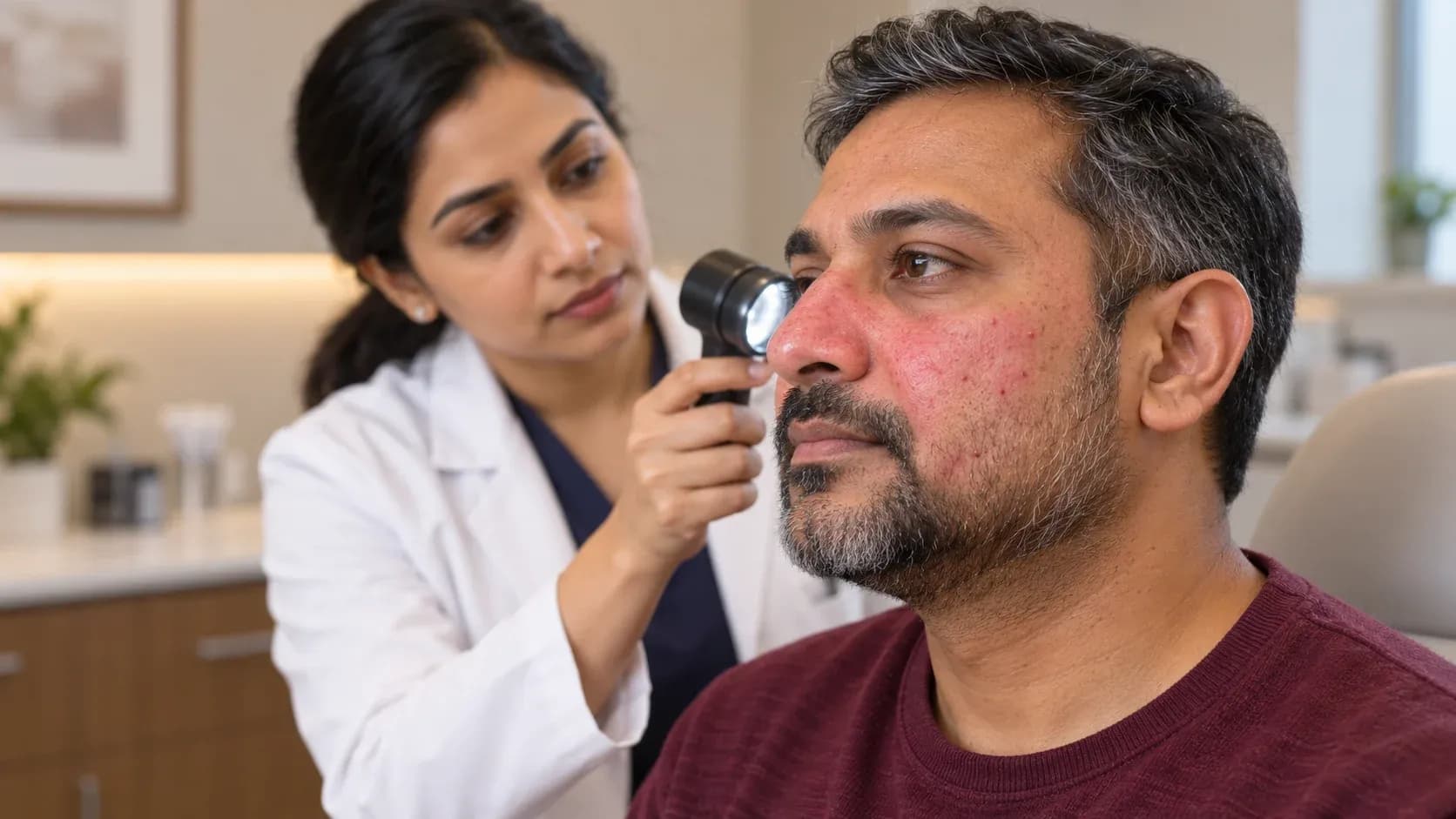
Rosacea can look like acne, but it is a different condition. It may cause flushing, persistent redness, visible blood vessels, and acne-like bumps. A dermatologist can help identify the condition and discuss treatment options; eye pain, light sensitivity, or vision changes need prompt medical attention.
What Is Acne Rosacea?
Acne rosacea is a common name for rosacea. Despite the name, it isn't acne. Rosacea is a chronic inflammatory skin condition that mainly affects the face, particularly the cheeks and nose, and can cause bumps. Rosacea typically doesn't cause blackheads or whiteheads. Your skin may feel warm, dry, or sensitive.
Rosacea can affect people of different skin tones and tends to flare up and settle down over time. On lighter skin, redness is easy to see. On darker skin, it can be harder to spot; you may notice violet or brown discolouration, warmth, or acne-like bumps.
Different Types of Rosacea
You can have more than one type at the same time. A dermatologist looks at your signs, not just a label.
- Vascular rosacea (also called erythematotelangiectatic rosacea, or ETR): Persistent facial redness, flushing, and visible blood vessels.
- Inflammatory rosacea (papulopustular rosacea): Inflamed bumps and pus-filled spots, often alongside redness.
- Rhinophyma or phymatous rosacea: Thickened skin, particularly around the nose, can cause it to appear enlarged or uneven.
- Ocular rosacea (eye rosacea): It can show up before any skin signs, such as dryness, irritation, redness, or swollen eyelids.
Symptoms of Acne Rosacea
According to the American Academy of Dermatology (AAD), symptoms can look different across skin tones, so redness is not the only sign to watch for. You might notice:
- Persistent facial redness: Colour changes that remain around your cheeks, nose, forehead, or chin.
- Acne-like bumps: Small, inflamed bumps or pus-filled spots without the typical blackheads associated with acne vulgaris.
- Flushing: Episodes of facial warmth and increased redness.
- Visible blood vessels: Small blood vessels that become noticeable on your cheeks or nose.
- Sensitive skin: Burning, stinging, dryness, or discomfort after applying certain skincare products.
- Eye irritation: Dry, watery, or bloodshot eyes, and irritated eyelids.
Thin skin may appear transparent, with visible blood vessels and veins. Do not confuse it with acne rosacea. A dermatologist can diagnose it more accurately than self-diagnosis.
What Causes Acne Rosacea?
Doctors still don't know exactly what causes rosacea. Researchers think these factors play a part:
- Immune system activity: Your immune system may overreact in your skin, causing lasting redness and bumps.
- Blood vessel changes: Blood vessels in your face may widen easily, causing flushing and making vessels more visible.
- Demodex mites: Tiny mites that live in the pores of most adults. People with rosacea often have more of them, but researchers still aren't sure whether the mites cause it.
- Genetic factors: A family history of rosacea increases your risk.
What Triggers Acne Rosacea Flare-Ups?
A trigger doesn't cause rosacea. It can set off a flare-up or make your symptoms worse. Common triggers include:
- Hot drinks, spicy foods, and alcohol
- Stress and intense exercise
- Hot baths and sudden temperature changes
- Skincare products that irritate your skin
Your triggers may differ from someone else’s. You do not need to eliminate foods or activities unless you notice a consistent connection or your dermatologist recommends it.
Rosacea vs Acne: What Is the Difference?
Rosacea and acne vulgaris can both cause facial bumps. Appearance alone cannot confirm a diagnosis. The table below helps you distinguish acne rosacea from acne vulgaris.
| Feature | Acne rosacea (rosacea) | Acne vulgaris |
|---|---|---|
| Main signs | Facial redness, flushing, acne-like bumps. | Blackheads, whiteheads, and inflamed spots. |
| Skin appearance | Red, violet, or brown discolouration. | Spots, clogged pores, and sometimes post-acne marks. |
| Usual Age | Occurs between ages 30 and 50. | Starts in the teenage years and can occur in adults. |
| Common areas | Cheeks, nose, chin, and forehead. | Face, chest, shoulders, and back. |
| Skin sensitivity | Burning, stinging, or flushing may occur. | Sensitivity may occur, particularly with irritating treatments. |
| Common causes and triggers | Sun, heat, spicy foods, and personal irritants, such as some skincare products. | Hormonal changes, excess oil, and clogged pores can contribute. |
| Treatment focus | Controlling redness, calming inflammatory bumps, and protecting your skin barrier (the outer layer that holds in moisture and keeps irritants out). | Controlling oil production, unclogging pores, targeting acne bacteria, and protecting your skin barrier. |
Can You Have Rosacea and Acne at the Same Time?
Yes, you can have both, which makes it hard to work out why you're breaking out. For example, you may have blackheads alongside persistent cheek redness and acne-like bumps.
Don't pile on strong acne treatments before you know what's behind your breakouts. A dermatologist can tell them apart and choose treatments that won't irritate your skin or damage your skin barrier.
Acne Rosacea Treatment
Your dermatologist will choose treatment based on your symptoms and their severity. It can include prescription creams or gels, tablets, laser or light therapy, and gentle daily skincare.
Prescription Treatments for Acne Rosacea
Your dermatologist may prescribe topical creams and gels, such as azelaic acid, metronidazole, or ivermectin, to treat acne-like bumps and inflammation. Some medicines may cause dryness, stinging, or irritation.
For redness that won't fade, your dermatologist may suggest a gel or cream that narrows blood vessels, such as brimonidine or oxymetazoline. Follow your dermatologist’s instructions and avoid adding several active ingredients to your routine at once.
Oral Medicines for Moderate to Severe Symptoms
Your dermatologist may recommend oral medicines, such as doxycycline, for more persistent or extensive symptoms, depending on your medical history. Do not take antibiotics or other prescription medicines without medical advice.
Note: Doxycycline can make your skin more sensitive to the sun, so sunscreen matters even more.
Laser and Light-Based Treatments
When creams, tablets, and gentle skincare don't control your symptoms, your dermatologist may recommend pulsed dye laser or intense pulsed light (IPL).
Laser and intense pulsed light treatments may help reduce visible blood vessels and persistent redness with several sessions. Ask your dermatologist what results to expect, the risks, and the cost.
How Long Does Acne Rosacea Treatment Take to Work?
Some acne rosacea treatments take two to four weeks, or up to three months, to show noticeable benefits. Your improvement depends on the treatment, your symptoms, and how closely you stick to your plan and go to follow-ups. Tell your dermatologist if your symptoms don't improve or get worse. They may change your treatment.
Understand What Your Skin Needs
Explore your acne concerns and potential triggers with the Clear Ritual Skin Test. It does not diagnose rosacea or replace a dermatologist’s assessment.
Take the Free Skin Test
How to Treat Acne Rosacea at Home
Gentle skincare can support your skin barrier and help minimise irritation. However, home care does not replace medical treatment for persistent or significant symptoms.
Avoid adding high-concentration products on your own or harsh home remedies, as they may worsen your symptoms. Follow these simple steps at home:
- Use a gentle cleanser: Wash your face with lukewarm water and avoid using harsh face masks for acne.
- Moisturise regularly: Choose a fragrance-free moisturiser your skin tolerates and that doesn't clog pores.
- Wear sunscreen: Use a broad-spectrum SPF 30 or higher every day. Mineral sunscreens with zinc oxide or titanium dioxide are often gentler on rosacea-prone skin.
- Avoid harsh exfoliation: Scrubs and irritating products may inflame your skin.
- Patch-test new products: Introduce one product at a time and stop using it if you get irritation.
- Track your triggers: Keep a short diary of flare-ups, what you ate, the weather, and the products you used.
How to Get Rid of Rosacea Acne?
Rosacea is a long-term condition. There's no cure, and no treatment clears it overnight, but you can keep it under control. To manage the condition, follow prescription treatments, avoid triggers you’ve identified, track your symptoms, exercise in a cool place, and take breaks to cool down if you start to flush.
If you think you have rosacea, see a dermatologist first. Don't squeeze the bumps, even when you're tempted. Don't stack acne treatments to clear them faster either. Both can make rosacea worse. If you have both acne and rosacea, your dermatologist may suggest a plan that treats both.
When to See a Dermatologist for Acne Rosacea?
See a dermatologist as soon as you notice redness that won't fade or bumps that keep coming back. Go back if you see no change after a few months of treatment.
A dermatologist can assess your symptoms, rule out other skin conditions, and recommend suitable treatment. Book a visit if you have redness that doesn't fade, bumps that keep coming back, visible blood vessels, or skin that often burns or stings.
See a doctor straight away if you get eye pain, light sensitivity, or changes in your vision. These can signal a serious eye problem.
Clear Ritual’s Perspective on Acne Rosacea
If you experience both regular acne and rosacea-like symptoms, identifying each concern is an important first step towards choosing suitable care. Your skin concerns may overlap, but their underlying causes may differ.
At Clear Ritual, we focus on personalised acne care through our free Skin Test, dermatologist-informed skincare, and on-demand support from a Skin Advisor. The Skin Test can help you explore potential acne triggers, but it does not diagnose rosacea or replace a dermatologist’s assessment.
If you’re also managing acne, take the Clear Ritual Skin Test for free to explore your skin concerns and find a more personalised starting point. If you think you have rosacea, talk to a dermatologist before you start strong acne ingredients.
Frequently Asked Questions
Q. Why does rosacea acne happen?
A. Doctors don't know the exact cause yet. They think it happens due to a combination of genetic predisposition, an overactive immune system, and blood vessel (vascular) dysregulation rather than normal acne causes like clogged pores or high oil production.
Q. Is acne rosacea contagious?
A. No, rosacea is not contagious. You can't pass rosacea on by touching someone or sharing things like towels or makeup.
Q. What does acne rosacea look like?
A. Acne rosacea usually appears as persistent redness, flushing, and acne-like bumps.
Q. Can acne rosacea go away on its own?
A. Not usually. A flare-up can settle on its own, but rosacea tends to come back without treatment.
Q. Can acne products make rosacea worse?
A. In some cases, acne products may damage your skin barrier and irritate your skin due to strong active ingredients, worsening rosacea.
Q. Is acne rosacea more common on the nose and cheeks?
A. Yes. It mostly appears on the cheeks and nose, but it can also affect your chin and forehead. There’s no established evidence yet, so doctors don’t know the reason.
Q. Can diet affect acne rosacea?
A. Yes, for some people. Food doesn't cause rosacea, but spicy food, hot drinks, and alcohol can set off flushing. Most of this evidence comes from patient reports, and it varies from person to person.
References
- Picardo M, Eichenfield LF, Tan J. Acne and Rosacea. Dermatol Ther (Heidelb). 2017 Jan;7(Suppl 1):43-52. doi: 10.1007/s13555-016-0168-8. Epub 2017 Feb 1. PMID: 28150107; PMCID: PMC5289119.
- Rainer BM, Kang S, Chien AL. Rosacea: Epidemiology, pathogenesis, and treatment. Dermatoendocrinol. 2017 Oct 4;9(1):e1361574. doi: 10.1080/19381980.2017.1361574. PMID: 29484096; PMCID: PMC5821167.
- American Academy of Dermatology: Triggers could be causing your rosacea flare-ups. (Initial foundational data: 2004, Pathophysiological framework: 2016, Periodically reviewed: 2026)
- Buddenkotte J, Steinhoff M. Recent advances in understanding and managing rosacea. F1000Res. 2018 Dec 3;7:F1000 Faculty Rev-1885. doi: 10.12688/f1000research.16537.1. PMID: 30631431; PMCID: PMC6281021.
- BRITISH ASSOCIATION OF DERMATOLOGISTS PATIENT INFORMATION LEAFLET Rosacea (Last Updated: May 2025)
- Farshchian M, Daveluy S. Rosacea. [Updated 2023 Aug 8]. In: StatPearls [Internet]. Treasure Island (FL): StatPearls Publishing; 2023 Jan-. Available from: Rosacea - StatPearls - NCBI Bookshelf
- Weiss E, Katta R. Diet and rosacea: the role of dietary change in the management of rosacea. Dermatol Pract Concept. 2017 Oct 31;7(4):31-37. doi: 10.5826/dpc.0704a08. PMID: 29214107; PMCID: PMC5718124.
- American Academy of Dermatology: People with darker skin tones can get rosacea (Last Updated: January 11, 2023)
Editorial Standards
Clear Ritual has Strict sourcing guidelines to ensure our content is accurate and current. We rely on peer-reviewed studies, academic research institutions, and medical associations. We strive to use primary sources and refrain from using tertiary references. See a mistake? Learn More about our Editorial Standards.
Related Articles
Acne Mechanica: How Friction from Helmets, Masks & Tight Clothing Causes Breakouts
Published 17 July 2026
Acne and Diet: What’s the Real Link Between Food and Breakouts?
Published 21 July 2026
Acne Prone Skin: Meaning, Symptoms, Causes & What to Do
Published 8 October 2026

Acne Vulgaris: Definition, Causes, and Treatment Options
Published 25 September 2026