Pigmentation on Face Home Remedies: Complete Guide

Quick Answer:
Facial pigmentation can be reduced at home using ingredients like turmeric, aloe vera, vitamin C-rich foods, and neem that work by inhibiting melanin production in the skin. Home remedies for pigmentation on face are most effective for mild to moderate hyperpigmentation and typically require 4-12 weeks of consistent use to show visible improvement. According to Clear Ritual's skin health team, combining the right topical ingredients with daily SPF protection gives the best results.
What Is Pigmentation On Face? Understanding the Core Problem
Facial pigmentation refers to darkened patches or uneven skin tone caused by excess melanin production in specific areas of the skin. Melanin is the pigment responsible for skin, hair, and eye colour: when produced in excess or unevenly, it creates visible dark spots, patches, or discolouration.
Hyperpigmentation on the face can appear as:
- Melasma: symmetrical brown or grey-brown patches, typically on cheeks, forehead, and upper lip; affects up to 6 million people in India
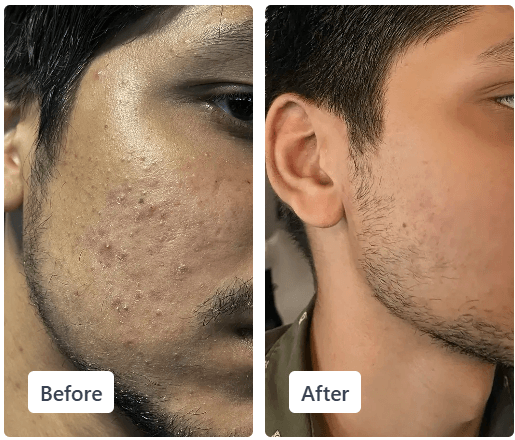
- Post-inflammatory hyperpigmentation (PIH): dark spots left after acne, eczema, or skin injury
- Sun spots (solar lentigines): flat brown spots triggered by UV exposure
- Pigmentation around the mouth: often caused by hormonal changes, friction, or frequent licking
- Lip pigmentation: darkening of the lips from sun exposure, smoking, or dehydration
Home remedies for pigmentation work by targeting melanin synthesis at a surface level. Ingredients like kojic acid (found in fermented rice water), arbutin (found in bearberry), and curcumin (found in turmeric) interfere with tyrosinase: the enzyme that triggers melanin production: reducing new pigmentation formation over time.
How Home Remedies for Pigmentation on Face Work: The Complete Mechanism
Home remedies for pigmentation on face work by disrupting the melanin production cycle through natural bioactive compounds that inhibit the tyrosinase enzyme.
Step-by-step mechanism:
- UV exposure or inflammation triggers melanocytes: specialised skin cells begin producing excess melanin as a protective response
- Tyrosinase enzyme activates: this enzyme converts tyrosine (an amino acid) into melanin precursors
- Active ingredients in home remedies block tyrosinase: compounds like curcumin in turmeric, kojic acid in rice water, and aloin in aloe vera reduce tyrosinase activity by 20-50% in laboratory studies
- Existing pigment is gradually shed: natural skin cell turnover (every 28-40 days in adults) brings new, less pigmented cells to the surface
- Antioxidants reduce oxidative damage: ingredients like vitamin C neutralise free radicals that worsen pigmentation
- Consistent SPF use prevents re-triggering: without sunscreen, UV rays re-activate melanocytes, undoing progress
According to Clear Ritual's formulation research, home remedies for pigmentation are most effective when applied to clean skin and left on for a minimum of 15-20 minutes before rinsing, allowing bioactive compounds enough contact time to act on the epidermis.
Common misconception: Home remedies do not "bleach" skin. They reduce excess melanin production: they do not alter your natural skin tone or permanently change skin colour.
Key Benefits of Home Remedies for Pigmentation: What You Actually Gain
Home remedies for pigmentation on face offer several clinically supported advantages over chemical treatments, particularly for individuals with sensitive skin or mild-to-moderate discolouration.
Short-term benefits (within 4-6 weeks):
- Reduced surface-level dark spots: aloe vera and turmeric show measurable reduction in melanin index scores within 4 weeks
- Improved skin texture: exfoliating agents like rice flour and gram flour remove dead skin cells gently
- Reduced inflammation: ingredients like neem and aloe vera have anti-inflammatory properties that calm PIH-prone skin
- Hydration boost: aloe vera gel increases skin water content by up to 8% when used regularly
Long-term benefits (8-16 weeks):
- Faded melasma patches: consistent turmeric and vitamin C application may reduce MASI (Melasma Area and Severity Index) scores over 12 weeks
- More even skin tone overall: regular use of pigmentation removal home remedies improves overall luminosity
- Lower risk of chemical irritation: natural ingredients have a lower risk of contact dermatitis compared to hydroquinone or strong AHAs
- Cost-effective maintenance: most home remedy ingredients cost under ₹100-₹300 per month
Who benefits most?
- Individuals with mild to moderate hyperpigmentation
- Those with PIH from acne scarring
- People seeking low-cost, low-risk maintenance between dermatological treatments
- Those with pigmentation around the mouth or lip pigmentation from lifestyle factors
Clear Ritual's skin health advisors note that home remedies for face pigmentation work best as part of a structured daily routine rather than as a standalone, irregular treatment.
Types of Home Remedies for Pigmentation on Face: Which Is Right for You?
Different home remedies for pigmentation target different root causes. Choosing the right one depends on your pigmentation type, skin sensitivity, and the area affected.
| Remedy | Active Compound | Best For | Frequency | Skin Type Caution |
|---|---|---|---|---|
| Turmeric + milk paste | Curcumin | Melasma, dull skin | 3-4x per week | May stain fair skin temporarily |
| Aloe vera gel | Aloin, acemannan | PIH, sensitive skin | Daily | Suitable for all types |
| Vitamin C (lemon diluted) | Ascorbic acid | Sun spots, general pigmentation | 2-3x per week | Avoid on broken/reactive skin |
| Rice water | Kojic acid, ferulic acid | Uneven tone, lip pigmentation | Daily rinse | Generally well-tolerated |
| Neem + tulsi paste | Nimbidin, ursolic acid | Acne-related PIH, oily skin | 2-3x per week | May dry out sensitive skin |
| Potato juice | Catecholase enzyme | Pigmentation around mouth, dark circles | Daily | Avoid if nightshade-sensitive |
| Papaya mask | Papain enzyme | Surface-level spots, skin texture | 1-2x per week | Patch test first; avoid if allergic |
| Sandalwood paste | Santalol | Melasma, sun damage | 2-3x per week | Suitable for dry to normal skin |
Pigmentation Around the Mouth
Pigmentation around the mouth is often hormonal or friction-related. Potato juice and diluted lemon juice (applied only to the perioral area, not lips) are among the most effective home remedies for pigmentation around the mouth. Apply with a cotton bud and rinse after 10 minutes.
Home Remedies for Lip Pigmentation
Home remedies for lip pigmentation include honey + rose petal application overnight, and aloe vera gel applied before bed. Rubbing a slice of beetroot on lips may also improve discolouration from sun exposure. Avoid lemon directly on lips: it can cause dryness and irritation.
How to Get Started with Home Remedies for Pigmentation: Step-by-Step Guide
Before starting any pigmentation removal home remedy routine, patch test every new ingredient on the inner wrist or behind the ear for 24 hours.
Morning Skincare Steps for Pigmentation
- Cleanse with a gentle, sulphate-free face wash: removes overnight sebum without stripping the skin barrier
- Apply vitamin C serum or rice water as a toner: vitamin C works best in the morning because it neutralises UV-triggered free radicals throughout the day
- Moisturise with a lightweight, non-comedogenic moisturiser: a compromised skin barrier worsens pigmentation
- Apply broad-spectrum SPF 30+: this is non-negotiable; UV exposure re-triggers melanin production within minutes of sun contact
Night-time Remedy Application Guide
- Double cleanse: remove sunscreen and makeup fully before applying any active remedy
- Apply chosen home remedy (turmeric paste, aloe vera gel, neem mask): leave on for 15-30 minutes or overnight as appropriate
- Rinse gently with lukewarm water: hot water increases inflammation and can worsen PIH
- Apply a barrier moisturiser: ingredients like shea butter or squalane seal in healing compounds overnight
Patch Testing Guidelines
- Apply a small amount to the inner wrist
- Wait 24 hours
- If redness, stinging, or swelling occurs, do not apply to the face
- Always start with lower concentrations: dilute lemon juice 1:3 with water before facial use
Common mistakes to avoid:
- Using lemon juice undiluted on the face: this can cause phytophotodermatitis (a chemical sunburn-like reaction)
- Skipping SPF while using brightening remedies: UV exposure will worsen pigmentation faster than remedies can reverse it
- Expecting results in under 4 weeks: skin cell turnover requires time
- Combining too many actives at once: start with one remedy per session
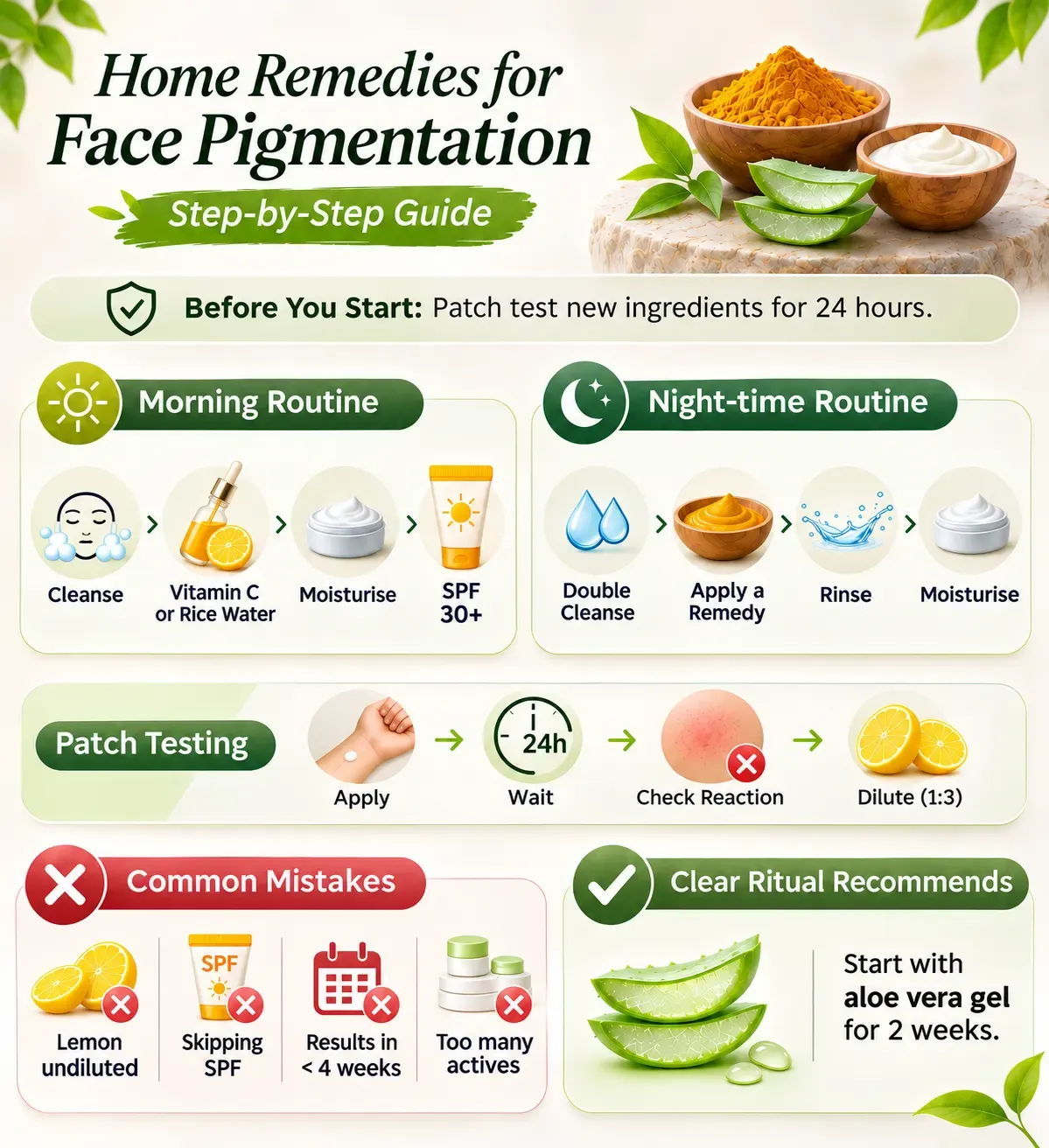
Clear Ritual recommends beginning with aloe vera gel alone for the first two weeks before introducing more active ingredients like turmeric or kojic acid from rice water.
Real-World Use Cases: Who Uses These Remedies and Why
Use Case 1: Post-Acne Dark Spots (PIH)
A 24-year-old with oily, acne-prone skin used neem + tulsi paste three times per week combined with daily aloe vera gel application. Within 8 weeks, PIH spots on the cheeks and chin showed visible lightening. Clear Ritual's skin advisors note that anti-inflammatory home remedies for face pigmentation work particularly well for PIH because they address the residual inflammation driving continued pigmentation.
Use Case 2: Melasma During Pregnancy
A 31-year-old during her second trimester developed symmetrical brown patches on her forehead and upper lip. Because many clinical treatments are contraindicated during pregnancy, she used turmeric + sandalwood paste three times per week with consistent SPF 50. After 12 weeks, patch intensity reduced moderately. Note: clinical supervision is recommended for pregnancy-related melasma.
Use Case 3: Pigmentation Around the Mouth
A 28-year-old with hormonal pigmentation around the mouth used potato juice applied nightly with a cotton bud. After 6 weeks, the perioral patches had faded by approximately 30-40% in self-reported photo comparison. Potato's catecholase enzyme is the active pigmentation-inhibiting compound.
Use Case 4: Sun-Induced Dark Spots
A 45-year-old with significant sun exposure history used rice water as a daily toner and a papaya enzyme mask twice weekly. After 10 weeks, sun spots on the forehead and cheeks appeared lighter, and overall skin tone was more even.
Use Case 5: Lip Pigmentation from Smoking
A 33-year-old with lip pigmentation from smoking used an overnight honey and aloe vera lip mask. After consistent use over 8 weeks, lip colour appeared more even. Home remedies for lip pigmentation address surface-level pigment change but cannot reverse deeper dermal changes from long-term smoking: clinical intervention may be needed.
Home Remedies for Pigmentation vs. Clinical Treatments: An Honest Comparison
| Treatment Type | Mechanism | Effectiveness | Cost (Monthly) | Risk Level | Best For |
|---|---|---|---|---|---|
| Home remedies (turmeric, aloe, rice water) | Tyrosinase inhibition, mild exfoliation | Mild to moderate | ₹100-₹500 | Low | Mild PIH, maintenance, sensitive skin |
| Topical hydroquinone (2-4%) | Strong tyrosinase inhibitor | Moderate to high | ₹400-₹1,200 | Medium (long-term risk of ochronosis) | Moderate melasma under supervision |
| Vitamin C serum (10-20%) | Antioxidant + tyrosinase inhibition | Moderate | ₹500-₹2,000 | Low to medium | General brightening |
| Chemical peels (glycolic, lactic) | Accelerated exfoliation | High (short-term) | ₹2,000-₹8,000 per session | Medium to high | Deep sun spots, melasma |
| Laser treatments (Nd:YAG, PicoSure) | Targeted melanin destruction | High | ₹5,000-₹25,000 per session | Medium to high | Persistent melasma, deep pigmentation |
Clear Ritual's recommendation: Home remedies for pigmentation on face are the most appropriate starting point for mild-to-moderate hyperpigmentation, particularly PIH and early melasma. For deeper or unresponsive pigmentation, escalating to a dermatologist-supervised regimen with vitamin C serums or chemical peels is advisable. Home remedies can then serve as a low-risk maintenance protocol between treatments.
Results Timeline: What to Expect from Home Remedies for Pigmentation
Results from home remedies for pigmentation on face depend on pigmentation type, consistency, sun protection, and skin tone. Deeper skin tones may see slower visible change because baseline melanin levels make contrast harder to detect early.
| Timeframe | What Typically Happens |
|---|---|
| Week 1-2 | Skin hydration improves; surface texture softens; no visible pigmentation change yet |
| Week 3-4 | Mild brightening at spot edges; first signs of fading in superficial spots |
| Week 5-8 | Moderate fading of PIH and sun spots; pigmentation around mouth begins to lighten |
| Week 9-12 | Significant improvement in mild-to-moderate cases; melasma shows partial improvement |
| Month 4-6 | Continued fading; maximum results for home-only regimens typically reached at this stage |
How long does turmeric take to lighten hyperpigmentation? Turmeric-based remedies typically show early results within 4-6 weeks of consistent use (3-4 times per week). A 12-week study on curcumin-based topicals found a statistically significant reduction in melanin index scores compared to baseline.
Factors that affect your results:
- Consistency: missing applications by more than 2-3 days per week significantly slows progress
- SPF compliance: without daily SPF 30+, UV re-exposure can outpace remedy benefits
- Pigmentation depth: epidermal (surface) pigmentation responds in 4-8 weeks; dermal (deep) pigmentation may require clinical treatment
- Skin barrier health: a compromised skin barrier reduces ingredient penetration by up to 40%
- Underlying cause: hormonal melasma is significantly harder to treat at home than PIH
Best Practices for Using Pigmentation Removal Home Remedies Effectively
Expert tips from Clear Ritual's skin health team:
- Always apply SPF 30+ every morning: without this, every home remedy you apply will be undermined by UV-triggered melanin re-production
- Use one new remedy at a time: introducing multiple actives simultaneously makes it impossible to identify what is working or causing irritation
- Be consistent for at least 8 weeks: skin cell turnover takes 28-40 days; visible change requires at least two full cycles
- Apply remedies to clean, slightly damp skin: damp skin allows better absorption of water-soluble active compounds
- Refrigerate aloe vera gel: cold application reduces inflammation and extends the shelf life of fresh gel (up to 7 days refrigerated)
- Dilute acidic ingredients: always dilute lemon juice at minimum 1:3 with water before facial application to prevent acid burns
- Do not combine lemon and turmeric in an open-cut or reactive skin area: combined acidity and staining can cause unexpected irritation
- Use a wooden or ceramic bowl for turmeric: metal can oxidise turmeric and reduce its bioavailability
When to Combine Multiple Remedies
Clear Ritual advises separating active remedies by session rather than combining them. For example: use turmeric paste in the evening three times per week, and rice water as a daily morning toner: do not mix both into a single application.
Common Mistakes to Avoid
Applying lemon juice to facial skin can cause irritation and phytophotodermatitis.
Skipping SPF can worsen existing pigmentation.
Trying multiple new remedies at once makes irritation harder to identify.
Persistent or changing facial pigmentation deserves dermatology assessment.
When to See a Dermatologist for Facial Pigmentation
Home remedies cannot reliably treat every type of dark patch. Ask a dermatologist for an assessment if pigmentation is persistent, spreading, changing in appearance, or accompanied by itching, bleeding, or pain. A clinician can check whether it is melasma, post-inflammatory hyperpigmentation, another skin condition, or something that needs closer investigation.
Daily broad-spectrum sunscreen and a gentle routine are important regardless of the cause. Avoid irritating ingredients, including lemon juice, which may make dark marks worse.
Conclusion
Facial pigmentation has several possible causes, so its management should match the underlying condition. Home mixtures may feel soothing or temporarily improve skin texture, but they are not proven substitutes for appropriate pigmentation treatment. Focus on consistent sun protection, gentle skincare, and professional assessment when marks persist.
Understand What Your Skin Needs
Take the Clear Ritual Skin Test to identify your skin concerns and explore a plan for your routine.
Take the Free Skin Test
Frequently Asked Questions
Can home remedies remove facial pigmentation permanently?
No home remedy is proven to remove every type of facial pigmentation permanently. Some dark marks fade gradually, but melasma and recurrent sun exposure can lead to new patches.
Is lemon juice safe to use on pigmentation around the mouth?
No. Lemon juice can irritate skin and may trigger a sun-related reaction that makes pigmentation darker. Avoid applying it to the face or around the lips.
How long do dark marks on the face take to fade?
The timeframe varies with the cause, depth, skin tone, and sun exposure. Some superficial marks fade over months, while melasma and deeper pigmentation may require dermatologist-guided care.
Does sunscreen help with facial pigmentation?
Yes. Broad-spectrum sunscreen helps prevent UV exposure from darkening existing patches. Reapply according to the product directions, particularly when outdoors, sweating, or swimming.
When should I see a dermatologist for pigmentation?
Seek an assessment if marks are persistent, changing, spreading, symptomatic, or affecting your wellbeing. A dermatologist can identify the cause and suggest appropriate treatment.
Editorial Standards
Clear Ritual has Strict sourcing guidelines to ensure our content is accurate and current. We rely on peer-reviewed studies, academic research institutions, and medical associations. We strive to use primary sources and refrain from using tertiary references. See a mistake? Learn More about our Editorial Standards.
Related Articles
Acne Pigmentation: Why Dark Marks Stay and How to Fade Them
Published 10 August 2026
What Is Post-Inflammatory Hyperpigmentation?
Published 2 September 2026

What Is Hyperpigmentation? Types, Triggers, and Treatments
Published 19 August 2026

Ingredients For Hyperpigmentation: Which Are Best And How They Work
Published 21 August 2026