Home Remedies for Blackheads: What Works and What to Avoid

Quick Answer:
Clay masks may temporarily absorb excess oil, while aloe vera may soothe skin, but neither reliably removes blackheads. Avoid lemon juice, cinnamon masks, abrasive scrubs and undiluted essential oils. For persistent blackheads, consider salicylic acid or a topical retinoid with appropriate guidance.
Home remedies for blackheads may help with oiliness or skin comfort, but most DIY mixtures have not been shown to clear open comedones in clinical trials. Blackheads form when sebum and dead skin cells clog open follicles. Gentle cleansing and evidence-based ingredients such as salicylic acid and topical retinoids are more reliable approaches.
What Are Blackheads and How Do They Form in Your Pores?
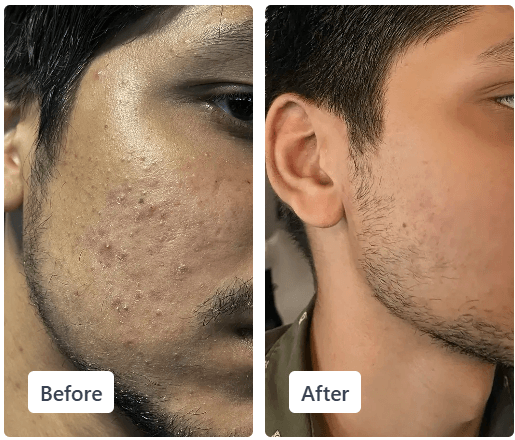
A blackhead is an open comedone, a pore clogged with a mixture of sebum (skin oil) and dead skin cells that has been exposed to air. That air exposure oxidises the trapped material, turning it dark brown or black. The colour comes from oxidation, not dirt.
The three-step blackhead formation process:
- Excess sebum, sebaceous glands produce more oil than the pore can handle, often triggered by hormonal shifts, humidity, or heavy skincare products
- Dead cell accumulation, without regular exfoliation, dead skin cells collect at the pore opening instead of shedding naturally
- Oxidation, the oil-cell plug sits at an open pore surface, reacts with oxygen, and darkens within 24–48 hours
The nose, chin, and forehead (the T-zone) are the most common sites because these areas contain the highest density of sebaceous glands, up to 900 sebum-secreting follicles per square centimetre, according to research published in the British Journal of Dermatology.
Where blackheads form most often:
- Nose, highest sebum density; most visible blackheads
- Chin and jawline, often hormone-linked, particularly in women
- Forehead, hairline products and sweat contribute
- Back and chest, triggered by sweat and friction
- Ears, frequently missed; require gentle targeted care
Blackheads vs. whiteheads: Both are comedones. Whiteheads form when the pore is sealed by a thin skin layer, preventing oxidation, which is why they stay white. Blackheads have an open pore opening. Most home remedies that work on blackheads also help prevent whiteheads, though exfoliation intensity differs slightly.
Which Home Remedies for Blackheads May Help?
Clay masks can absorb surface oil, aloe vera may provide hydration, and green tea has been studied for sebum-related effects. None has robust evidence as a standalone blackhead-removal treatment. Honey-cinnamon masks, lemon juice and physical scrubs are not recommended because of irritation risk.
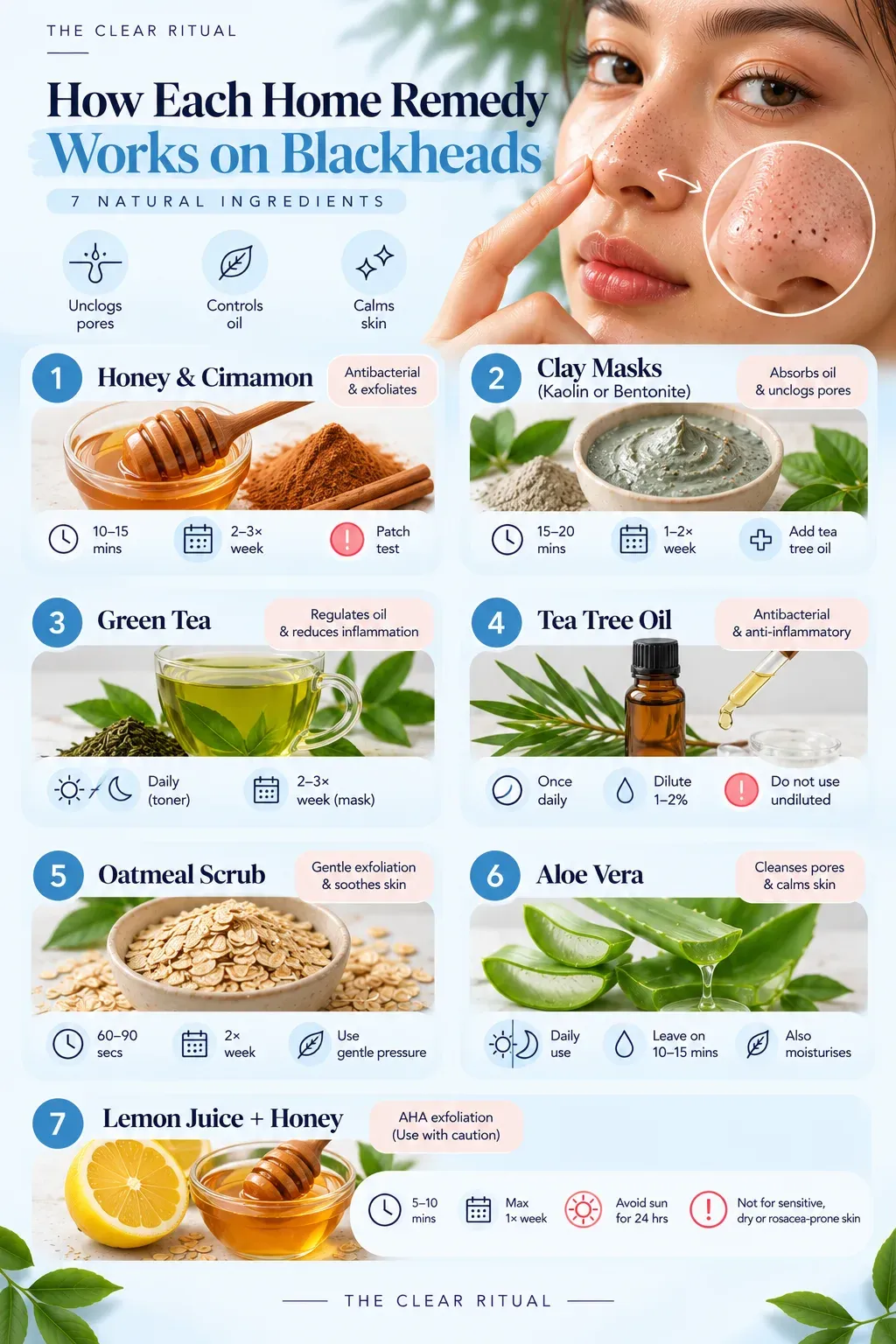
How Each Home Remedy Works on Blackheads: The Science Behind 7 Natural Ingredients
Clear Ritual's approach to natural skincare is grounded in understanding what each ingredient actually does inside the pore, not just on the skin surface.
1. Honey and Cinnamon Mask: Limited Evidence and Irritation Risk
There is no reliable clinical evidence that honey and cinnamon masks remove blackheads. Cinnamon can cause contact dermatitis or burns, so avoid using it on facial skin.
2. Clay Masks (Kaolin or Bentonite), Oil Absorption Powerhouse
Clay minerals have a high surface area that physically binds to sebum and draws it out of the pore opening. A 2017 article in the International Journal of Molecular Sciences found kaolin clay effective at reducing skin surface lipid levels, directly relevant to blackhead prevention. Clay masks do not extract deep, compacted blackheads, but they consistently reduce the oil supply that forms new ones.
How to use:
- Mix clay powder with water or rose water to a paste
- Apply a thin, even layer to the T-zone or full face
- Remove after 15–20 minutes, before it dries fully (partially dried is the target)
- Rinse with lukewarm water
Avoid homemade essential-oil mixtures on the face; even diluted tea tree oil may irritate or sensitise skin.
3. Green Tea, Antioxidant and Oil Regulator
Green tea is rich in polyphenols (particularly EGCG) that regulate sebum production and reduce skin inflammation. A randomised controlled trial published in the Journal of Investigative Dermatology found that 2% green tea lotion applied twice daily for 8 weeks significantly reduced sebum production in participants with oily skin, a direct mechanistic link to blackhead prevention.
How to use (as toner):
- Brew a strong cup of green tea and allow to cool completely
- Apply with a cotton pad after cleansing, morning and evening
How to use (as mask):
- Mix 1 tsp green tea powder with 1 tsp honey
- Apply for 15 minutes, then rinse
Frequency: Daily as toner; 2–3 times per week as mask
4. Tea Tree Oil, Nature's Antibacterial Agent
Tea tree oil contains terpinen-4-ol, a compound with documented antibacterial and anti-inflammatory properties. A 2006 single-blind trial in the Medical Journal of Australia found that 5% tea tree oil gel achieved comparable improvement in open comedones to 5% benzoyl peroxide over 12 weeks, while being 3.5 times less likely to cause adverse effects. The critical condition: it must be diluted to 1–2% for safe home use.
How to use:
- Avoid homemade essential-oil mixtures on the face; even diluted tea tree oil may irritate or sensitise skin.
- Apply to affected areas only using a cotton swab
- Leave overnight; rinse in the morning
Avoid homemade essential-oil mixtures on the face; even diluted tea tree oil may irritate or sensitise skin.
5. Oatmeal: Soothing, Not a Blackhead Extraction Method
Colloidal oatmeal can soothe dry or irritated skin, but scrubbing does not reliably clear blackheads and may worsen irritation. Use a gentle oatmeal-based wash without abrasive rubbing.
6. Aloe Vera, The Skin-Soothing Pore Cleanser
Aloe vera contains protease enzymes that gently break down dead skin cells at the pore opening, directly relevant to blackhead prevention. It also contains acemannan and aloin, anti-inflammatory compounds that calm the congested pore environment. Unlike most other remedies, aloe vera is safe for daily use and can function as both a treatment and a lightweight moisturiser.
How to use:
- Apply fresh aloe gel directly from a cut leaf, or use 100% pure store-bought gel
- Apply after cleansing; leave on for 10–15 minutes or use as a leave-on overnight moisturiser
Benefits:
- Calms redness around blackhead-prone areas
- Balances oil production without over-drying
- Supports skin barrier repair
Frequency: Safe for daily use
7. Lemon Juice and Honey: Why This DIY Remedy Is Not Recommended
Do not apply raw lemon juice to blackheads. Citrus juice can irritate the skin and may cause a phototoxic reaction after sun exposure. Mixing it with honey does not make its acidity or phototoxic risk predictable. Choose a formulated exfoliant instead.
Which Home Remedies for Blackheads Are Dangerous? What to Avoid
Some widely shared DIY blackhead treatments cause measurable skin damage. Clear Ritual's dermatological review team consistently flags the following as remedies to avoid entirely.
| Remedy | Why it's unsafe |
|---|---|
| Baking soda | pH of 9, significantly alkaline against skin's natural 4.5–5.5 acid mantle; disrupts barrier, causes dryness and irritation |
| Toothpaste | Contains menthol, sodium lauryl sulphate, and fluoride, all irritants on facial skin; disrupts acid mantle within 20 minutes |
| Sugar scrubs | Crystal edges create micro-tears in the skin surface; worsens congestion and increases infection risk |
| Egg white masks | No peer-reviewed evidence of blackhead removal; poses bacterial contamination risk |
| Apple cider vinegar (undiluted) | Acidity risks chemical irritation; no peer-reviewed evidence for comedone reduction |
| Charcoal peel-off masks | Adhesive damages the skin surface; not recommended for dry or sensitive skin |
Myth vs. Fact:
| Myth | Fact |
|---|---|
| "Toothpaste clears blackheads overnight." | Its alkaline pH and irritants disrupt the skin's acid mantle and cause contact dermatitis without reaching inside the pore. |
| "Scrubbing harder removes blackheads faster." | Over-scrubbing damages the moisture barrier and triggers compensatory sebum overproduction, worsening blackheads. |
| "Natural means safe for everyone." | Even natural ingredients can trigger contact allergies; cinnamon, tea tree oil, and citrus are among the most common skincare allergens. |
| "Nose strips remove blackheads permanently." | Pore strips remove only surface debris, the comedone core remains; pores typically refill within days. |
How to Remove Blackheads Naturally at Home: A Step-by-Step Weekly Routine
A single remedy applied once will not reduce blackheads. What works is a layered weekly routine that addresses oil control, exfoliation, and barrier protection in the right sequence. The Clear Ritual approach structures natural blackhead care across daily and weekly steps.
Daily Routine, Every Morning
- Cleanse, use a mild, non-comedogenic cleanser with lukewarm water (hot water overstimulates oil glands)
- Tone, apply cooled green tea with a cotton pad or a rose water spritz to regulate oil and tighten pore appearance
- Moisturise, aloe vera gel or a lightweight oil-free moisturiser (skipping this step triggers rebound sebum production)
- Protect, SPF 30 minimum; sun damage thickens the skin surface and worsens pore congestion over time
Daily Routine, Every Evening
- Double cleanse, remove sunscreen and makeup with micellar water first, then follow with your regular cleanser
- Avoid homemade essential-oil mixtures on the face; even diluted tea tree oil may irritate or sensitise skin.
- Seal, a thin layer of aloe vera gel or your regular night moisturiser
Weekly Add-Ons
Twice a week (e.g., Tuesday and Friday):
- Oatmeal scrub: massage gently for 60–90 seconds, rinse with cool water
- Avoid cinnamon masks because they can irritate facial skin.
Once a week (e.g., Sunday):
- Clay mask: thin, even layer; remove before fully dry (15–20 minutes)
- Or: green tea powder + honey detox mask
Common Mistakes That Undo Your Progress
- Over-exfoliating, more than 3 exfoliation sessions per week damages the moisture barrier, increasing oil production as a stress response
- Skipping moisturiser, oily skin still needs hydration; skipping it causes more sebum output, not less
- Squeezing blackheads, pushes debris deeper, widens the pore, and risks post-inflammatory scarring
- Letting clay masks dry fully, partially dried is the target; fully dried clay pulls moisture from the skin, not just sebum
- Mixing acidic ingredients in one session, lemon juice with apple cider vinegar, or tea tree oil with lemon juice, significantly increases irritation and photosensitivity risk
What Results Should You Expect from Home Care?
There is no established timeline or reliable percentage reduction for blackheads from homemade remedies. Evidence-based treatments, such as salicylic acid and topical retinoids, often require several weeks of consistent use. If blackheads persist, a dermatologist can advise on appropriate treatment or professional extraction.
Frequently Asked Questions About Home Remedies for Blackheads
Q. Can home remedies remove blackheads permanently?
A. No. Blackheads can recur as oil and dead skin cells accumulate. Gentle cleansing and suitable comedone treatments help manage them over time.
Q. Does a clay mask remove blackheads?
A. A clay mask may absorb excess surface oil, but it does not reliably extract an existing blackhead. Overusing clay can dry or irritate skin.
Q. Is lemon juice safe for removing blackheads?
A. No. Raw lemon juice may cause irritation and phototoxic skin reactions. Use properly formulated skincare products instead.
Q. Can I squeeze blackheads at home?
A. Squeezing with fingers or sharp tools can damage skin and cause inflammation. A dermatologist or trained professional can advise on safe extraction.
Q. What skincare ingredients work best for blackheads?
A. Salicylic acid can help unclog pores, and topical retinoids help prevent comedones. Introduce treatments gradually and seek professional advice if you have sensitive skin or persistent acne.
Q. How long does it take to reduce blackheads?
A. There is no reliable timeline for DIY remedies. Evidence-based skincare may take several weeks to show improvement, and ongoing care is often needed.
Understand What Your Skin Needs
Take the Clear Ritual Skin Test to identify your skin type, concerns, and potential triggers before building your routine.
Take the Free Skin Test
Disclaimer: This article is for general educational purposes only and does not replace advice from a qualified healthcare professional. Stop using any product that causes irritation and consult a dermatologist for persistent or painful acne.
Editorial Standards
Clear Ritual has Strict sourcing guidelines to ensure our content is accurate and current. We rely on peer-reviewed studies, academic research institutions, and medical associations. We strive to use primary sources and refrain from using tertiary references. See a mistake? Learn More about our Editorial Standards.
Related Articles
Ingredients for Cystic Acne: How They Work
Published 20 July 2026
How to Prevent Whiteheads Long-Term: Habits That Actually Help
Published 20 July 2026

Natural Home Remedies for Whiteheads: What Actually Works
Published 13 October 2026
The Clear Ritual’s Guide: 5 Daily Skincare Routine Steps for Acne
Published 20 July 2026