How to Use Aloe Vera Gel on Your Face at Night: A Step-by-Step Guide

Quick Answer:
Aloe vera gel can be used at night as a lightweight hydrating step. After cleansing, apply a thin layer to slightly damp skin and follow with moisturiser if needed. Patch test a new product first, and discontinue use if irritation develops. Nighttime use is convenient, but it is not proven to work better than daytime application.
What Is Aloe Vera Gel for the Face; and Why Use It at Night?
Aloe vera gel is a clear, water-based substance extracted from the leaves of the Aloe barbadensis plant. It contains over 75 active compounds including vitamins C and E, polysaccharides, enzymes, and amino acids that support skin hydration, repair, and protection.
Using aloe vera gel on your face at night is effective because skin follows daily rhythms. There is no established evidence that aloe vera must be applied at a particular hour to work. Nighttime application can be a convenient option for people seeking a simple hydrating step.
Key properties of aloe vera gel relevant to facial skin:
- Mucopolysaccharides; bind moisture into the skin layers
- Aloin and anthraquinones; support mild brightening and cell turnover
- Gibberellins and polysaccharides; may stimulate collagen synthesis
- Salicylic acid (trace); provides mild exfoliation and pore-clearing
How to Use Aloe Vera Gel on Your Face at Night: Step-by-Step Guide
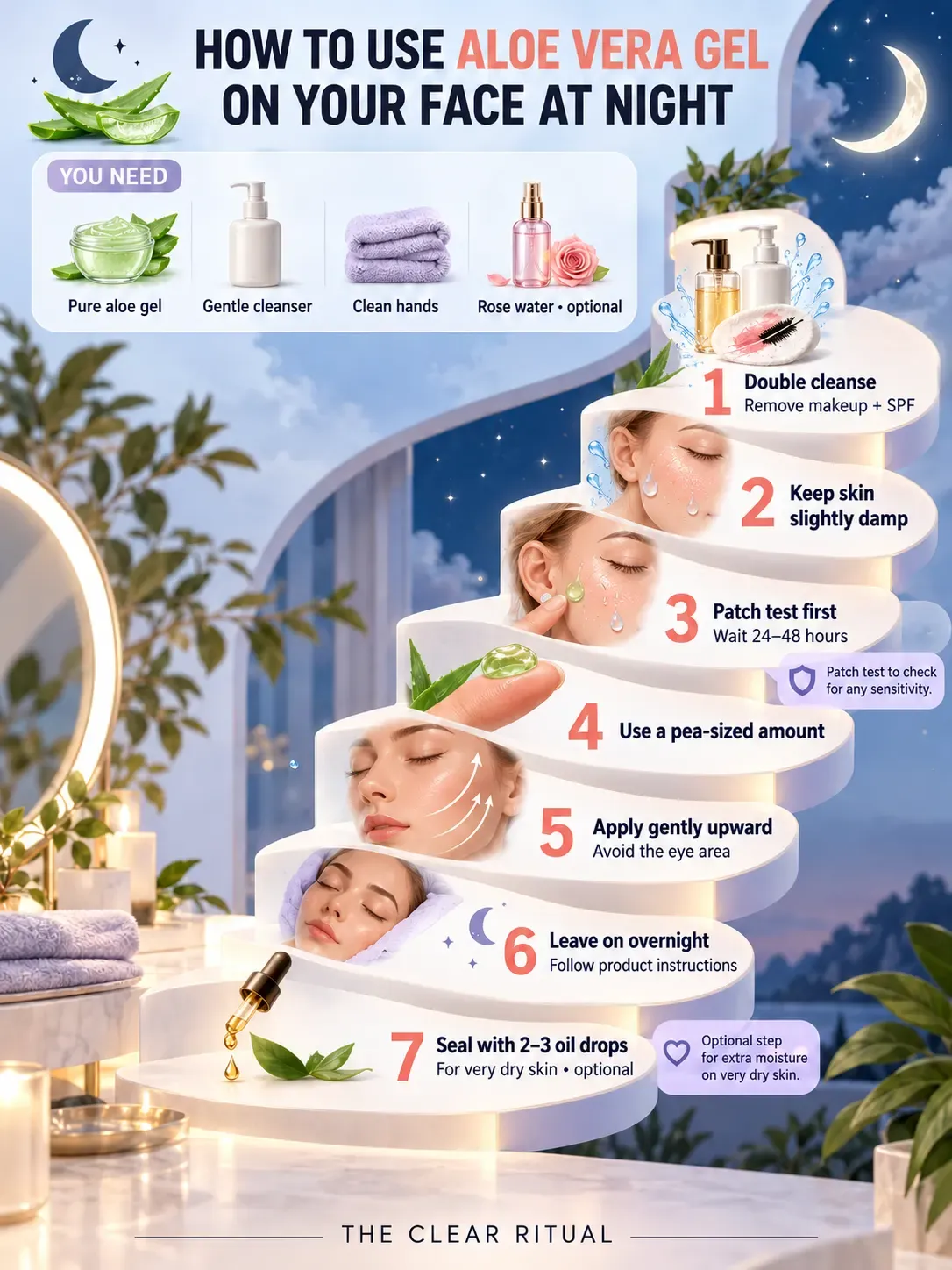
Follow these steps in order for the most effective overnight results. Each step has a specific purpose; skipping one can reduce absorption or cause irritation.
What You Need Before Starting:
- Pure aloe vera gel (fresh from leaf or a product with ≥95% aloe content)
- A gentle, sulphate-free cleanser
- Clean hands or a soft spatula
- Optional: rose water toner for sensitive skin types
Step-by-Step Process:
Double cleanse your face; Remove makeup or sunscreen first, then cleanse with a mild face wash. This removes surface impurities that would block aloe vera absorption. Clean skin helps the product spread evenly.
Pat skin dry (not bone dry); Leave skin slightly damp. Aloe vera gel penetrates better into hydrated skin because it is water-soluble. Completely dry skin may absorb less of the active compounds.
Perform a patch test if first-time use; Apply a small amount behind the ear or on the inner wrist. Check the area over 24–48 hours for redness, itching, or irritation before applying more widely. Clear Ritual advises this step for anyone with sensitive or reactive skin.
Take a pea-sized to small-coin-sized amount; Less is more with aloe vera gel. Too much product sits on the surface and can feel sticky or cause mild congestion in some skin types.
Apply in upward, circular motions; Start from the jaw and move upward toward the forehead. This technique reduces drag on the skin and supports lymphatic circulation. Avoid the immediate eye area.
Leave on overnight; do not rinse; Aloe vera gel functions as an overnight treatment because a simple aloe gel may feel lightweight. Follow the instructions for your specific product.
Follow with a facial oil if your skin is very dry; Apply 2–3 drops of a lightweight oil (rosehip or squalane) on top of the aloe vera layer to seal in moisture. This is optional and suitable for dry or dehydrated skin types.
Common Mistakes to Avoid:
- Using aloe vera gel with added fragrances, alcohol, or artificial colours; these can irritate skin overnight
- Applying to unwashed skin; blocks absorption and may cause breakouts
- Using too much product; causes stickiness without added benefit
- Storing fresh aloe in non-refrigerated conditions; active compounds degrade within 24 hours at room temperature
- Mixing directly with citrus-based ingredients overnight; increases photosensitivity risk
How Aloe Vera Gel Works on Facial Skin: The Mechanism
Aloe vera gel improves facial skin because its polysaccharide chains form a thin film on the skin surface that slows transepidermal water loss (TEWL). Simultaneously, smaller molecular compounds like acemannan penetrate the epidermis to stimulate fibroblast activity, which supports collagen and elastin production.
Skin hydration also depends on a healthy skin barrier repair.
The skin-level mechanism, step by step:
- Film formation; Mucilaginous polysaccharides coat the skin surface, reducing moisture evaporation by creating a breathable barrier
- Epidermal penetration; Low-molecular-weight compounds including gibberellins pass through the stratum corneum
- Fibroblast stimulation; Gibberellins bind to growth factor receptors and may increase collagen synthesis by approximately 6–8 times in laboratory models [2]
- Anti-inflammatory action; Acemannan and C-glucosyl chromone reduce the activity of inflammatory compounds (prostaglandins), which is why aloe vera gel calms redness and irritation
- Mild brightening; Some aloe-derived compounds have been studied for effects on pigmentation, but topical aloe gel is not an established treatment for dark spots
this mechanism is not known to be more active at night than during the day.
Key Benefits of Using Aloe Vera Gel on Your Face at Night
Applying aloe vera gel overnight delivers both immediate and cumulative skin benefits.
For persistent dark marks, learn more about post-inflammatory hyperpigmentation.
Short-term benefits (within 1–7 days):
- Reduced facial redness and inflammation; noticeable for some people
- Improved skin hydration; the gel may help skin feel temporarily more hydrated
- Cooling and soothing effect; particularly effective for sunburned or irritated skin
- Reduced surface oiliness; aloe vera's astringent properties may minimise pore appearance temporarily
Long-term benefits (4–12 weeks of consistent use):
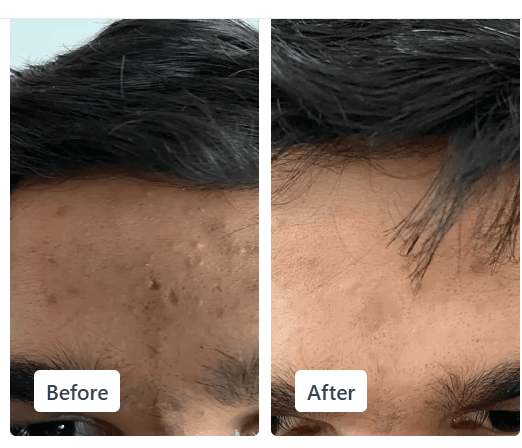
- Reduced hyperpigmentation; limited evidence for meaningful dark-spot or tan reduction
- Improved skin texture; smoother surface due to mild exfoliation from salicylic acid traces
- Reduced appearance of fine lines; attributed to temporary hydration that can soften the appearance of fine lines
- Even skin tone; post-acne marks may need targeted treatment and daily sun protection
- Strengthened skin barrier; reduced sensitivity and reactivity over time
Who benefits most from nighttime aloe vera gel use:
- People with oily or combination skin (lightweight, non-comedogenic hydration)
- Those with acne-prone skin (anti-inflammatory and mild antibacterial properties)
- Individuals with sun-exposed or tanned skin (tyrosinase inhibition for brightening)
- People with sensitive skin seeking minimal-ingredient overnight care
Aloe Vera Gel vs. Other Overnight Skincare Alternatives
| Feature | Aloe Vera Gel | Hyaluronic Acid Serum | Retinol Cream | Coconut Oil |
|---|---|---|---|---|
| Pore-clogging potential | Depends on formulation and skin response | Depends on formulation and skin response | Depends on formulation and skin response | Depends on formulation and skin response |
| Best for skin type | All types, esp. oily/combination | Dry and dehydrated | Ageing, acne-prone | Very dry, not acne-prone |
| Anti-inflammatory | Yes | Minimal | No (may irritate) | Mild |
| Brightening effect | Yes (via aloin) | No | Indirect | No |
| When results appear | Varies by product and concern | Varies by product and concern | Varies by product and concern | Varies by product and concern |
| Irritation risk | Low | Very low | Moderate–high | Low |
| Cost range | Low–moderate | Moderate | Moderate–high | Low |
| Suitable for sensitive skin | Yes | Yes | Not recommended | Patch test required |
Clear Ritual's recommendation: Aloe vera gel may suit people who prefer a lightweight hydrating layer, but suitability depends on the complete formula and individual skin sensitivity. For advanced anti-ageing goals, aloe vera can be layered under a retinol-based product on alternate nights.
You can also compare options in our guide to moisturiser for acne-prone skin.
What the Research Says About Aloe Vera Gel on the Face
Research on aloe vera includes laboratory studies and small clinical studies of particular preparations. Some formulations may help with skin hydration or soothing, but findings cannot be generalised to every raw or commercial aloe gel. Evidence is insufficient to promise collagen growth, pigmentation removal, or superior overnight results.
Aloe Vera Gel Application by Skin Concern: Which Approach to Use
Different skin concerns call for slightly different application approaches with aloe vera gel.
| Skin Concern | Application Method | Additional Step |
|---|---|---|
| Oily / acne-prone skin | Thin layer, no oil on top | Avoid adding essential oils if skin is sensitive |
| Dry / dehydrated skin | Medium layer + seal with facial oil | Use rosehip or squalane oil on top |
| Hyperpigmentation / tan | Apply only to affected areas or full face | Consistent daily use for minimum 6 weeks |
| Sunburn / irritation | Apply generously, refrigerate gel first | Avoid any additional actives overnight |
| Ageing / fine lines | Full-face thin layer under moisturiser | Alternate with retinol on different nights |
| Sensitive / reactive skin | Minimal amount, patch test first | Avoid mixing with any other actives |
Expert Tips and Best Practices for Overnight Aloe Vera Gel Use
these best practices significantly improve outcomes for nighttime aloe vera gel application.
Refrigerate your aloe vera gel; Cool gel provides an additional anti-inflammatory effect and slows degradation of active compounds. Store in the refrigerator door, not the freezer.
Use it consistently for at least 4 weeks; Visible results from aloe vera gel require consistent nightly application. Sporadic use does not allow the cumulative collagen and brightening mechanisms to fully activate.
Choose 95%+ aloe vera content products; Many commercial gels contain as little as 10% actual aloe vera. Read ingredient labels; "aloe barbadensis leaf juice" should appear first or second on the INCI list.
Vitamin C serum may be used in the same routine if both products are tolerated; While both are beneficial, there is no general rule that aloe vera deactivates vitamin C. Introduce products gradually if your skin is sensitive.
Apply before any heavier moisturiser; Aloe vera gel has a thin, water-based consistency. Always apply it before heavier creams or oils to avoid trapping it beneath an occlusive layer that prevents penetration.
Use a clean applicator or freshly washed hands; Bacteria transferred from hands can contaminate the gel and increase breakout risk over time.
Avoid application immediately after exfoliation; Freshly exfoliated skin is more permeable; applying aloe vera on the same night as physical or chemical exfoliation may cause mild stinging. If skin is stinging or irritated, pause new products until it settles.
Track your skin's response weekly; photograph their skin in consistent lighting once per week to objectively assess changes over a 6–8 week period.
How Long Does Aloe Vera Gel Take to Show Results on the Face?
Results from overnight aloe vera gel application appear in stages, and timelines vary depending on skin concern and consistency of use.
Week 1–2: Skin feels more hydrated and looks less dull in the morning. Redness and irritation are noticeably reduced within the first few applications.
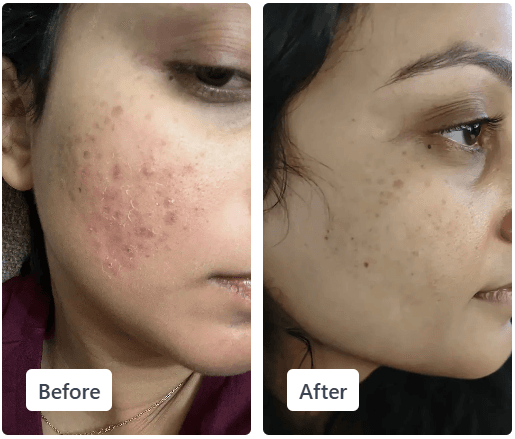
Week 3–4: Skin texture begins to improve. Pores may appear smaller due to reduced surface oiliness. Early signs of reduced acne marks may become visible.
Week 5–8: Hyperpigmentation, sun tan, and dark spots show measurable lightening. Skin tone appears more even. Fine lines may look softened due to improved collagen activity.
Week 9–12: Long-term users typically report a significantly stronger skin barrier, reduced breakout frequency, and sustained moisture retention throughout the day.
Results vary depending on skin type, age, the concentration of aloe vera in the product used, and whether the application routine is followed consistently. Clear Ritual notes that individuals with darker skin tones may require up to 10–12 weeks to see noticeable brightening effects due to higher baseline melanin activity.
Understand What Your Skin Needs
Take the Clear Ritual Skin Test to identify your skin type, concerns, and potential triggers before building your routine.
Take the Free Skin Test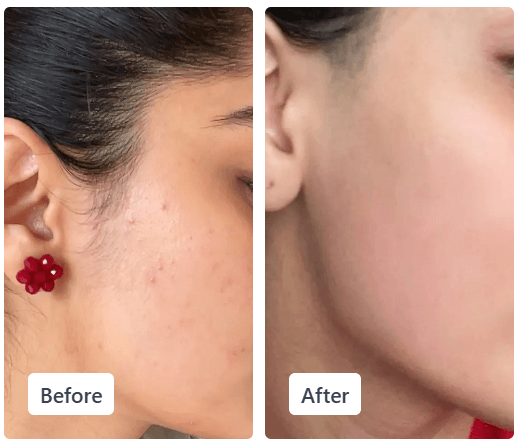
Frequently Asked Questions About Using Aloe Vera Gel on Face at Night
Q. What are the benefits of using aloe vera gel on my face overnight?
A. Aloe vera gel may provide lightweight hydration and a soothing sensation. Evidence does not show that overnight application is necessarily more effective than daytime use.
Q. Can aloe vera help with hyperpigmentation?
A. Some aloe-derived compounds have been studied for effects on pigmentation, but there is limited clinical evidence that ordinary aloe vera gel reliably fades dark spots. Daily sunscreen and proven treatments are more important.
Q. Can aloe vera remove tan?
A. Aloe vera may soothe sun-exposed skin, but it is not a proven tan-removal treatment. Use broad-spectrum sunscreen to prevent further tanning and pigmentation.
Q. How do I glow with aloe vera gel in 7 days?
A. A lightweight gel may temporarily make skin look fresher by improving hydration. It cannot reliably remove pigmentation or transform skin tone in seven days.
Q. Is it safe to leave aloe vera gel on my face all night?
A. Many people tolerate a simple aloe vera gel overnight, but contact irritation or allergy can occur. Patch test first, avoid broken skin, and rinse it off if you develop burning, itching, or redness.
Q. Should I apply aloe vera gel before or after moisturiser?
A. Apply a thin layer of aloe vera gel after cleansing, then use moisturiser if your skin needs additional hydration. Follow product directions and adjust to your skin response.
Q. Can I use aloe vera gel every night?
A. Yes, if your skin tolerates it. Start with a small amount, monitor for irritation, and stop using it if redness, itching, or burning develops.
Conclusion
Aloe vera gel can be a simple overnight hydrating step, especially when used in a gentle, fragrance-free formula. Cleanse first, apply a thin layer, and use moisturiser as needed. Avoid expecting guaranteed results for dark spots, wrinkles, or acne, and seek professional advice for persistent concerns.
Disclaimer: This article provides general skincare information and does not replace advice from a qualified healthcare professional.
Editorial Standards
Clear Ritual has Strict sourcing guidelines to ensure our content is accurate and current. We rely on peer-reviewed studies, academic research institutions, and medical associations. We strive to use primary sources and refrain from using tertiary references. See a mistake? Learn More about our Editorial Standards.
Related Articles
Acne in Perimenopause: Hormonal Changes Behind Adult Breakouts
Published 16 July 2026
Acne on Cheeks: Causes, Treatment & What Actually Works
Published 17 July 2026
Acne on Chin: Causes, Types, and How to Treat It
Published 17 July 2026
Acne on Neck: Why It Appears and How to Treat It by Cause
Published 10 August 2026