Seborrheic Dermatitis on Face: Causes, Symptoms, and Treatment
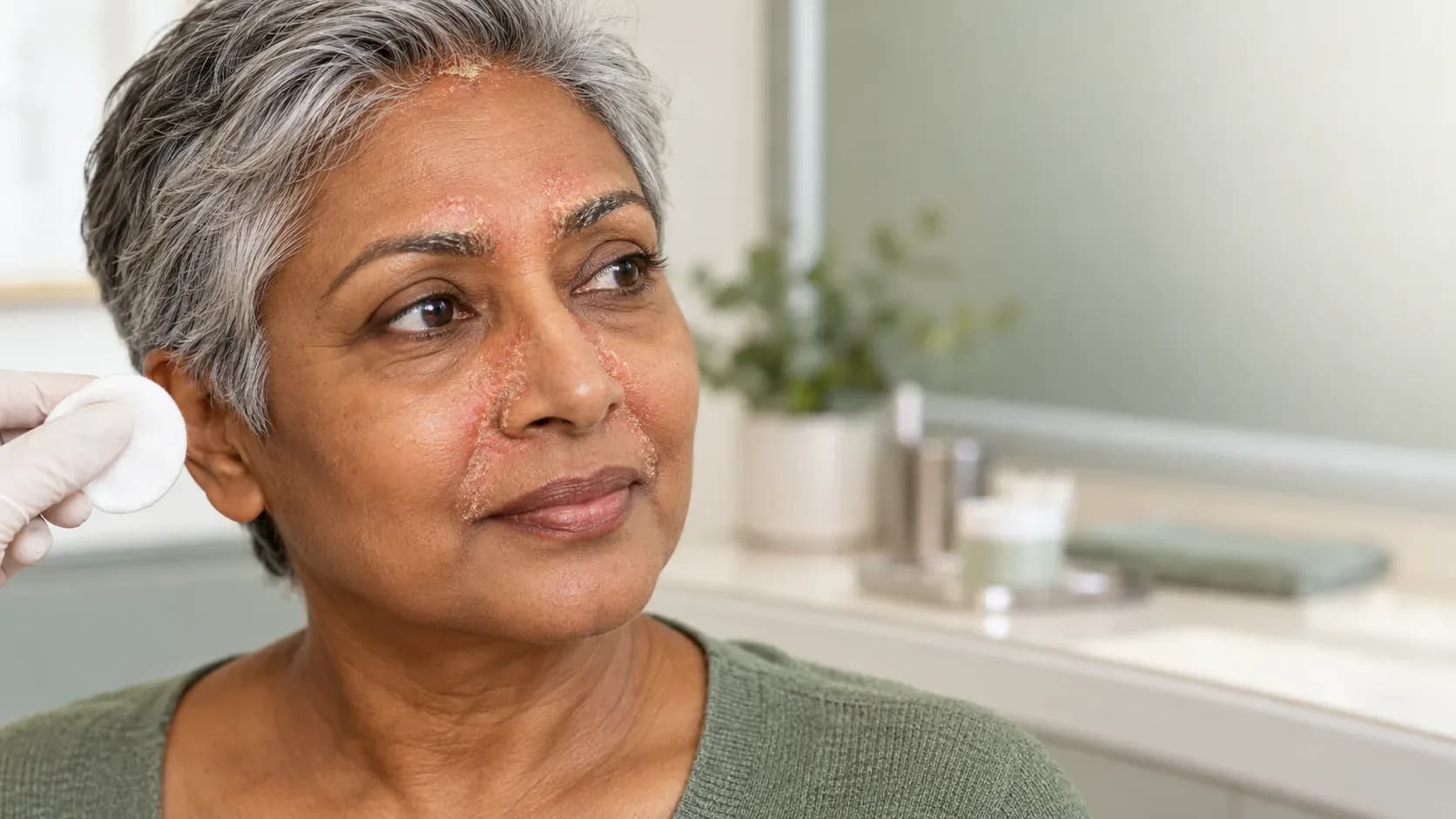
Quick Answer: Seborrheic dermatitis on the face is a long-term skin condition that causes red patches with white or yellow flaky scales. It appears where your skin has the most oil glands, like your eyebrows, the sides of your nose, and your hairline. It isn’t contagious, and poor hygiene doesn’t cause it.
Oil, your skin barrier, and your immune reaction to Malassezia, a yeast that lives on healthy skin, all play a part. You can’t cure it for good, but antifungal creams like ketoconazole 2% and short courses of mild anti-inflammatory creams, used as your dermatologist directs, can keep flare-ups under control.
What Is Seborrheic Dermatitis on the Face?
Seborrheic dermatitis commonly affects oil-rich areas of your skin. On your face, it may appear around your eyebrows, sides of your nose, hairline, ears, or other oil-rich areas. You may notice redness, itching, scaling, or flaky patches. The scales can look dry or greasy, and they’re often white or yellow.
Seborrheic dermatitis is not simply caused by having “dirty” or excessively oily skin. Current research suggests that several factors work together, including the skin barrier, immune response, your skin’s oil (sebum), and the tiny organisms that live on your skin.
Researchers also think Malassezia, a yeast that lives on healthy skin, plays a role, although having more of it isn’t the whole story.
Causes of Seborrheic Dermatitis on the Face
No single thing causes seborrheic dermatitis. It develops through an interaction between your skin’s natural oil, the microbes on your skin, and your genes.
Malassezia lives on healthy skin. If you’re prone to it, your skin reacts to what Malassezia leaves behind when it breaks down your skin oil. That reaction causes redness and flaking. This is why wiping out the yeast isn’t the whole fix.
Researchers have linked these factors that raise your risk of seborrheic dermatitis:
1. Hormone-Driven Oil Changes (Androgens)
- Hormones called androgens (male-type hormones that everyone has) make your oil glands bigger and more active.
- It often first shows up in babies, probably because of hormones passed on from the mother. It can return after puberty and appear at any point in adulthood.
- Most people with seborrheic dermatitis have normal hormone levels. Their glands simply respond to normal hormones.
2. Your Genes
- Researchers have found changes in a few genes, such as ZNF750, in rare cases. Most people with seborrheic dermatitis don’t have a gene change like this, and you don’t need a gene test to get diagnosed.
- When these genes change, they can disrupt the structural skin barrier. This structural breakdown lets irritating substances from Malassezia seep in and inflame your skin.
3. Your Nervous System
- Seborrheic dermatitis is more common in people with Parkinson’s disease. If you have Parkinson’s disease, your skin may make more oil. Doctors think this comes from changes in the nerves that control your glands.
- Less facial movement may also let oil build up, making flare-ups more likely. Most people with seborrheic dermatitis don’t have a nerve condition.
4. A Weakened Immune System
- In most people, it starts with the skin reacting strongly to Malassezia. A weak immune system, for example from HIV, an organ transplant, or chemotherapy, makes it more likely and often more severe.
- If your immune system is weak, flare-ups often hit harder and take longer to clear.
What Can Trigger Seborrheic Dermatitis on the Face?
Certain things can set off a flare-up. These can include:
- Cold or dry weather
- Stress and fatigue
- Some medicines (ask your doctor before you stop any)
- Harsh soaps or dry air that strip your skin
- Changes in your skin barrier due to alcohol-based toners, fragranced products, and strong exfoliants.
Triggers may vary from person to person. Note down what changed before each flare, such as stress, poor sleep, a new product, or the weather.
Seborrheic Dermatitis Symptoms on Face
The seborrheic dermatitis symptoms on your face can range from mild flaking to red, inflamed patches. You may see:
- Red or pink patches. On brown or darker skin, they may look lighter or darker than the surrounding skin, and the redness can be hard to see.
- Flaking or scaling
- Itching or irritation
- White or yellowish scales that look dry or greasy.
- Patches that keep coming back in the same spots.
Note: Flaking on the scalp (dandruff) alongside facial patches points strongly to seborrheic dermatitis.
Does Seborrheic Dermatitis Cause White Patches on the Face?
Seborrheic dermatitis can leave white flakes on red, irritated skin. After a flare heals, it can also leave lighter patches of skin, which are easier to see on brown or darker skin. They usually fade with time.
Not every white patch on your face is seborrheic dermatitis. Lighter patches can come from pityriasis alba (a mild eczema-type condition), vitiligo, or a fungal infection called tinea versicolor.
If you notice patches that have sharp edges, don’t fade, or keep spreading, see a dermatologist before you treat them. They can look at the patches and tell you what’s actually happening and suggest the right treatment.
Stages of Seborrheic Dermatitis on the Face
Seborrheic dermatitis does not follow a fixed set of medical stages. Instead, it tends to have cyclical phases, with periods when your skin feels better and times when symptoms flare up.
- You may first notice mild flaking, irritation, or itchiness.
- During a flare, redness, scaling, and itching get worse.
- With the right treatment and care, the symptoms can settle, but they may come back.
Note:Symptoms typically begin to clear within a few days to two weeks of starting proper antifungal treatment.
Best Treatment for Seborrheic Dermatitis on Face
Treatment for seborrheic dermatitis on your face depends on the severity of your symptoms and how severe your symptoms are and which areas they affect.
- The treatment commonly focuses on reducing inflammation and calming it, and reducing Malassezia on your skin.
- Dermatologists often start with topical antifungal creams, such as ketoconazole 2% for facial seborrheic dermatitis.
- Depending on your symptoms, a dermatologist may also recommend a short course of a mild steroid cream, or a non-steroid cream such as tacrolimus or pimecrolimus.
Note: Do not reach for a strong steroid cream just because it clears redness fast. Strong steroid creams can thin your facial skin, show tiny blood vessels, cause acne-like bumps, and bring redness back when you stop, so use any steroid cream only as directed by a healthcare professional.
How to Treat Seborrheic Dermatitis on the Face at Home
Your daily routine can support treatment, especially when your skin is irritated. Try these at home:
- Wash with lukewarm water and a mild cleanser. Don’t scrub, and pat dry.
- Use a fragrance-free moisturiser that doesn’t clog pores or sting.
- Avoid picking or scratching flaky patches.
- Introduce new skincare products one at a time.
- Exfoliating acids can sting inflamed facial skin, so do a patch test.
- Stop using anything that stings or burns.
- Follow the treatment schedule your dermatologist recommends.
Keep your routine short while your skin is inflamed. Adding several new active ingredients, such as acids or retinoids at once, can make it harder to tell what helps and what irritates your skin.
Natural Remedies for Seborrheic Dermatitis on the Face
Natural doesn’t always mean gentle, and essential oils in particular can irritate inflamed skin. Tea tree oil and aloe vera are commonly searched as natural remedies. However, evidence is limited, with small studies mainly looking at short-term use or scalp dandruff rather than facial seborrheic dermatitis. Tea tree oil may also cause irritation or allergic reactions.
Gentle cleansing, a fragrance-free moisturiser, and staying away from irritants will do more for you than most home remedies. Natural options don’t replace treatment from your dermatologist. If your patches keep coming back, see one instead of trying remedy after remedy.
How to Control Seborrheic Dermatitis on the Face?
You may not be able to prevent every flare, but you can make the condition easier to manage. Start by identifying what triggers your symptoms.
Keep your skincare routine simple, and follow your prescribed treatment consistently. Ask your dermatologist how long to use each medicine and whether to keep a lighter routine going once your skin clears. Because seborrheic dermatitis can recur, the goal is to keep flare-ups under control, not to cure it once.
Clear Ritual’s Perspective on Seborrheic Dermatitis on the Face
At Clear Ritual, we believe skincare works best when it matches your skin. Your skin can respond differently to the same ingredient or routine, so we start by finding out what your skin needs.
The Clear Ritual Skin Test looks at your skin type, breakout triggers, and root concerns. Then you can order a doctor-reviewed treatment kit built for your skin. We focus on understanding your skin, keeping your routine manageable, and providing expert-designed skincare.
Understand What Your Skin Needs
Take the free skin test to assess your skin type, sensitivity, barrier concerns, and breakout triggers, then build a routine suited to your skin.
Take the Free Skin Test
Frequently Asked Questions
Q: Can seborrheic dermatitis on the face go away permanently?
A: For most adults, no. It’s a long-term condition that tends to come back. Treatment can keep your skin clear for long stretches.
Q: Can you suddenly develop seborrheic dermatitis on your face?
A: Yes. It can show up for the first time at any age, even if you have never noticed it before. It may happen due to a new skincare product, a new medicine, cold or dry weather, stress and fatigue.
Q: Can seborrheic dermatitis cause white patches on your face?
A: Yes. It can cause white, flaky scales. After a flare heals, it can also leave lighter patches of skin, which are easier to see on brown or darker skin. They usually fade with time. If they don’t, see a dermatologist.
Q: How can you control seborrheic dermatitis on your face?
A: Follow the treatment your dermatologist recommends, keep your skincare routine gentle, avoid known irritants, and watch for factors that seem to trigger flare-ups.
Q: How can you cure seborrheic dermatitis on your face?
A: You can’t cure it, but you can clear a flare. Your dermatologist may start with an antifungal cream for a few weeks, add a short course of a mild anti-inflammatory cream if needed, and then move you to a lighter routine to keep it away.
References
- Kim GK. Seborrheic Dermatitis and Malassezia species: How Are They Related? J Clin Aesthet Dermatol. 2009 Nov;2(11):14-7. PMID: 20725575; PMCID: PMC2923939.
- Turchin I, Albrecht L, Hanna S, et al. Current Understanding of Seborrheic Dermatitis: Epidemiology, Burden of Disease, and Pathophysiology. J Cutan Med Surg. 2025;29(4_suppl):5S-15S. doi:10.1177/12034754251368840
- Dall’Oglio F, Nasca MR, Gerbino C, Micali G. An Overview of the Diagnosis and Management of Seborrheic Dermatitis. Clin Cosmet Investig Dermatol. 2022;15:1537-1548. Published 2022 Aug 6. doi:10.2147/CCID.S284671
- Chang CH, Chovatiya R. More yeast, more problems?Reevaluating the role of Malassezia in seborrheic dermatitis. Arch Dermatol Res. 2024;316(4):100. Published 2024 Mar 12. doi:10.1007/s00403-024-02830-7
- LeFevre NM, Braudis K, Feigenbaum LS. Seborrheic Dermatitis: Diagnosis and Treatment. Am Fam Physician. 2025;112(2):166-173.
- Seborrheic dermatitis: Diagnosis and treatment - American Academy of Dermatology Association (2024)
- Navarro Triviño FJ, Velasco Amador JP, Rivera Ruiz I. Seborrheic Dermatitis Revisited: Pathophysiology, Diagnosis, and Emerging Therapies-A Narrative Review. Biomedicines. 2025 Oct 9;13(10):2458. doi: 10.3390/biomedicines13102458. PMID: 41153741; PMCID: PMC12562114.
Disclaimer: This article is for general educational purposes and is not a substitute for personalised medical advice. Consult a qualified dermatologist for persistent, spreading, painful, or treatment-resistant facial symptoms.
Editorial Standards
Clear Ritual has Strict sourcing guidelines to ensure our content is accurate and current. We rely on peer-reviewed studies, academic research institutions, and medical associations. We strive to use primary sources and refrain from using tertiary references. See a mistake? Learn More about our Editorial Standards.
Related Articles
Acne in Perimenopause: Hormonal Changes Behind Adult Breakouts
Published 16 July 2026
Acne Caused by Makeup: Understanding Acne Cosmetica
Published 17 July 2026
Pimples After Waxing: Causes, Treatment, and Prevention
Published 12 October 2026

Aanya’s Blemish-Prone Skin Journey With Clear Ritual
Published 9 September 2026