Why Does a Pimple Keep Coming Back and What You Can Do About It
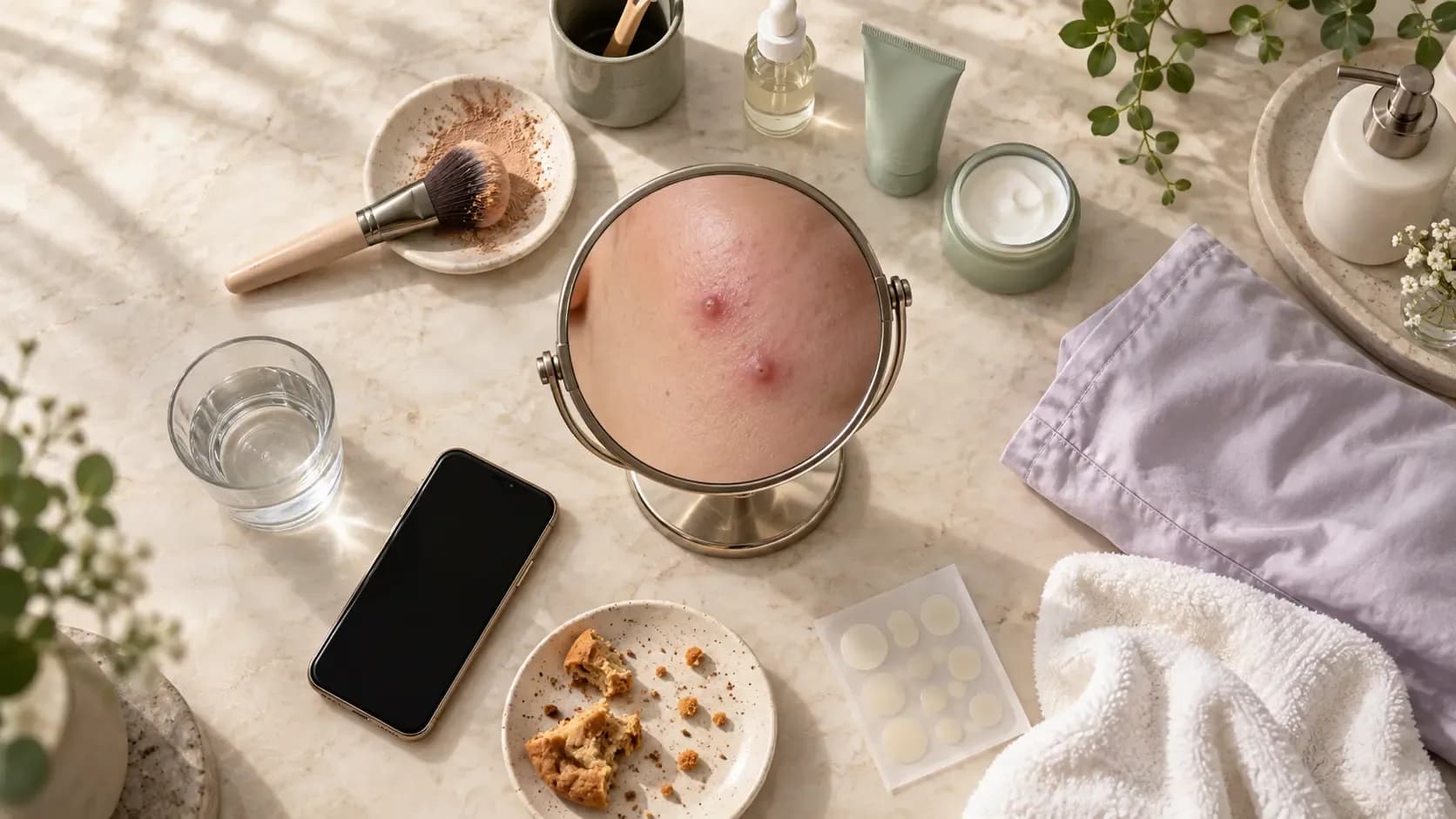
Treating the visible pimple does not stop the next one from forming. Most recurring pimples refill because the follicle itself is still damaged, sebum production remains elevated, and the bacterial environment inside the pore was never fully cleared. The conditions underneath the skin simply have not changed yet.
What Is a Recurring Pimple?
A recurring pimple is a pimple that returns to the same follicle , or keeps refilling after it has been popped , because the root triggers remain active beneath the surface even when the skin looks healed.
Those root triggers are:
- Excess sebum produced by hormonally or metabolically stimulated sebaceous glands
- A compromised follicle wall that makes refilling almost automatic after popping or picking
- Microcomedones , microscopic clogs invisible to the naked eye , that persist between visible breakouts
- Low-grade inflammation that keeps the follicle primed for another immune reaction
- External habits such as touching, occlusive products, and friction that re-introduce bacteria daily
- Internal triggers including diet, stress, and poor sleep that keep oil production high regardless of topical care
According to Clear Ritual's skin science team, recurring pimples are not a personal failure. They are a biological cycle that continues until the internal conditions driving it are changed.
What Happens Beneath the Surface When a Pimple Returns?
When a pimple forms, inflammation occurs deep within the hair follicle. The visible bump represents only the surface endpoint of a process that began days earlier.
Once that pimple heals, the follicle often remains compromised. The sebaceous gland attached to it may continue producing excess oil, and the follicle lining can still shed dead cells faster than they exit the pore. This creates a persistent environment where another blockage forms easily , the same pore that just cleared can refill with sebum and cellular debris within days.
Add bacteria , particularly Cutibacterium acnes, which thrives in oxygen-poor, oil-rich spaces , and the immune system responds with inflammation again. The cycle perpetuates because the underlying conditions never fully resolved.
Clear Ritual's approach begins here: understanding that what you see on the skin's surface is the last stage of a process that started much earlier.
Why Does Oil Production Stay Elevated?
Sebaceous glands respond to androgens , the hormones that regulate how much oil your skin produces. When androgen levels fluctuate due to menstrual cycles, stress, or metabolic factors, sebum output increases. More oil means more opportunities for pores to clog.
Stress compounds this. Elevated cortisol triggers inflammatory pathways and stimulates sebaceous activity directly. Poor sleep disrupts hormone regulation further, keeping oil production high even when surface hygiene is consistent. A 2017 review in Clinics in Dermatology confirmed that psychological stress activates the hypothalamic-pituitary-adrenal axis, producing neuropeptides , including substance P , that act directly on sebocytes.
Diet plays an equally direct role:
- High-glycemic foods , white bread, sugary snacks, processed carbohydrates , spike insulin levels
- Insulin stimulates androgens, which directly increase sebum production
- Dairy products, particularly skim milk, have been associated with acne in some individuals due to hormones and bioactive molecules that influence oil glands
- A 2018 systematic review in the Journal of the Academy of Nutrition and Dietetics confirmed that insulin-like growth factor 1 (IGF-1) mediates the androgen-sebum pathway
If the internal hormone environment remains unstable, skin continues cycling through breakouts regardless of topical efforts.
Why Incomplete Pore Clearance Causes Pimples to Return
A pimple that looks healed externally may still harbour microcomedones , tiny clogs invisible to the naked eye. These precursor lesions sit beneath the skin's surface, waiting to evolve into full inflammatory papules or pustules. The skin appeared to clear, but the blockage never fully dissolved.
Over-cleansing worsens this cycle:
- Stripping the skin with harsh surfactants removes protective lipids from the outermost layer
- This damages the skin barrier and increases transepidermal water loss
- In response, sebaceous glands produce even more oil to compensate for perceived dryness
- The cycle intensifies rather than resolves
Under-cleansing creates the opposite problem:
- Sweat, pollution particles, and cosmetic residue accumulate on the skin
- These mix with sebum and create a sticky matrix that traps dead cells inside pores
- Bacterial colonies feed on this accumulated debris overnight
Balance is essential. A cleansing routine must remove excess without compromising barrier integrity. Clear Ritual recommends twice daily cleansing , no more, no less , using a gentle, non-stripping formula suited to your skin type.
How Lingering Inflammation Keeps Pimples Returning
Even after a pimple flattens, low-grade inflammation can persist within the follicle. Immune cells remain activated, and pro-inflammatory cytokines circulate in the tissue. This creates a hypersensitive environment where minor triggers , friction from a phone, slight pressure from sleeping on one side, or a single missed cleanse , provoke another breakout.
Post-inflammatory hyperpigmentation often signals this ongoing inflammation. The dark spots left behind indicate that melanocytes responded to inflammatory signals. The pigmentation itself does not cause new pimples, but it reflects an immune system still on alert and ready to react to minor disruptions.
Chronic stress feeds this inflammatory state. Cortisol does not just increase oil , it impairs skin barrier repair and prolongs immune activation. If stress remains constant, inflammation never fully subsides and skin stays reactive.
For this reason, Clear Ritual's personalised skin assessment looks beyond surface symptoms to identify whether ongoing inflammatory activity is a primary driver for a given individual.
Which External Habits Reinforce the Pimple Cycle?
Several everyday habits sustain the recurring-pimple cycle by continuously re-introducing bacteria or disrupting the follicle environment:
Face touching Hands transfer bacteria and oils to vulnerable pores with each contact. Resting a chin on a hand during work, adjusting hair, or rubbing eyes , habits that often go unnoticed , sustain bacterial loads that keep follicles infected.
Occlusive cosmetics and thick moisturisers Products containing comedogenic ingredients like coconut oil or certain silicones can trap sebum inside pores. Makeup left on overnight provides bacteria with nutrients and prevents natural desquamation , the process by which dead cells shed from pore walls.
Aggressive exfoliation or shaving Micro-tears in the skin trigger inflammatory responses and allow bacteria easier access to deeper follicle structures. Daily physical scrubs or high-percentage acids may perpetuate irritation rather than clear pores.
Masks, helmets, and headbands Friction and trapped heat against the skin , called acne mechanica , increases sweating and occludes pores. Sweat mixed with sebum creates an ideal bacterial breeding ground, particularly where fabric rubs repeatedly.
Why Do Some Pimples Keep Coming Back in the Same Spot?
Certain pores are anatomically more prone to clogging. Larger follicles , especially on the chin, jawline, and forehead , produce more sebum and have wider openings where debris accumulates more easily.
Follicle damage from picking: When pressure is applied to a pimple, the follicle wall can rupture, forcing bacteria and sebum into surrounding tissue. This spreads infection and inflammation beyond the original site. Even after healing, the damaged follicle remains structurally weaker and more susceptible to repeat blockages. A 2020 study in the Journal of the European Academy of Dermatology and Venereology found that mechanical follicle trauma accelerates comedone recurrence by disrupting the normal desquamation process.
Hormonal clustering: Androgen receptors concentrate along the jawline and chin. When hormone levels fluctuate predictably , such as in the week before menstruation , the same follicles activate repeatedly. If a breakout appears within 5–7 days before a period and in the same location each cycle, that predictability is evidence of hormonal acne rather than random bacterial infection.
Scar tissue narrowing the pore: Each inflammatory episode deposits scar tissue that physically narrows the pore exit, making the follicle structurally predisposed to future clogging. Once a follicle becomes inflamed repeatedly, the altered pore shape makes blockages more likely , not less.
Why Does a Pimple Keep Refilling? The Follicle Mechanism Explained
A pimple refills because popping it removes only the visible contents. It does not fix the damaged follicle, stop sebum production, or clear the bacteria inside. Within 24–72 hours, the same gland begins secreting fresh oil into an already-weakened channel, and the cycle restarts.
Here is exactly what happens at each stage:
- You pop the pimple. Pressure forces sebum and bacterial debris out through the pore opening , but also pushes some of that material sideways through micro-tears in the follicle wall, spreading bacteria into surrounding tissue.
- The follicle wall is now compromised. The lining is thinner and structurally weaker than an unpopped follicle. Scar tissue begins forming, which narrows the pore exit , making future blockages more likely, not less.
- Sebum production continues uninterrupted. The sebaceous gland is hormonally driven. Popping does nothing to slow it. Within hours, new oil begins accumulating in the damaged follicle.
- Bacteria repopulate quickly. Cutibacterium acnes thrives in the oxygen-poor, oil-rich environment of a freshly popped pore. Because the follicle wall is now thinner, bacteria can re-enter from surrounding skin faster than before.
- Inflammation reactivates. The immune system detects bacterial presence and sebum pooling , and responds again with the same inflammatory cascade. The pimple refills, often larger than the original.
The single-sentence summary: A pimple refills because popping treats the contents, not the container , and the container keeps producing oil.
For most people, a popped pimple begins refilling within 1–3 days. Superficial whiteheads may refill in under 24 hours. Deeper nodules or cysts may appear to clear for a week before re-forming because deeper pores take longer to accumulate enough sebum to become visible , but the refilling process starts almost immediately after popping.
Why Does Acne Keep Coming Back Even After Treatment? A Realistic Timeline
Treatment clears visible pimples , it does not automatically remove the conditions that produce them. If hormones, diet, or skin barrier function have not changed, acne will return after the treatment effect fades.
The table below shows what is actually happening under the skin during each phase of the recurring cycle:
| Timeframe | What You See | What Is Happening Under the Skin |
|---|---|---|
| Week 1–2 of treatment | Existing pimples flatten | Active inflammation is being suppressed; microcomedones remain |
| Week 3–4 | Skin looks clearest | Surface is cleared; sebaceous glands are still active |
| Week 6–8 | New breakout begins | Microcomedones formed during the "clear" period become visible |
| Month 3+ (no root-cause work) | Full cycle repeats | Hormones, diet, and barrier remain unchanged; the cycle restarts |
| Month 3+ (root-cause addressed) | Breakouts reduce in frequency | Internal triggers are reducing; follicle environment is changing |
Why does acne come back after antibiotics specifically? Antibiotics suppress C. acnes populations , but they do not reduce sebum production, change hormone levels, or repair follicle structure. Once a course ends, bacteria repopulate from surrounding skin. A 2019 review in Antibiotics (MDPI) found that C. acnes resistance rates have risen significantly over two decades of widespread antibiotic use in acne treatment. If the follicle environment , oily, oxygen-poor, structurally compromised , has not changed, bacterial overgrowth returns.
How long does it take to break the recurring acne cycle? Most people begin to notice a reduction in breakout frequency after 3 months of addressing both surface and internal triggers simultaneously. Visible stability , fewer new pimples, longer clear windows , typically appears by months 4–6. Skin that is deeply scarred or hormonally driven may require 6–12 months of consistent management.
The Role of the Skin Microbiome in Recurring Acne
The skin hosts millions of bacteria, fungi, and other microorganisms that form the skin microbiome. A balanced microbiome protects against pathogenic overgrowth. When this balance is disrupted , through antibiotic use, harsh cleansers, or environmental stressors , opportunistic bacteria like C. acnes proliferate unchecked.
A 2019 study in mSystems (Dagnelie et al.) found that individuals with acne had significantly lower microbiome diversity on the skin surface compared to clear-skinned controls, with C. acnes over-represented. Broad-spectrum topicals and frequent washing reduced diversity further, creating conditions for recurring bacterial dominance.
Diversity matters: a healthy microbiome contains multiple bacterial species that compete for resources and regulate each other. When diversity drops and C. acnes dominates, inflammation becomes chronic. Restoring balance requires more than killing bacteria , it involves supporting beneficial species through gentle care and avoiding practices that wipe out microbial diversity entirely.
Clear Ritual's personalised approach accounts for microbiome disruption as a distinct contributor to recurring acne patterns, separate from , but interconnected with , hormonal and dietary factors.
Surface Treatments vs. Root-Cause Approaches: What Actually Works?
Not all acne interventions work at the same level. The table below compares surface treatments against root-cause approaches, so you can see exactly what each one does and does not address.
| Approach | What It Targets | Works Alone? | Best For | Limitation |
|---|---|---|---|---|
| Salicylic acid (BHA) | Unclogs pores, dissolves dead cells | Partially | Mild blackheads, oily skin | Does not stop sebum overproduction |
| Benzoyl peroxide | Kills C. acnes bacteria | Partially | Inflammatory pustules | Does not address hormone-driven oil |
| Niacinamide | Reduces inflammation, regulates sebum | Partially | Sensitive, oily skin | Supportive only; not a standalone fix |
| Retinoids | Speeds cell turnover, prevents microcomedones | Partially | Persistent comedonal acne | Takes 12+ weeks; can purge initially |
| Dietary changes | Reduces insulin spikes, lowers androgen stimulation | Partially | Hormonal or diet-triggered acne | Requires consistency over months |
| Hormonal treatment (e.g. oral contraceptives, spironolactone) | Reduces androgen-driven sebum | Yes, for hormonal cases | Jawline/chin acne cycling with hormones | Prescription-only; not suitable for all |
| Personalised skin assessment | Identifies specific root-cause combination | Yes, as foundation | Anyone with recurring or treatment-resistant acne | Requires commitment to a full protocol |
The honest summary: most recurring acne is multi-factorial. Salicylic acid and benzoyl peroxide will manage active breakouts , but if elevated androgens keep oil production high, or if the skin barrier is compromised, the cycle restarts the moment you stop. Research supports a layered approach: surface treatment to manage symptoms, combined with internal and lifestyle work to shift root conditions.
In one 12-week trial, participants who combined dietary changes with topical retinoids had a 64% reduction in lesion count versus 45% for topical retinoids alone.
How to Stop a Pimple From Coming Back: 6 Steps That Address the Root Cause
These six steps work at different levels of the recurring-pimple cycle. They are ordered from immediate , what to do today , to structural , what changes the pattern over weeks.
Step 1: Stop popping. Every time a pimple is popped, the follicle wall is damaged and faster refilling is guaranteed. Use a warm compress for 5 minutes instead , it softens the plug and reduces inflammation without rupturing the follicle structure.
Step 2: Patch it, do not touch it. Hydrocolloid patches draw out fluid while protecting the pore from external bacteria and the mechanical habit of touching. They also prevent the pore from being re-exposed to the environment before it is ready to heal.
Step 3: Audit your cleansing routine. Twice daily , no more, no less. Over-cleansing (more than twice daily, or using sulphates) strips protective lipids and triggers compensatory sebum overproduction. Under-cleansing allows cosmetic residue, sweat, and pollution to accumulate and feed bacterial colonies.
Step 4: Add one active that works at the follicle level. Retinoids help prevent microcomedones by supporting normal cell turnover inside the follicle. Benzoyl peroxide can help reduce acne-causing bacteria, while salicylic acid can help clear surface-level congestion. Introduce only one active at a time and follow the product directions to limit irritation.
Step 5: Address the triggers that keep oil and inflammation elevated. Track whether breakouts follow poor sleep, ongoing stress, high-glycemic meals, menstrual cycles, friction, or particular products. Patterns recorded over several weeks can help identify which factors are most relevant to your skin.
Step 6: Stay consistent long enough to judge the routine. Acne care takes time because visible pimples can begin forming before they appear on the surface. Follow a suitable routine consistently and avoid changing several products at once. If your pimples remain painful, deep, or persistent, seek professional assessment.
When Should You See a Dermatologist?
Consider seeing a dermatologist if the same pimple repeatedly returns, your breakouts are deep or painful, over-the-counter care has not helped, or you are developing scars or persistent dark marks.
Professional assessment is also useful when breakouts follow a strong hormonal pattern or appear suddenly. A dermatologist can identify the type of acne involved and recommend care based on its severity and likely triggers.
Clear Ritual's Perspective on Recurring Pimples
A recurring pimple is rarely just a surface problem. Repeatedly drying, squeezing, or spot-treating the same bump may temporarily change how it looks without addressing why the follicle keeps becoming blocked or inflamed.
At Clear Ritual, we believe the useful first step is understanding the pattern behind your breakouts. This includes where they occur, how often they return, which products you use, and whether lifestyle or hormonal factors may be contributing.
Understand Why Your Pimples Keep Returning
Take the Clear Ritual Skin Test to identify your breakout pattern and build a routine suited to your skin's needs.
Take the Skin Test
Frequently Asked Questions
1. Why does the same pimple keep coming back?
The same pimple may return when the follicle remains prone to clogging or inflammation. Continued oil production, microcomedones, picking, friction, or hormonal patterns can contribute.
2. Why does a pimple refill after you pop it?
Popping removes some visible contents but does not stop oil production or fully clear the follicle. It can also damage the follicle wall, allowing inflammation to continue.
3. How can you stop a recurring pimple?
Avoid squeezing it, cleanse gently, use a suitable follicle-targeting active consistently, and identify relevant triggers. Persistent or painful recurring pimples should be assessed by a dermatologist.
4. How long does it take to reduce recurring breakouts?
Improvement generally takes consistent care over several weeks. The timeline varies with acne type, severity, treatment choice, and whether hormonal or lifestyle factors are involved.
5. Can recurring pimples leave dark marks or scars?
Yes. Repeated inflammation and picking can increase the likelihood of post-inflammatory hyperpigmentation and acne scarring.
References
- American Academy of Dermatology: Acne diagnosis and treatment
- American Academy of Dermatology: Why acne may not clear
- NICE: Acne vulgaris management recommendations
- NHS: Acne treatment
Disclaimer
This article is intended for general informational purposes and is not a substitute for personalised medical advice, diagnosis, or treatment. Consult a qualified dermatologist if you have persistent, painful, or recurring breakouts.
Editorial Standards
Clear Ritual has Strict sourcing guidelines to ensure our content is accurate and current. We rely on peer-reviewed studies, academic research institutions, and medical associations. We strive to use primary sources and refrain from using tertiary references. See a mistake? Learn More about our Editorial Standards.
Related Articles
Stress and Pimples: Is There a Real Connection?
Published 22 July 2026
Stress and Whiteheads: The Hidden Skin–Mind Connection
Published 22 July 2026

Sweat, Pollution & Whiteheads: Why Your Environment Matters
Published 22 July 2026

How Hormones Trigger Whiteheads (Puberty, PCOS, Stress & Periods)
Published 22 July 2026