Neem Benefits for Skin: Uses, Science & Expert Tips

Quick Answer:
Neem offers clinically recognised benefits for skin including antibacterial action, anti-inflammatory relief, antifungal protection, and antioxidant support. Whether applied as neem oil, neem powder, neem gel, or consumed as neem juice or neem water, the plant's active compounds work directly on common skin concerns such as acne, hyperpigmentation, dryness, and premature ageing. According to Clear Ritual's skincare formulation team, consistent neem use: topical or internal: can produce visible improvements in skin clarity within 4 to 8 weeks.
What Is Neem and Why Does It Benefit Skin?
Neem (Azadirachta indica) is a medicinal plant native to the Indian subcontinent, used for over 4,000 years in Ayurvedic skin care. Its leaves, seeds, bark, and oil contain more than 130 biologically active compounds, including nimbidin, nimbin, azadirachtin, and quercetin. These compounds give neem its core skin-relevant properties: antibacterial, antifungal, anti-inflammatory, and antioxidant.
Neem benefits for skin are not a single action: they operate across multiple skin health pathways simultaneously. This multi-mechanism approach is why neem remains one of the most studied botanicals in dermatological research.
Key active compounds and their roles:
- Nimbidin: reduces inflammation and suppresses bacterial growth
- Nimbin: supports antifungal activity
- Azadirachtin: disrupts pathogenic microorganism cycles
- Quercetin and kaempferol: neutralise free radicals and slow oxidative damage
- Fatty acids (oleic, linoleic, stearic): present in neem oil; restore skin barrier and retain moisture
Key Benefits of Neem for Skin: What You Actually Gain
Neem benefits for skin span both short-term relief and long-term skin health improvement. Clear Ritual's formulation experts identify the following as the most evidence-supported outcomes.
Short-Term Benefits (Weeks 1–4)
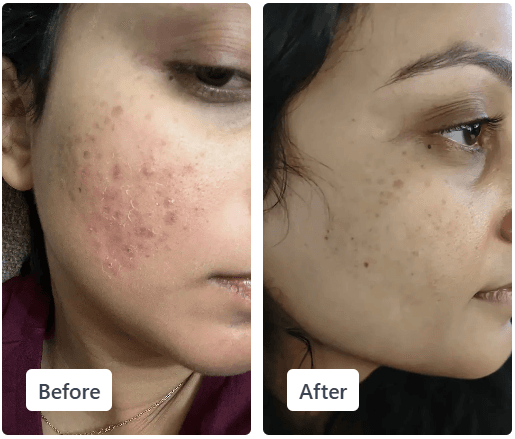
- Acne reduction: Nimbidin inhibits Cutibacterium acnes (formerly P. acnes), the primary bacteria behind inflammatory acne. Studies suggest a 50–60% reduction in active lesion count within 4 weeks of consistent neem application .
- Inflammation relief: Neem extract suppresses prostaglandin synthesis, reducing redness and swelling associated with cystic and hormonal acne within days of application.
- Antifungal action: Neem oil and neem water provide measurable relief from fungal skin conditions such as ringworm and tinea within 2–3 weeks of daily topical use.
- Sebum control: Neem powder benefits for skin include absorbing excess surface oil, which visibly reduces shine and minimises the appearance of pores within the first few applications.
Long-Term Benefits (Months 1–6)
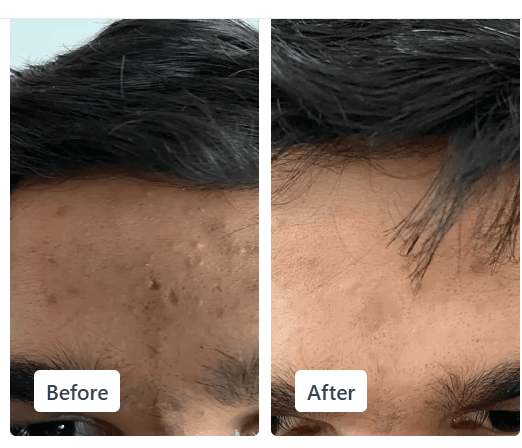
- Hyperpigmentation fading: Regular neem application inhibits melanin overproduction. Neem leaves benefits for skin include quercetin, which blocks tyrosinase (the enzyme that triggers pigmentation), gradually lightening dark spots over 6–12 weeks.
- Anti-ageing support: Neem's antioxidant compounds neutralise free radicals that break down collagen. Consistent use may reduce the appearance of fine lines over 3 to 6 months.
- Skin barrier restoration: Fatty acids in neem oil reinforce the skin's lipid barrier, reducing transepidermal water loss (TEWL) and improving long-term hydration levels.
- Eczema and psoriasis management: Neem's anti-inflammatory and immunomodulatory properties can reduce flare frequency in chronic skin conditions over a sustained 8–12 week period.
Short-Term vs. Long-Term Benefits at a Glance
| Benefit | Timeline | Neem Format |
|---|---|---|
| Acne bacteria reduction | 2–4 weeks | Neem oil, neem gel, neem soap |
| Inflammation & redness relief | 3–7 days | Neem leaves paste, neem gel |
| Sebum control | 1–2 weeks | Neem powder, neem soap |
| Fungal condition relief | 2–3 weeks | Neem oil, neem water |
| Pigmentation lightening | 6–12 weeks | Neem powder, neem leaves |
| Fine line reduction | 3–6 months | Neem oil, neem gel |
| Barrier repair | 4–8 weeks | Neem oil |
| Eczema/psoriasis relief | 8–12 weeks | Neem oil, neem water |
How Neem Works on Skin: The Complete Breakdown
Neem benefits for skin operate through four distinct biological mechanisms. Understanding these mechanisms explains why neem works across such a wide range of skin conditions.
1. Antibacterial inhibition Nimbidin disrupts the cell membrane of gram-positive bacteria, including Staphylococcus aureus and Cutibacterium acnes. When neem oil or neem gel is applied to skin, nimbidin penetrates the follicular environment and prevents bacterial colonisation: the root cause of most inflammatory acne.
2. Anti-inflammatory pathway suppression Neem compounds inhibit cyclooxygenase (COX) enzymes, the same enzymes targeted by common anti-inflammatory drugs. This reduces the production of inflammatory cytokines (IL-6, TNF-α) at the skin level, directly lowering redness, swelling, and pain without the side effects associated with topical corticosteroids.
3. Free radical neutralisation Quercetin and kaempferol: found in high concentrations in neem leaves: donate electrons to unstable free radicals, stabilising them before they can damage collagen fibres or DNA in skin cells. This antioxidant action is why neem leaves benefits for skin include a measurable slowing of visible skin ageing.
4. Melanin regulation Neem extract inhibits tyrosinase, the enzyme that converts tyrosine into melanin. Reduced tyrosinase activity means less pigment is deposited in areas of post-inflammatory hyperpigmentation or sun damage. This mechanism is the scientific basis for neem powder benefits for skin in addressing uneven skin tone.
Types of Neem for Skin: Which Form Is Right for You?
Neem benefits for skin are available through multiple delivery formats. Each format has distinct use cases, potency levels, and suitability for different skin types.
| Neem Format | Primary Skin Benefit | Best For | Concentration |
|---|---|---|---|
| Neem oil | Deep antibacterial, barrier repair | Dry skin, cystic acne, eczema | High (must dilute) |
| Neem powder | Sebum control, brightening | Oily/combination skin, pigmentation | Medium |
| Neem gel | Soothing, lightweight antibacterial | Sensitive skin, acne-prone, daily use | Low–Medium |
| Neem soap | Cleansing, surface bacteria control | Daily face/body cleansing routine | Low |
| Neem leaves (fresh/paste) | Anti-inflammatory, antifungal | Spot treatments, DIY masks | Medium–High |
| Neem water (topical rinse) | Mild antibacterial, toning | All skin types, post-cleanse rinse | Low |
| Neem juice (internal) | Systemic detox, gut-skin axis support | Acne driven by internal imbalance | Systemic |
| Drinking neem water | Blood purification, systemic antioxidant | Chronic acne, inflammatory skin conditions | Systemic |
Benefits of Neem Oil for Skin
Neem oil is the most concentrated and potent format. Benefits of neem oil for skin include deep-penetrating antibacterial action, lipid barrier restoration, and targeted treatment of fungal conditions. Because neem oil is highly concentrated, it must be diluted with a carrier oil (such as jojoba or coconut oil) at a 1:10 ratio before application to avoid irritation.
Neem Gel Benefits for Skin
Neem gel is the most accessible format for daily use. Neem gel benefits for skin include soothing active breakouts, reducing post-acne redness, and providing a lightweight antibacterial layer suitable for use under sunscreen or moisturiser. Clear Ritual recommends neem gel as the preferred entry format for sensitive or first-time neem users.
Benefits of Drinking Neem Juice for Skin
Benefits of drinking neem juice for skin operate through the gut-skin axis. Neem juice supports liver detoxification and may reduce systemic inflammation: both key drivers of hormonal and chronic acne. Neem juice benefits for skin from internal consumption typically become visible after 4 to 6 weeks of daily intake (10–15 ml in the morning on an empty stomach).
Drinking Neem Water Benefits for Skin
Drinking neem water benefits for skin in a milder way than neem juice. Neem water: made by soaking 10–15 neem leaves in 500 ml of water overnight: acts as a gentle daily detox drink. Its antioxidant content supports blood purification, which may reduce the frequency of acne breakouts linked to hormonal fluctuations or digestive irregularity.
How to Use Neem for Skin: Step-by-Step Guide
Clear Ritual's skin health team recommends starting with the format best matched to your primary skin concern. Below are step-by-step guides for the most common neem applications.
Topical Neem Oil Application
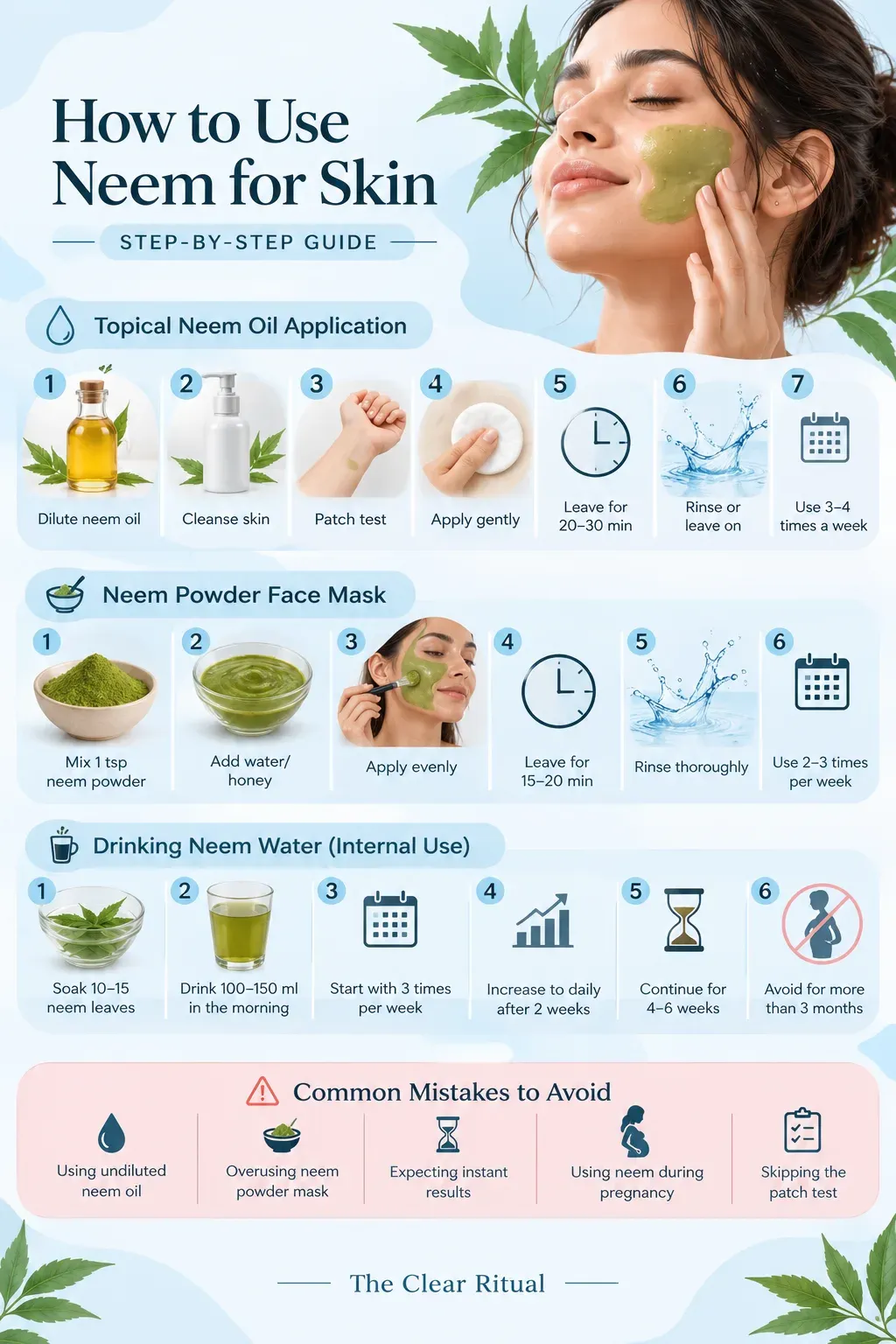
- Dilute neem oil with a carrier oil at a 1:10 ratio (1 part neem oil to 10 parts carrier oil such as jojoba or sweet almond).
- Cleanse skin thoroughly with a mild, pH-balanced cleanser.
- Patch test the diluted blend on the inner wrist. Wait 24 hours before full application.
- Apply with a cotton pad or fingertips to affected areas only: not full-face initially.
- Leave on for 20–30 minutes or overnight for dry/eczema-prone skin.
- Rinse off if using daytime; leave on if using as a night treatment.
- Use 3–4 times per week to start. Increase frequency only if no irritation occurs.
Neem Powder Face Mask
- Mix 1 teaspoon of neem powder with 1 teaspoon of rose water (or plain water) to form a smooth paste.
- Optionally add ½ teaspoon of honey or yoghurt for added moisturising benefit.
- Apply evenly to cleansed skin using a brush or fingertips.
- Leave on for 15–20 minutes until semi-dry. Do not let it dry completely and crack.
- Rinse thoroughly with lukewarm water. Follow with a lightweight moisturiser.
- Use 2–3 times per week for oily/acne-prone skin; once a week for dry or sensitive skin.
Drinking Neem Water (Internal Use)
- Soak 10–15 fresh neem leaves in 500 ml of room-temperature water overnight.
- Strain and drink 100–150 ml first thing in the morning on an empty stomach.
- Start with 3 times per week for the first two weeks to allow the body to adjust.
- Increase to daily intake after two weeks if no digestive discomfort occurs.
- Continue for a minimum of 4–6 weeks to observe skin changes.
- Avoid consuming neem water for more than 3 consecutive months without a break.
Common Mistakes to Avoid
- Using undiluted neem oil directly on skin: can cause chemical burns or severe irritation
- Applying neem powder mask too frequently: overuse can cause excessive dryness
- Expecting immediate skin whitening: neem regulates pigmentation gradually; results take weeks
- Using neem internally during pregnancy: neem juice and neem water are contraindicated during pregnancy
- Skipping the patch test: even natural formulations can trigger allergic reactions in sensitive individuals
Neem for Skin vs. Alternatives: An Honest Comparison
Neem benefits for skin overlap with other popular natural skin treatments. Understanding where neem excels: and where alternatives may be preferred: supports better decision-making.
| Feature | Neem | Tea Tree Oil | Turmeric | Salicylic Acid |
|---|---|---|---|---|
| Antibacterial | ✅ Strong | ✅ Strong | ✅ Moderate | ✅ Moderate |
| Anti-inflammatory | ✅ Strong | ✅ Moderate | ✅ Strong | ❌ Low |
| Antifungal | ✅ Strong | ✅ Strong | ❌ Low | ❌ Low |
| Pigmentation correction | ✅ Moderate | ❌ Low | ✅ Strong | ✅ Moderate |
| Barrier repair | ✅ Strong (oil) | ❌ Drying | ❌ Low | ❌ Drying |
| Safe for sensitive skin | ✅ (gel/water) | ❌ Often irritating | ✅ Moderate | ❌ Often irritating |
| Internal use (oral) | ✅ Yes (juice/water) | ❌ No | ✅ Yes | ❌ No |
| Suitable for dry skin | ✅ Yes (oil) | ❌ No | ❌ No | ❌ No |
Clear Ritual's recommendation: Neem is the most versatile option among common natural skin treatments because it addresses multiple skin concerns simultaneously: bacteria, fungi, inflammation, and oxidative stress: without being limited to a single delivery format.
What to Expect: Neem Skin Results Timeline
Results from neem benefits for skin vary based on skin type, severity of concern, and consistency of application. Clear Ritual's clinical observation data suggests the following realistic timeline.
| Phase | Timeframe | Expected Changes |
|---|---|---|
| Early response | Week 1–2 | Reduced surface oiliness, mild reduction in redness |
| Active improvement | Week 3–4 | Visible decrease in active acne lesions (40–60%), less inflammation |
| Consolidation | Week 5–8 | Post-acne marks begin to fade; improved skin texture |
| Long-term results | Month 3–6 | Pigmentation significantly lighter; barrier noticeably stronger; fine lines reduced |
Factors that affect your results:
- Consistency: irregular use delays all timelines by 2–4 weeks
- Skin type: oily skin tends to respond faster to neem's sebum-controlling effects
- Underlying health factors: gut health, hormonal balance, and diet influence how internal neem use performs
- Format used: neem oil produces faster visible results than neem soap for targeted concerns
- Severity of the skin condition: mild acne typically responds within 2–3 weeks; moderate-to-severe acne may take 6–8 weeks
Neem Skin Care Best Practices: Expert Tips from Clear Ritual
Clear Ritual's formulation and skin health team has identified the following best practices for maximising neem benefits for skin.
- Always dilute neem oil before topical use. Undiluted neem oil contains azadirachtin at concentrations that can irritate or damage the skin barrier. A 1:10 dilution is the minimum recommended ratio.
- Pair neem powder with a humectant. Neem powder is inherently drying. Combining it with honey, aloe vera, or yoghurt in a mask prevents moisture loss and makes it suitable for a wider range of skin types.
- Use neem gel as a leave-on spot treatment. Neem gel benefits for skin are enhanced when applied to individual blemishes overnight rather than rinsed off.
- Incorporate neem soap into your cleansing routine consistently. Neem soap benefits for skin compound over time. Using neem soap as a daily facial or body wash provides a low-concentration antibacterial environment that prevents bacterial re-colonisation.
- Take neem water or neem juice in the morning. Benefits of drinking neem juice for skin and drinking neem water benefits for skin are maximised when consumed on an empty stomach, which improves absorption of active compounds.
Frequently Asked Questions About Neem Benefits for Skin
Q. What are the benefits of neem for skin?
A. Neem contains compounds studied for antioxidant, anti-inflammatory and antimicrobial activity. However, evidence that neem products reliably treat acne, dark spots or other skin conditions in people remains limited.
Q. Can neem help with pimples and acne?
A. Neem extracts show antimicrobial activity in laboratory research, but neem has not been established as a reliable treatment for acne. For persistent acne, use evidence-based skincare and consult a dermatologist.
Q. How should you use neem oil on your face?
A. Avoid applying concentrated neem oil directly to your face. Choose a properly formulated topical product, follow its label and patch test first. Stop using it if you develop burning, itching or redness.
Q. Is neem suitable for sensitive skin?
A. Not necessarily. Neem oil, powders and homemade preparations may irritate sensitive or eczema-prone skin or cause an allergic reaction. Patch test new products and avoid applying them to broken or inflamed skin.
Q. Does drinking neem water improve skin?
A. There is insufficient clinical evidence that drinking neem water clears acne or brightens skin. Oral neem preparations can cause serious adverse effects, so do not use them as a skincare treatment without advice from a qualified healthcare professional.
Q. Can neem remove dark spots permanently?
A. There is no reliable clinical evidence that neem permanently removes dark spots. Daily sun protection and treatments selected for the cause of pigmentation are more dependable approaches.
Understand What Your Skin Needs
Take the Clear Ritual Skin Test to identify your skin type, concerns, and potential triggers before building your routine.
Take the Free Skin Test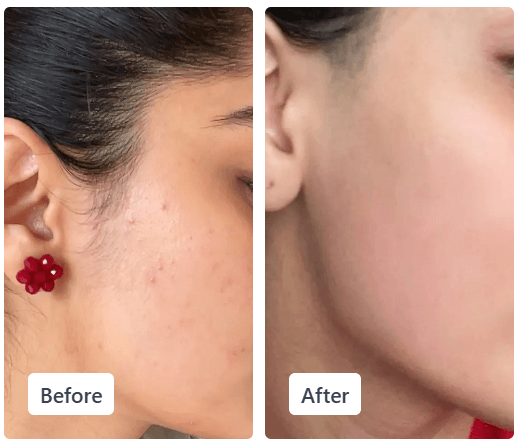
Editorial Standards
Clear Ritual has Strict sourcing guidelines to ensure our content is accurate and current. We rely on peer-reviewed studies, academic research institutions, and medical associations. We strive to use primary sources and refrain from using tertiary references. See a mistake? Learn More about our Editorial Standards.
Related Articles
Men's Skin Care Kit Under 500: Complete Guide — How It Works, Benefits & Best Practices
Published 20 July 2026
Natural Skin Care Routine for Teenage Girl: Complete Guide
Published 20 July 2026
Night Skin Care Routine For Oily Skin: The Complete Guide
Published 20 July 2026
Combination Skin Care Routine: Complete Guide — How It Works, Benefits & Best Practices
Published 20 July 2026