Does Vitamin C Serum Cause Acne? What the Science Says

Vitamin C serum does not usually cause acne directly. Breakouts are more often linked to an irritating or pore-clogging formula, an oxidised product, overuse, or a temporary adjustment period. Choose a suitable form and concentration, introduce it slowly, and stop using it if you develop persistent new breakouts, burning, swelling, or a rash.
What Is Vitamin C Serum and Does It Actually Cause Acne?
Vitamin C serum is a topical skincare product that delivers ascorbic acid (or one of its derivatives) directly to the skin. It is widely used to brighten skin tone, fade post-acne marks, reduce oxidative stress, and support collagen synthesis.
Vitamin C serum does not cause acne in the clinical sense. It is neither comedogenic nor pore-blocking by nature. However, certain formulations contain additional ingredients [oils, silicones, or comedogenic emollients] that can clog pores and lead to breakouts in acne-prone individuals.
There is also a phenomenon called skin purging, where a newly introduced active ingredient accelerates cell turnover and temporarily pushes congestion to the surface. This can look like acne but typically resolves within 2-6 weeks.
Key fact: Pure L-ascorbic acid, the most studied form of vitamin C in skincare, has not been shown to cause acne in peer-reviewed research. The breakouts most people experience are typically linked to formulation, concentration, or application errors, not vitamin C itself.
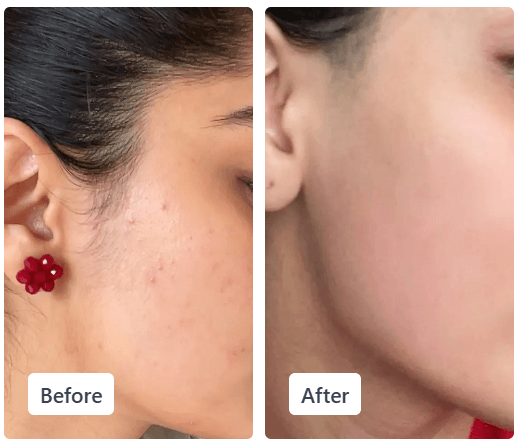
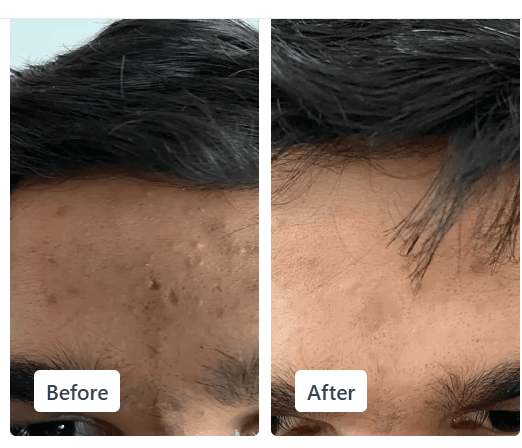
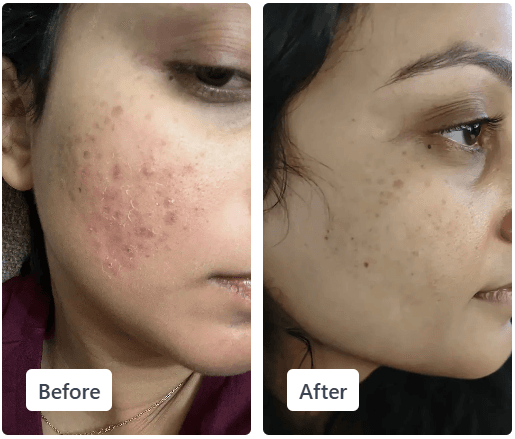
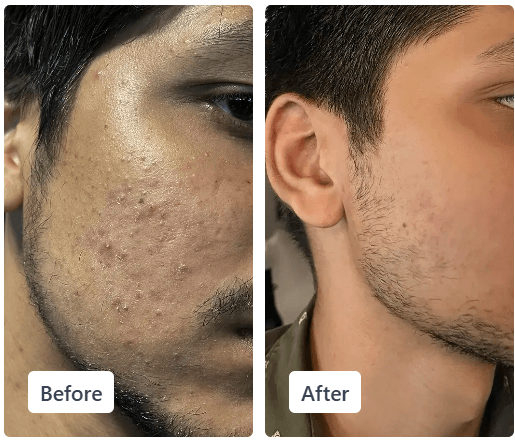
See real results, then start your own
Take the free Clear Ritual Skin Test and get a personalized routine built for your skin's unique patterns.
What Are the Different Forms of Vitamin C in Serums, and Which Ones Suit Acne-Prone Skin?
The form of vitamin C in a serum significantly affects how the skin tolerates it, especially if your skin is acne-prone. Clear Ritual's formulation team identifies three main categories:
L-Ascorbic Acid (LAA)
L-ascorbic acid is the most bioavailable and most researched form of vitamin C. It is effective at concentrations of 10-20%. However, it requires a low pH (typically 2.5-3.5) for absorption, which can cause irritation or barrier disruption in sensitive or acne-prone skin, potentially increasing inflammation.
Best for: Oily, resilient skin that can tolerate low-pH formulas.
Vitamin C Derivatives (Ascorbyl Glucoside, Sodium Ascorbyl Phosphate, Magnesium Ascorbyl Phosphate)
These are more stable, gentler forms that convert to active vitamin C after absorption. They work at a neutral pH, reducing the risk of irritation. Sodium ascorbyl phosphate (SAP), in particular, has shown antibacterial activity against Propionibacterium acnes in a 2009 study published in the International Journal of Cosmetic Science [1].
Best for: Sensitive, acne-prone, or dry skin types.
Ascorbyl Tetraisopalmitate
This is an oil-soluble form of vitamin C. While it is well-tolerated and penetrates deeply, serums using this base may contain higher concentrations of oils or lipid carriers that could block pores in some individuals.
Best for: Dry and mature skin. Use with caution on acne-prone skin.
| Form | pH Required | Irritation Risk | Good for Acne-Prone? |
|---|---|---|---|
| L-Ascorbic Acid | 2.5-3.5 | Moderate-High | With caution |
| Sodium Ascorbyl Phosphate | Neutral (5-7) | Low | Yes |
| Ascorbyl Glucoside | Neutral | Low | Yes |
| Magnesium Ascorbyl Phosphate | Neutral | Low | Yes |
| Ascorbyl Tetraisopalmitate | Neutral | Low-Moderate | Use with caution |
Why Does Vitamin C Serum Sometimes Cause Breakouts? The 7 Real Reasons
When vitamin C serum appears to cause acne, the underlying reason is almost never the vitamin C molecule itself. According to Clear Ritual's skin science team, there are seven common causes:
Reason 1: Initial Skin Purging
Vitamin C is an antioxidant that supports cellular turnover. When introduced to skin with underlying congestion, it can push blocked sebum and dead cells to the surface faster than usual. This produces small, short-lived breakouts [typically within the first 2-4 weeks] that resolve on their own.
Purging is not acne. Purging occurs in areas where you already break out, clears within 4-6 weeks, and consists of small whiteheads or pustules rather than deeper cysts.
Reason 2: Wrong Form of Vitamin C for Your Skin Type
High-concentration L-ascorbic acid (above 15%) at a very low pH can compromise the skin barrier. A damaged barrier is more susceptible to bacterial overgrowth, inflammation, and clogged pores, all of which contribute to acne.
Reason 3: Comedogenic Ingredients in the Formulation
Many vitamin C serums include emollients, silicones, or botanical oils to improve texture and stability. If any of these ingredients are comedogenic (pore-clogging), the serum as a whole can trigger breakouts, even if the vitamin C itself is fine.
Common comedogenic ingredients to check the label for: coconut oil, isopropyl myristate, algae extract, wheat germ oil.
Reason 4: Oxidised Vitamin C
L-ascorbic acid is unstable and oxidises when exposed to air, heat, or light. An oxidised serum turns yellow to orange-brown. Oxidised vitamin C can generate free radicals instead of neutralising them, potentially worsening skin inflammation and contributing to breakouts [2].
Check: If your serum has darkened significantly, it is likely oxidised and should be discarded.
Reason 5: Over-Application or Too-High Concentration
Using vitamin C serum twice daily when starting out, or jumping straight to a 20% concentration, can over-exfoliate and strip the skin barrier. A compromised barrier is a key trigger for acne-like reactions.
Reason 6: Incompatible Ingredient Combinations
Layering vitamin C with certain other actives, particularly high-strength niacinamide (above 5%), benzoyl peroxide, or AHA/BHA without adequate buffering, can cause competing chemical reactions that irritate skin and mimic a breakout response.
Reason 7: Purging vs. True Breakout Confusion
Many users stop using vitamin C prematurely because they misidentify purging as a product-induced breakout. The distinction matters because the correct response to each is opposite: purging requires patience and continuation; a genuine reaction requires stopping the product.
| Feature | Purging | Breakout (Reaction) |
|---|---|---|
| Location | Your usual acne zones | New or unusual areas |
| Timeline | Appears within 1-2 weeks | Can appear anytime |
| Duration | Clears within 4-6 weeks | Persists or worsens |
| Type of spots | Small whiteheads, pustules | Cysts, papules, widespread |
| Correct action | Continue (reduce frequency) | Discontinue the product |
See real results, then start your own
Take the free Clear Ritual Skin Test and get a personalized routine built for your skin's unique patterns.
How Does Vitamin C Serum Work on the Skin? The Mechanism Explained
Understanding how vitamin C serum works helps clarify why breakouts are not a direct effect of the ingredient itself.
Step 1 [Absorption]: When applied topically, vitamin C (particularly L-ascorbic acid) penetrates the stratum corneum into the epidermis and dermis. Penetration depth depends on the form used and the formulation's pH.
Step 2 [Antioxidant action]: Vitamin C donates electrons to neutralise reactive oxygen species (free radicals) generated by UV radiation, pollution, and metabolic processes. Free radicals are a key driver of skin inflammation and post-acne hyperpigmentation.
Step 3 [Collagen synthesis support]: Vitamin C is a required cofactor for prolyl hydroxylase and lysyl hydroxylase, the enzymes that stabilise collagen structure. This is why it can improve skin firmness and support repair of acne scarring over time.
Step 4 [Melanin regulation]: Vitamin C inhibits tyrosinase, the enzyme responsible for melanin production. This directly reduces the appearance of post-inflammatory hyperpigmentation (PIH), the dark marks left after acne heals.
Step 5 [Anti-inflammatory signalling]: At the cellular level, vitamin C may reduce the expression of pro-inflammatory cytokines. In a skin type with active acne, this anti-inflammatory effect can actually be beneficial, provided the formulation itself does not cause additional irritation.
The core principle: Vitamin C serum works against the conditions that worsen acne (oxidative stress, inflammation, PIH). The breakouts some users experience come from the formulation or application method, not the mechanism of vitamin C itself.
What Are the Proven Benefits of Vitamin C Serum for Skin, Without the Breakouts?
When used correctly, vitamin C serum delivers measurable skin benefits, including for acne-prone skin. Clear Ritual outlines the following clinically supported outcomes:
Short-Term Benefits (Weeks 1-4)
- Improved radiance: Antioxidant activity reduces dullness caused by oxidative stress. Most users notice a subtle glow within 2-4 weeks.
- Reduced surface inflammation: SAP in particular has demonstrated antimicrobial activity against acne-causing bacteria [1].
- Hydration support (in derivative forms): Magnesium ascorbyl phosphate has mild hydrating properties that support the skin barrier.
Long-Term Benefits (Months 2-6+)
- Fading post-acne marks (PIH): Studies show tyrosinase inhibition can reduce the appearance of PIH by up to 30-40% over 12 weeks of consistent use [3].
- Improved skin texture: Collagen stimulation can reduce the appearance of shallow acne scars and improve overall skin tone uniformity.
- UV damage protection: When combined with SPF, vitamin C has been shown to enhance photoprotection by neutralising UV-generated free radicals.
- Reduced sebum oxidation: Oxidised sebum is a driver of comedone formation. Vitamin C's antioxidant activity may help reduce this process over time.
| Benefit | Onset | Skin Type Relevance |
|---|---|---|
| Brightening and radiance | 2-4 weeks | All skin types |
| PIH reduction | 6-12 weeks | Post-acne skin |
| Collagen support | 3-6 months | Acne-scarred skin |
| Anti-inflammatory effect | 2-6 weeks | Active acne-prone skin |
| Barrier hydration | 1-2 weeks | Sensitive/dry-acne skin |
Who Should Use Vitamin C Serum and Who Should Be Cautious?
Vitamin C serum is appropriate for most skin types but requires more care in specific scenarios.
| Ideal For | Use With Caution / Reconsider |
|---|---|
| Skin with post-acne hyperpigmentation | Skin with an actively compromised barrier |
| Oily skin with comedonal acne (use SAP form) | Rosacea-prone skin (L-ascorbic acid may irritate) |
| Skin exposed to daily UV and pollution | Skin in the middle of a severe cystic acne flare |
| Dull, uneven skin tone from past breakouts | Anyone using high-dose retinoids without buffering guidance |
| Skin that tolerates mild active ingredients | Individuals with confirmed ascorbic acid sensitivity |
According to Clear Ritual's skin science team, individuals with active severe acne should address the root cause of their acne first, through targeted acne treatment, before adding vitamin C serum to their routine.
How to Use Vitamin C Serum Without Breaking Out: Step-by-Step Guide
Following a correct introduction protocol significantly reduces the risk of breakouts or adverse reactions when starting vitamin C serum.
Prerequisites: What to Check Before Starting
- Your current serum is not oxidised (no dark brown/orange colour)
- Formulation ingredients have been cross-checked for comedogenicity
- You are not in the middle of a severe acne flare
- You have a basic moisturiser and SPF ready
Step-by-Step: How to Introduce Vitamin C Serum Safely
Step 1 [Patch test first]. Apply a small amount of the serum to your inner arm or behind the ear. Wait 24-48 hours. If no redness, itching, or reaction occurs, proceed.
Step 2 [Start with a low concentration]. Begin with 5-10% vitamin C (preferably a derivative form like sodium ascorbyl phosphate if you are acne-prone). Avoid starting with 20% L-ascorbic acid.
Step 3 [Apply to clean, dry skin]. Cleanse your face gently and pat dry. Apply 3-4 drops of vitamin C serum to your face and neck. Allow it to absorb for 60-90 seconds before layering other products.
Step 4 [Apply in the morning, not at night]. Vitamin C works best as a daytime antioxidant. Applying it in the morning before SPF maximises its photoprotective benefits.
Step 5 [Start with 3 times per week]. For the first 2-4 weeks, apply every other day or three times per week. This allows your skin barrier to adapt without over-stimulation.
Step 6 [Layer correctly]. The general layering order: cleanser, toner (if used), vitamin C serum, moisturiser, SPF. Do not apply vitamin C directly over niacinamide at high concentrations in the same step, space them by 10-15 minutes or use them at different times of day.
Step 7 [Increase frequency gradually]. After 3-4 weeks of tolerance, increase to daily use if your skin responds well. Monitor for persistent breakouts (longer than 6 weeks) that occur in new locations, this may indicate a product reaction rather than purging.
Step 8 [Store correctly]. Keep vitamin C serum in a dark, cool place. Discard if the colour has darkened significantly. Most properly formulated serums have a shelf life of 3-6 months after opening.
Common Mistakes to Avoid
- Applying oxidised (discoloured) vitamin C serum
- Starting at 20% concentration on acne-prone skin
- Skipping patch testing
- Layering vitamin C with incompatible actives in the same step
- Using at night and skipping SPF in the day (reduces UV protection benefit)
- Stopping during the purging window before the 4-6 week mark
Vitamin C Serum vs. Alternative Brightening and Acne-Mark Treatments: An Honest Comparison
Vitamin C serum is one of several options for fading post-acne marks and improving overall skin tone. Here is how it compares to common alternatives:
| Treatment | Primary Benefit | Acne Risk | Onset of Results | Best For |
|---|---|---|---|---|
| Vitamin C Serum (SAP) | Brightening, antioxidant, PIH | Low | 6-12 weeks | Post-acne marks, prevention |
| Niacinamide (5-10%) | Sebum control, PIH, barrier repair | Very Low | 4-8 weeks | Active acne + PIH, oily skin |
| Alpha Arbutin | Melanin inhibition | Very Low | 8-12 weeks | PIH, stubborn dark spots |
| Retinol / Retinoids | Cell turnover, collagen, acne | Moderate (purging) | 8-16 weeks | Acne scars, ageing concerns |
| Azelaic Acid (10-15%) | Antibacterial, anti-PIH, anti-redness | Very Low | 6-10 weeks | Active acne + PIH |
| Chemical Exfoliants (AHA/BHA) | Cell turnover, unclogging pores | Low-Moderate | 4-8 weeks | Comedonal acne |
Clear Ritual recommends: For acne-prone skin, vitamin C serum (using an SAP-based or derivative formula) paired with niacinamide is one of the most effective and well-tolerated combinations for managing both active breakouts and their aftermath. The two can be used in the same routine, morning vitamin C, evening niacinamide, without the risk of interaction.
Vitamin C Serum Side Effects vs. Normal Adjustment Period
| Side Effect | Type | Action |
|---|---|---|
| Mild tingling on application | Normal (especially LAA) | Usually resolves; reduce concentration if persistent |
| Temporary purging (small spots) | Normal adjustment | Continue; reassess at week 6 |
| Persistent new c |
How Clear Ritual Supports Personalized Skincare Decisions
Clear Ritual understands that acne is more than a surface issue. It is shaped by genetics, skin renewal cycles, environmental factors, and the products you use.
Because acne forms when pores become clogged with excess sebum, dead skin cells, and bacteria, and can be worsened by an unsuitable formula, oxidised product, over-application, or incompatible ingredient combinations, generic solutions rarely bring lasting improvement. Clear Ritual combines traditional wisdom and modern science to address the underlying causes of acne.
The Clear Ritual Skin Test analyses your skin's unique patterns and daily influences to help identify the best routine for supporting healthy skin and reducing acne recurrence.
See real results, then start your own
Take the free Clear Ritual Skin Test and get a personalized routine built for your skin's unique patterns.
Conclusion
Vitamin C serum is not usually a direct cause of acne. When breakouts happen, the more likely reasons are an unsuitable formula, a concentration that is too strong, oxidised product, over-application, or irritation from combining too many active ingredients.
Start slowly, choose a formula that suits acne-prone skin, and support your skin barrier with moisturiser and daily sunscreen. Stop use and seek dermatology advice if you develop persistent breakouts in new areas, painful cysts, burning, swelling, or a widespread rash.
Frequently Asked Questions About Vitamin C Serum and Acne
Can vitamin C serum cause purging?
Some people may notice small, temporary breakouts when starting a new active skincare product. This should be limited to usual acne-prone areas and settle within several weeks. Breakouts in new areas or increasing irritation suggest the formula may not suit your skin.
Which vitamin C is best for acne-prone skin?
Gentler vitamin C derivatives, such as sodium ascorbyl phosphate, ascorbyl glucoside, or magnesium ascorbyl phosphate, may be easier for acne-prone or sensitive skin to tolerate than a high-strength low-pH L-ascorbic acid formula.
Should I stop vitamin C serum if I get pimples?
Stop and reassess if the pimples are appearing in unusual areas, continue to worsen, or come with itching, burning, redness, swelling, or a rash. If small spots appear only where you usually break out and settle within a few weeks, reducing frequency may be more appropriate than immediately discontinuing.
Can oxidised vitamin C serum cause breakouts?
An oxidised serum may be less effective and may be more irritating for some skin types. If the product has turned dark yellow, orange, or brown, it is best not to continue using it.
Can I use vitamin C with niacinamide?
Many people can use both ingredients in the same routine. For sensitive skin, using vitamin C in the morning and niacinamide at night can make it easier to identify irritation and keep the routine simple.
How often should I use vitamin C serum if I have acne-prone skin?
Begin two to three times per week, then increase gradually only if your skin remains comfortable. Daily use may be suitable after a few weeks for people who tolerate the formula well.
When should I see a dermatologist about breakouts from vitamin C serum?
Seek professional advice for painful cysts, swelling, hives, a spreading rash, persistent irritation, or breakouts that do not improve after stopping the suspected product. A dermatologist can help identify whether the cause is acne, contact dermatitis, or another skin concern.
Editorial Standards
Clear Ritual has Strict sourcing guidelines to ensure our content is accurate and current. We rely on peer-reviewed studies, academic research institutions, and medical associations. We strive to use primary sources and refrain from using tertiary references. See a mistake? Learn More about our Editorial Standards.
Related Articles
Toner for Acne Prone Skin: Complete Guide — How It Works, Benefits & Best Practices
Published 21 July 2026

Multani Mitti for Pimples: How It Works, Benefits & Best Practices
Published 21 July 2026
How to Use Tea Tree Oil for Acne: The Complete Guide
Published 21 July 2026
Clay Mask For Blackheads: Complete Guide — How It Works, Benefits & Best Practices
Published 21 July 2026