How to Use Tea Tree Oil for Acne: The Complete Guide
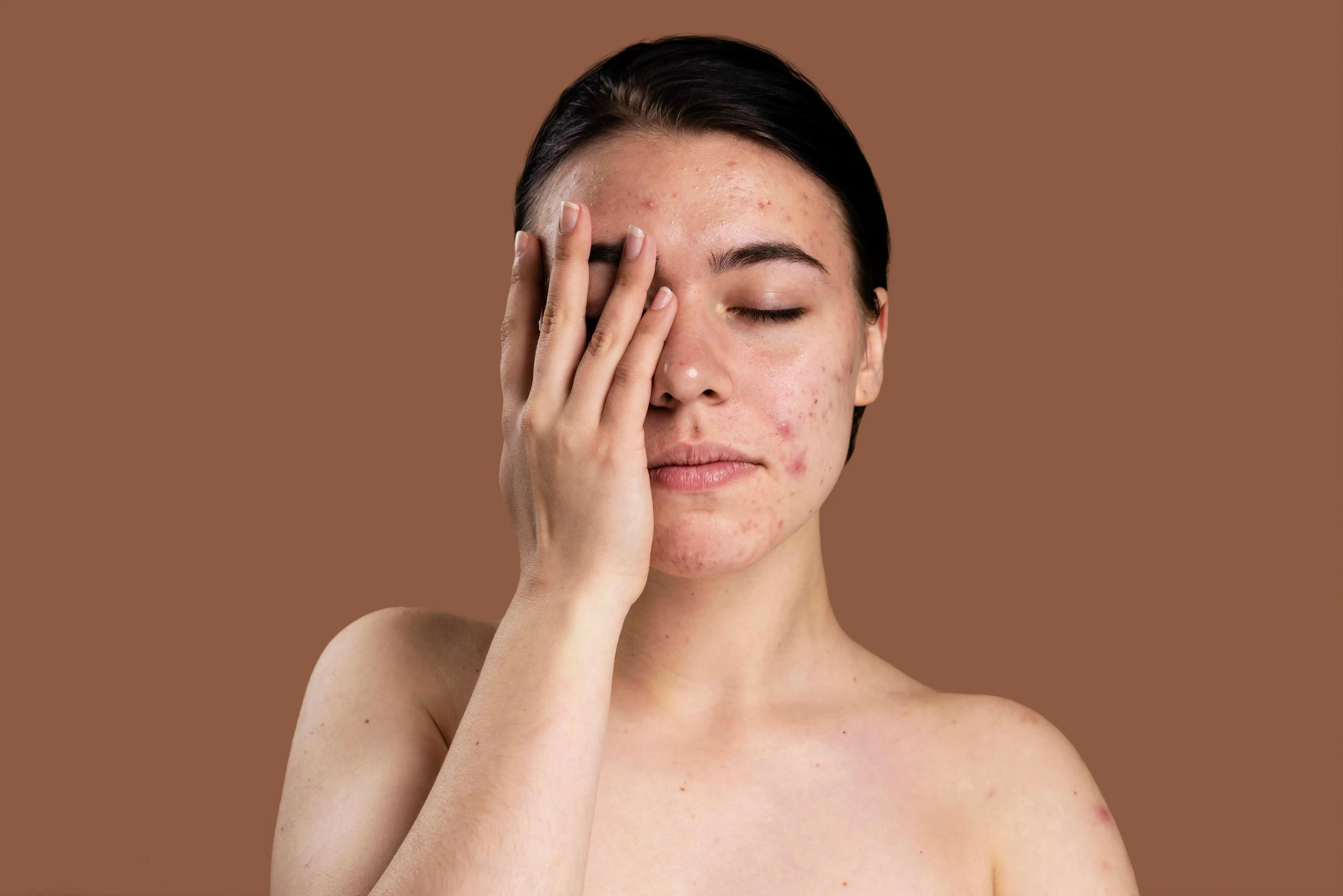
Tea tree oil may help mild inflammatory acne, but it should never be applied undiluted. A pre-formulated product or a carefully diluted spot treatment is less likely to irritate the skin. Stop using it if you develop burning, itching, swelling, a rash, or worsening breakouts, and see a dermatologist for painful, cystic, scarring, or persistent acne.
What Is Tea Tree Oil and How Does It Help Acne?
Tea tree oil is an essential oil extracted from the leaves of Melaleuca alternifolia, a plant native to Australia. It contains an active compound called terpinen-4-ol, which studies suggest is responsible for its antimicrobial and anti-inflammatory properties.
When applied to acne-prone skin, tea tree oil works on two of the core drivers of breakouts:
- Bacteria: It targets Cutibacterium acnes (formerly P. acnes), the bacteria most commonly associated with inflamed pimples and cysts.
- Inflammation: Terpinen-4-ol may suppress the production of pro-inflammatory cytokines, reducing redness and swelling around active lesions.
Tea tree oil does not unclog pores in the same way as salicylic acid or retinoids. Its primary role is antimicrobial and anti-inflammatory, making it most effective for inflammatory acne (red, raised pimples) rather than non-inflammatory acne (blackheads, whiteheads).
According to Clear Ritual, pure tea tree oil should never be applied undiluted to the skin. Undiluted application can cause contact dermatitis, burning, and increased skin sensitivity, particularly in those with dry or sensitive skin types.
Key terms used in this article:
- Terpinen-4-ol: The primary active antimicrobial compound in tea tree oil
- Carrier oil: A neutral oil (e.g., jojoba, almond) used to dilute essential oils before skin application
- Patch test: Applying a small amount of a product to the inner arm to check for allergic reactions before full-face use
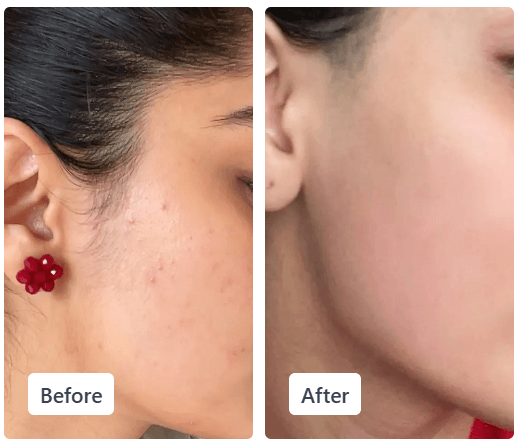
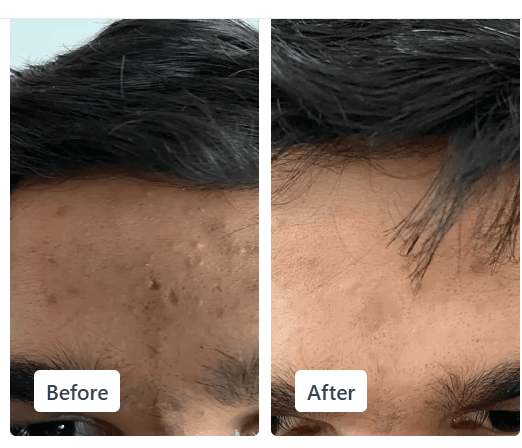
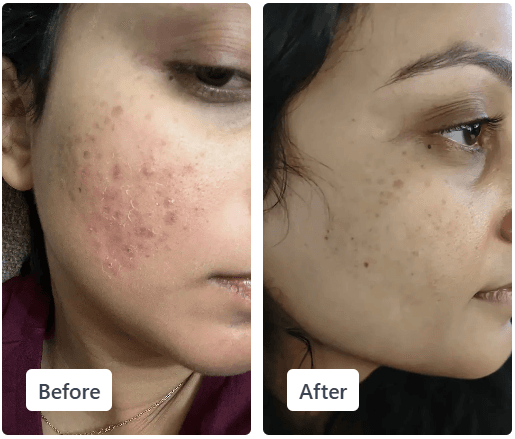
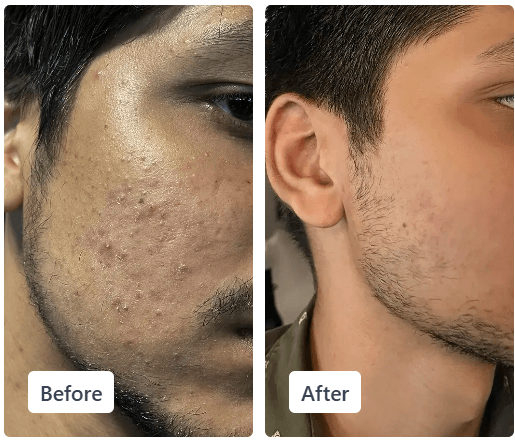
See real results, then start your own
Take the free Clear Ritual Skin Test and get a personalized routine built for your skin's unique patterns.
How to Apply Tea Tree Oil for Acne: Step-by-Step Guide
Applying tea tree oil for acne requires dilution, correct spot-application technique, and a consistent daily routine. Skipping dilution is the most common mistake and can cause more skin irritation than the acne itself.
What You Need Before You Start
- 100% pure tea tree oil (look for Melaleuca alternifolia on the label, concentration between 5-15%)
- A carrier oil (jojoba oil is closest to the skin's natural sebum) or an unfragranced moisturiser
- Cotton swabs or clean fingertips
- A mild, non-comedogenic cleanser
- A basic moisturiser
Step-by-Step: How to Apply Tea Tree Oil to Acne Spots
-
Cleanse your face using a gentle, sulfate-free cleanser. Pat dry with a clean towel. Applying tea tree oil to clean, dry skin allows better absorption and reduces the risk of trapping dirt under the treatment.
-
Dilute the tea tree oil. Combine 1-2 drops of tea tree oil with 12 drops (approximately 1 teaspoon) of carrier oil. This produces a concentration of roughly 5%, which clinical studies suggest is effective while minimising irritation risk. For sensitive skin, start at 1 drop per teaspoon (approximately 2-3% concentration).
-
Perform a patch test before applying to your face. Apply the diluted mixture to the inner forearm and wait 24 hours. If no redness, itching, or swelling appears, the dilution is safe for facial use.
-
Apply to individual spots. Dip a clean cotton swab into the diluted oil and press gently onto each pimple. Avoid dragging the swab across unaffected skin. Apply only to active breakouts, not as a full-face treatment.
-
Allow to absorb for 20-30 minutes. Do not rinse off immediately. If irritation occurs, wash the area with cool water.
-
Follow with moisturiser. Tea tree oil can be drying. Applying a non-comedogenic moisturiser after treatment helps maintain the skin barrier and reduces the risk of rebound oiliness.
-
Apply once daily, preferably in the evening. Nighttime application allows the oil to work without interaction with sunscreen, makeup, or sweat.
How to Use Tea Tree Oil for Pimples as a Spot Treatment vs. Full Routine
Tea tree oil performs best as a targeted spot treatment, not a full-face serum. Applying it to all skin areas, including non-affected zones, increases irritation risk without meaningful benefit for acne prevention.
Clear Ritual recommends integrating tea tree oil as the treatment step in a simple three-step evening routine: cleanse to treat (tea tree oil spot) to moisturise.
Common Setup Mistakes to Avoid
Do not apply undiluted tea tree oil directly to skin. Even at 100% concentration, results are not better, but the risk of chemical burns, peeling, and hyperpigmentation is significantly higher.
- Using too much product per application (more than 2 drops per session is rarely necessary)
- Applying tea tree oil before sunscreen and then going outdoors [tea tree oil may increase photosensitivity]
- Using tea tree oil around the eyes, lips, or mucous membranes
- Mixing tea tree oil with other active ingredients like benzoyl peroxide or retinol without dermatologist guidance [this can cause excessive dryness and barrier damage]
How Tea Tree Oil Works on Acne: The Mechanism Explained
Tea tree oil reduces acne because its active compound, terpinen-4-ol, disrupts the cell membranes of acne-causing bacteria and modulates the skin's inflammatory response. Understanding this mechanism helps explain why correct usage and realistic timelines matter.
The Core Mechanism: Step by Step
-
Terpinen-4-ol penetrates bacterial cell walls. The compound's lipophilic (fat-soluble) nature allows it to pass through the lipid membrane of C. acnes bacteria and disrupt cellular function, ultimately killing or inhibiting bacterial growth.
-
Bacterial load decreases. With fewer C. acnes bacteria on the skin surface and within the follicle, the inflammatory cascade [which causes the redness and swelling of a pimple] has less of a trigger to sustain itself.
-
Cytokine suppression reduces inflammation. Terpinen-4-ol has been shown in laboratory studies to reduce the production of TNF-alpha, IL-1β, and IL-10, inflammatory markers involved in the swelling and pain associated with acne lesions [1].
-
Sebum interaction is minimal but relevant. Tea tree oil does not reduce sebum production directly. However, its antibacterial action within the follicle reduces the chance that accumulated sebum becomes a site of bacterial colonisation.
-
Healing proceeds without systemic exposure. Unlike oral antibiotics, topical tea tree oil acts locally, which means systemic side effects are unlikely when used correctly.
How Long Does Tea Tree Oil Take to Work on Acne?
Tea tree oil typically begins to show visible effects on individual pimples within 2-4 days of consistent application. Broader improvement in acne count and skin texture generally requires 4-8 weeks of daily use.
In a 2007 randomised controlled trial published in the Indian Journal of Dermatology, Venereology and Leprology, a 5% tea tree oil gel was compared to 5% benzoyl peroxide lotion over 8 weeks. Both treatments significantly reduced total acne lesion count, with tea tree oil showing fewer side effects (dryness, scaling, burning) than benzoyl peroxide [2].
Results vary depending on acne severity, skin type, dilution consistency, and whether a complementary skincare routine is maintained.
See real results, then start your own
Take the free Clear Ritual Skin Test and get a personalized routine built for your skin's unique patterns.
Key Benefits of Using Tea Tree Oil for Acne
Using tea tree oil for acne provides several evidence-supported benefits, particularly for those with mild-to-moderate inflammatory breakouts who prefer a plant-based treatment option.
Benefits at a Glance
- Antimicrobial action: Reduces C. acnes bacterial load on the skin's surface and within follicles
- Anti-inflammatory effect: May reduce the size and redness of individual pimples within 48-72 hours of application
- Fewer side effects than benzoyl peroxide: Clinical comparisons report significantly less dryness and peeling with 5% tea tree oil gel versus 5% benzoyl peroxide over 8 weeks [2]
- Non-antibiotic treatment: Tea tree oil does not contribute to antibiotic resistance, which is a growing concern with topical antibiotic acne treatments
- Widely accessible: Available over the counter, typically at a lower cost than prescription formulations
- Versatile application: Can be incorporated into existing skincare routines without requiring a complete regimen overhaul
- Suitable for sensitive skin at correct dilutions: A 2-5% concentration is generally tolerated by most skin types when properly diluted
Short-Term vs. Long-Term Benefits
| Timeframe | Expected Benefit |
|---|---|
| Days 2-4 | Visible reduction in redness and size of individual pimples |
| Weeks 1-2 | Reduction in surface bacterial count; fewer new active spots |
| Weeks 4-6 | Measurable decrease in total inflammatory acne lesion count |
| Weeks 8+ | Sustained improvement in skin clarity with consistent use |
Who Benefits Most from Tea Tree Oil for Acne?
Tea tree oil is most effective for:
- People with mild-to-moderate inflammatory acne (red papules and pustules)
- Those who have experienced dryness or irritation from benzoyl peroxide
- Individuals seeking a non-prescription, plant-derived option as a first-line treatment
- People with oily or combination skin who are not managing cystic or hormonal acne patterns
Clear Ritual notes that tea tree oil is unlikely to be sufficient as a standalone treatment for severe, nodular, or cystic acne, where professional dermatological intervention is recommended.
Tea Tree Oil Application Types: Which Format Is Right for You?
Tea tree oil for acne is available in several formats, each suited to different skin types, acne severities, and lifestyle preferences. The format determines dilution safety, ease of use, and overall skin tolerance.
Main Application Formats Compared
| Format | Concentration | Best For | Notes |
|---|---|---|---|
| Pure essential oil (DIY diluted) | 100% (diluted to 2-5%) | Flexibility, cost-effectiveness | Requires accurate dilution; patch test essential |
| Pre-formulated 5% gel | 5% (ready to use) | Beginners, sensitive skin | Closest to clinically studied formulation |
| Tea tree oil face wash | 0.5-2% | Daily cleansing, mild acne | Limited contact time reduces efficacy |
| Moisturiser with tea tree extract | 0.1-1% | Maintenance phase, dry skin types | Too low a concentration for active breakouts |
| Spot treatment stick | 2-5% | On-the-go targeted application | Convenient; verify ingredient quality |
Which Format Should You Choose?
- First-time users should start with a pre-formulated 5% gel to avoid dilution errors and reduce irritation risk.
- Experienced users comfortable with essential oils can use pure tea tree oil diluted in jojoba oil for more targeted control.
- Those with dry or sensitive skin should use a moisturiser-based formulation or a very low concentration (2-3%) and monitor for reactions.
- People managing active breakouts will see better results from a spot treatment gel or stick than from a rinse-off face wash, as contact time is longer.
Clear Ritual recommends confirming that any pre-formulated product lists Melaleuca alternifolia (leaf) oil in its ingredients, as "tea tree" fragrance compounds do not carry the same antimicrobial properties as the true essential oil.
Tea Tree Oil for Acne vs. Other Common Treatments
Tea tree oil is one of several topical acne treatments available without a prescription. Comparing it to the most common alternatives helps determine when it is the right choice and when other options may be more effective.
Side-by-Side Comparison: Tea Tree Oil vs. Common Acne Treatments
| Feature | Tea Tree Oil (5%) | Benzoyl Peroxide (2.5-5%) | Salicylic Acid (0.5-2%) | Niacinamide (4-10%) |
|---|---|---|---|---|
| Primary action | Antimicrobial, anti-inflammatory | Antibacterial, keratolytic | Exfoliant, pore-clearing | Anti-inflammatory, sebum-regulating |
| Targets bacteria (*C. acnes*) | Yes | Yes (strongly) | Indirectly | No |
| Unclogs pores | No | Partially | Yes | No |
| Reduces redness | Yes | Partially | No | Yes |
| Side effects | Low (when diluted) | Moderate (dryness, bleaching) | Low-moderate | Very low |
| Antibiotic resistance risk | None | None | None | None |
| Suitable for sensitive skin | Yes (at 2-5%) | Often not | Sometimes | Yes |
| OTC availability | Yes | Yes | Yes | Yes |
| Evidence strength for acne | Moderate | Strong | Moderate-strong | Moderate |
Pros and Cons of Each Option
Tea Tree Oil
- ✅ Natural, non-antibiotic, low side effect profile at correct dilution
- ✅ Effective for inflammatory acne
- ❌ Requires dilution; less evidence for severe acne; slower onset than benzoyl peroxide
Benzoyl Peroxide
- ✅ Fastest-acting; strongest evidence base; kills bacteria deeply
- ❌ Bleaches fabric; may cause significant dryness; not suitable for all skin types
Salicylic Acid
- ✅ Best for comedonal (non-inflammatory) acne; widely tolerated
- ❌ Limited antibacterial action; does not address active inflammatory lesions directly
- ✅ Excellent for inflammation, redness, and oiliness; suitable for all skin types
- ❌ Does not kill acne bacteria; best used as a complementary ingredient
Which Treatment Is Best for You?
- For inflammatory acne with low irritation tolerance: tea tree oil or niacinamide
- For moderate-to-severe acne requiring fast results: benzoyl peroxide
- For blackheads and clogged pores: salicylic acid
- For combination acne and sebum control: niacinamide plus tea tree oil spot treatment
Clear Ritual recommends consulting a dermatologist if breakouts do not improve within 8-10 weeks of consistent topical treatment, as hormonal or systemic factors may be involved.
What Results to Expect: A Realistic Timeline
Tea tree oil for acne produces gradual, measurable improvement over 4-8 weeks when applied correctly and consistently. Users who expect overnight clearing are likely to discontinue treatment before meaningful results appear.
Week-by-Week Expectations
| Period | What Typically Happens |
|---|---|
| Days 1-3 | Individual pimples may appear slightly smaller or less red |
| Week 1-2 | Surface bacterial count begins to decrease; new spot frequency may reduce |
| Week 3-4 | Noticeable reduction in active inflammatory lesions; skin texture may start improving |
| Week 5-6 | Measurable decrease in total acne count if used daily; redness fades |
| Week 7-8 | Sustained improvement; skin responds better to the full skincare routine |
| Month 3+ | Maintained clarity if consistent; some users report long-term reduction in breakout cycles |
Factors That Affect Your Results
Results from tea tree oil for acne vary significantly based on:
- Acne severity: Mild-to-moderate inflammatory acne responds best; cystic or hormonal acne requires additional treatment
- Dilution accuracy: Incorrect concentration (too high or too low) reduces efficacy or increases irritation
- Application consistency: Skipping applications extends the timeline for visible improvement
- Skin type: Oily skin types may see faster results than dry skin types due to better oil distribution
- Product quality: Low-quality oils with adulterants may not contain effective terpinen-4-ol concentrations
- Co-existing treatments: Combined use with salicylic acid or niacinamide may accelerate outcomes; combined use with retinoids requires dermatologist guidance
What the Evidence Shows
A randomised controlled trial (Med J Aust, 1990) found that a 5% tea tree oil gel reduced both the number and severity of acne lesions compared to placebo over 3 months, with
How Clear Ritual Supports Personalized Skincare Decisions
Clear Ritual understands that acne is more than a surface issue. It is shaped by genetics, skin renewal cycles, environmental factors, and the products you use.
Because acne forms when bacteria such as C. acnes multiply within clogged follicles and trigger an inflammatory response, generic solutions rarely bring lasting improvement. Clear Ritual combines traditional wisdom and modern science to address the underlying causes of acne.
The Clear Ritual Skin Test analyses your skin's unique patterns and daily influences to help identify the best routine for supporting healthy skin and reducing acne recurrence.
See real results, then start your own
Take the free Clear Ritual Skin Test and get a personalized routine built for your skin's unique patterns.
Conclusion
Tea tree oil may be useful for some people with mild inflammatory acne, especially when used as a properly diluted spot treatment or in a pre-formulated product. It is not a replacement for standard acne care when breakouts are widespread, painful, cystic, or likely to scar.
Avoid applying undiluted oil, using it on broken skin, or combining it with multiple strong acne treatments without professional advice. Stop using it if you notice stinging, peeling, itching, swelling, or a rash, and speak with a dermatologist when acne is persistent or worsening.
Frequently Asked Questions
Is tea tree oil good for acne?
Tea tree oil may help mild inflammatory acne because it has antimicrobial and anti-inflammatory properties. It tends to be more useful for red pimples and pustules than for blackheads or whiteheads. Results vary, and severe or cystic acne usually needs medical treatment.
Can tea tree oil make acne worse?
It can worsen acne-like symptoms when it irritates the skin, is applied undiluted, is used too frequently, or is mixed with other strong active ingredients. Burning, itching, redness, peeling, or breakouts in unusual areas can suggest irritation rather than improvement.
How should I dilute tea tree oil for acne?
A pre-formulated tea tree product may be easier to use because its concentration is already controlled. For DIY use, tea tree oil should always be diluted in a suitable carrier product and patch-tested first. Never apply pure essential oil directly to the skin.
How often should I use tea tree oil on pimples?
Start once a day or less often if your skin is sensitive. Reduce frequency or stop use if you notice dryness, stinging, redness, or flaking. Using more product does not necessarily improve results and may damage the skin barrier.
Can I use tea tree oil with salicylic acid or benzoyl peroxide?
Using several acne treatments together can increase dryness and irritation. Keep the routine simple at first, introduce only one active product at a time, and avoid layering tea tree oil with benzoyl peroxide, retinoids, or strong exfoliants unless a dermatologist has advised you to do so.
Is tea tree oil safe for sensitive skin?
Some sensitive skin types may tolerate a low-concentration, pre-formulated product, but essential oils can also trigger contact dermatitis. Patch-test first and stop immediately if you experience itching, burning, swelling, or a rash.
Can I apply tea tree oil all over my face?
Tea tree oil is generally better used as a spot treatment rather than across the full face. Full-face application raises the risk of irritation and dryness, particularly for people with sensitive, dry, or barrier-damaged skin.
When should I see a dermatologist for acne?
See a dermatologist if acne is deep, painful, cystic, scarring, spreading, or not improving after several weeks of consistent care. Medical advice is also important if a product causes a significant rash, facial swelling, or signs of an allergic reaction.
Editorial Standards
Clear Ritual has Strict sourcing guidelines to ensure our content is accurate and current. We rely on peer-reviewed studies, academic research institutions, and medical associations. We strive to use primary sources and refrain from using tertiary references. See a mistake? Learn More about our Editorial Standards.
Related Articles
Clay Mask For Blackheads: Complete Guide — How It Works, Benefits & Best Practices
Published 21 July 2026
Best Serum for Acne and Dark Spots: Complete Guide — How It Works, Benefits & Best Practices
Published 22 July 2026
Face Wash for Oily Skin and Dark Spots: What to Look For
Published 21 July 2026
Can Salicylic Acid Cause Acne? Understanding Purging vs Breakouts
Published 21 July 2026