
Pus-Filled Pimples: Causes, Treatment, and Prevention
Learn why pus-filled pimples develop, their common triggers, safe treatment options, prevention practices, and when persistent or painful breakouts require dermatological care.
Read More

Results

Understand every form acne takes, from blackheads and whiteheads to papules, pustules, nodules and cysts, and how each one is treated.
Learn why pus-filled pimples develop, their common triggers, safe treatment options, prevention practices, and when persistent or painful breakouts require dermatological care.
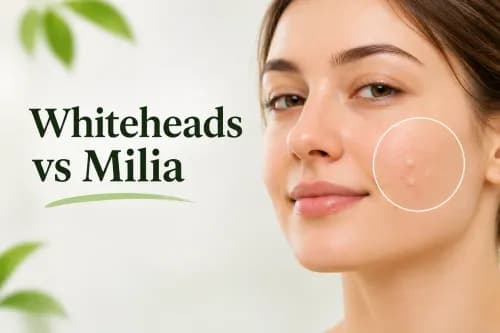
Learn the differences between whiteheads and milia, how each develops, which treatments can help, and why squeezing bumps near the eyes can be risky. Read on.
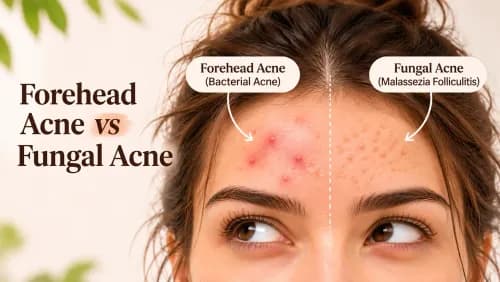
Learn how forehead acne differs from fungal acne, including symptoms, causes, treatment options, and when to consult a dermatologist for persistent bumps.
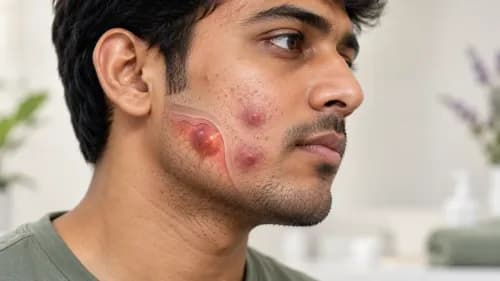
Learn what causes nodular acne, how it differs from cystic acne, which treatments can help and when to seek care to reduce the risk of scarring.

Learn how fungal acne differs from bacterial folliculitis, including key symptoms, causes, triggers, treatment options, and ways to identify each condition.

Understand the science behind pus-filled pimples, their triggers, safe treatment options, healing process, and prevention.

Pustular acne causes inflamed, pus-filled bumps that require consistent treatment targeting blocked pores, bacteria and inflammation.
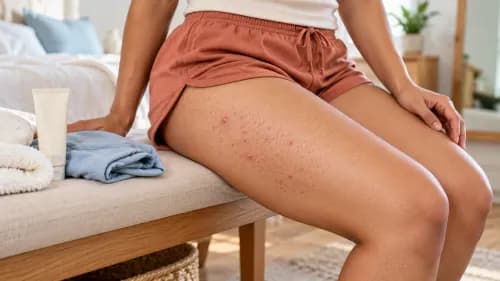
Pimples on thighs commonly result from friction, sweat, folliculitis or ingrown hairs, and treatment should match the underlying cause.
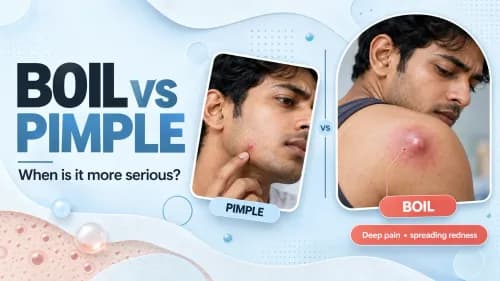
Pimples are small clogged pores, while boils are deeper bacterial infections that become larger, warmer and considerably more painful.