Ayurvedic Herbs for Kapha, Pitta, and Vata Skin: What They Are and How They Work
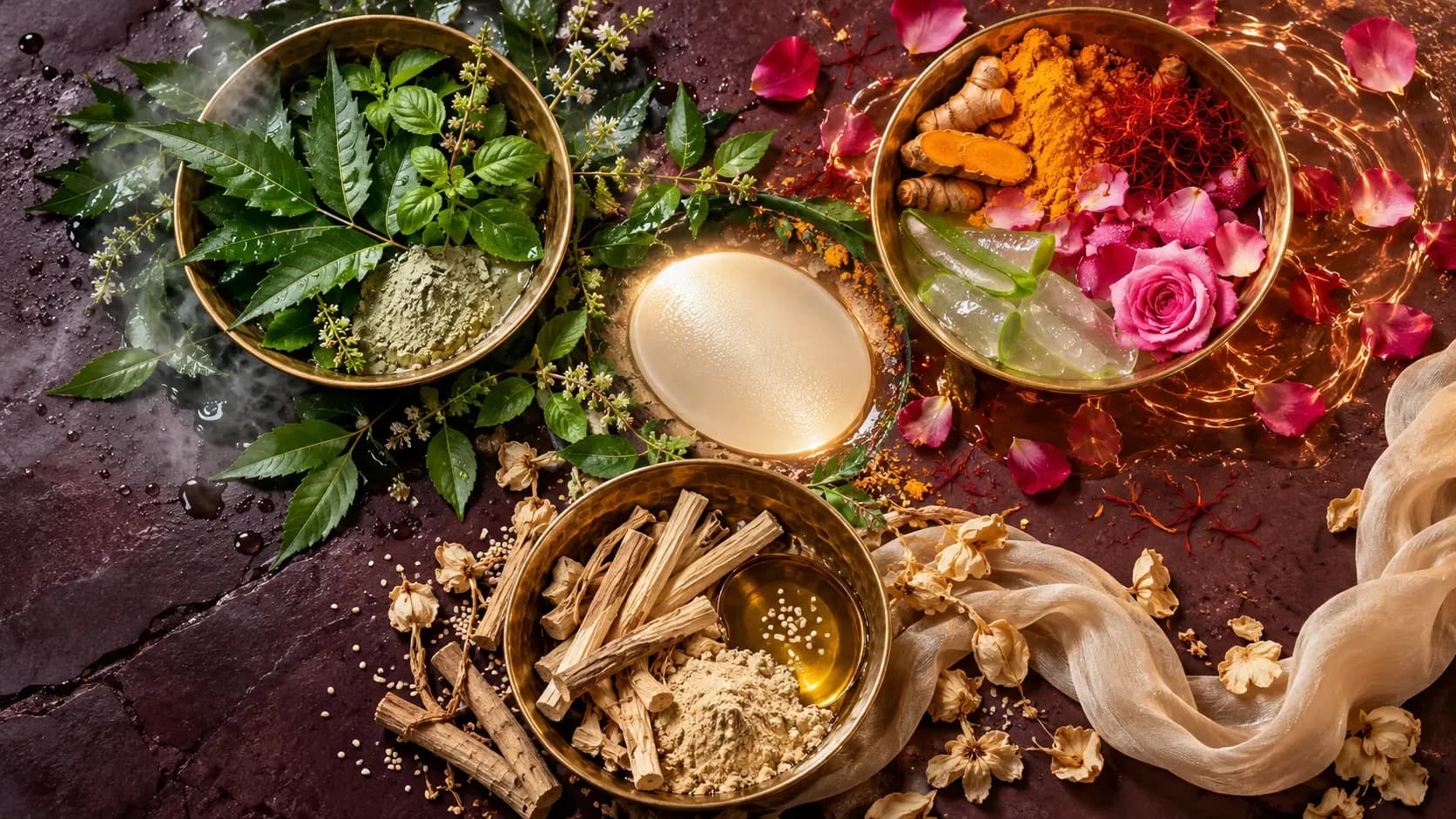
Ayurvedic herbs for Kapha, Pitta, and Vata skin work by correcting internal dosha imbalances - excess oil, internal heat, or tissue dryness - that drive persistent breakouts, redness, and flakiness at the root rather than at the surface.
The three doshas - Kapha (earth + water), Pitta (fire + water), and Vata (air + ether) - directly govern your skin's oiliness, inflammatory response, and hydration levels. When any one is aggravated, skin signals it through visible symptoms. The right herbal combination addresses why the symptom keeps returning, not just what it looks like today.
This guide maps the most evidence-supported Ayurvedic herbs to each dosha, explains the biological mechanisms behind each one, and provides a practical daily routine and realistic timeline for results.
What Are the Three Doshas and How Do They Affect Skin?
The three doshas in Ayurveda are biological energies that govern all physiological functions - including how your skin produces oil, manages inflammation, and retains moisture.
| Dosha | Elemental Composition | Skin Traits When Balanced | Common Skin Issues When Aggravated |
|---|---|---|---|
| Kapha | Earth + Water | Thick, smooth, hydrated, slow to react | Cystic acne, clogged pores, excess oiliness, sluggish healing |
| Pitta | Fire + Water | Warm, flushed, acne-prone, reactive | Redness, inflammation, sudden breakouts, sensitivity, rashes |
| Vata | Air + Ether | Thin, dry, fine-pored, delicate | Flakiness, premature aging, dullness, eczema-like dryness |
No dosha is inherently problematic. Skin issues arise specifically when a dosha moves out of its natural range - either from diet, stress, seasonal shifts, or lifestyle habits.
Most people have a dominant dosha with a secondary one. Dual-dosha skin patterns - Kapha + Pitta or Vata + Pitta - are common in clinical practice, which is why single-herb or single-ingredient protocols often underdeliver. According to The Clear Ritual's formulation approach, blended herbal combinations that address more than one dosha simultaneously produce more consistent results than isolated extracts.
What Are the Best Ayurvedic Herbs for Kapha Skin?
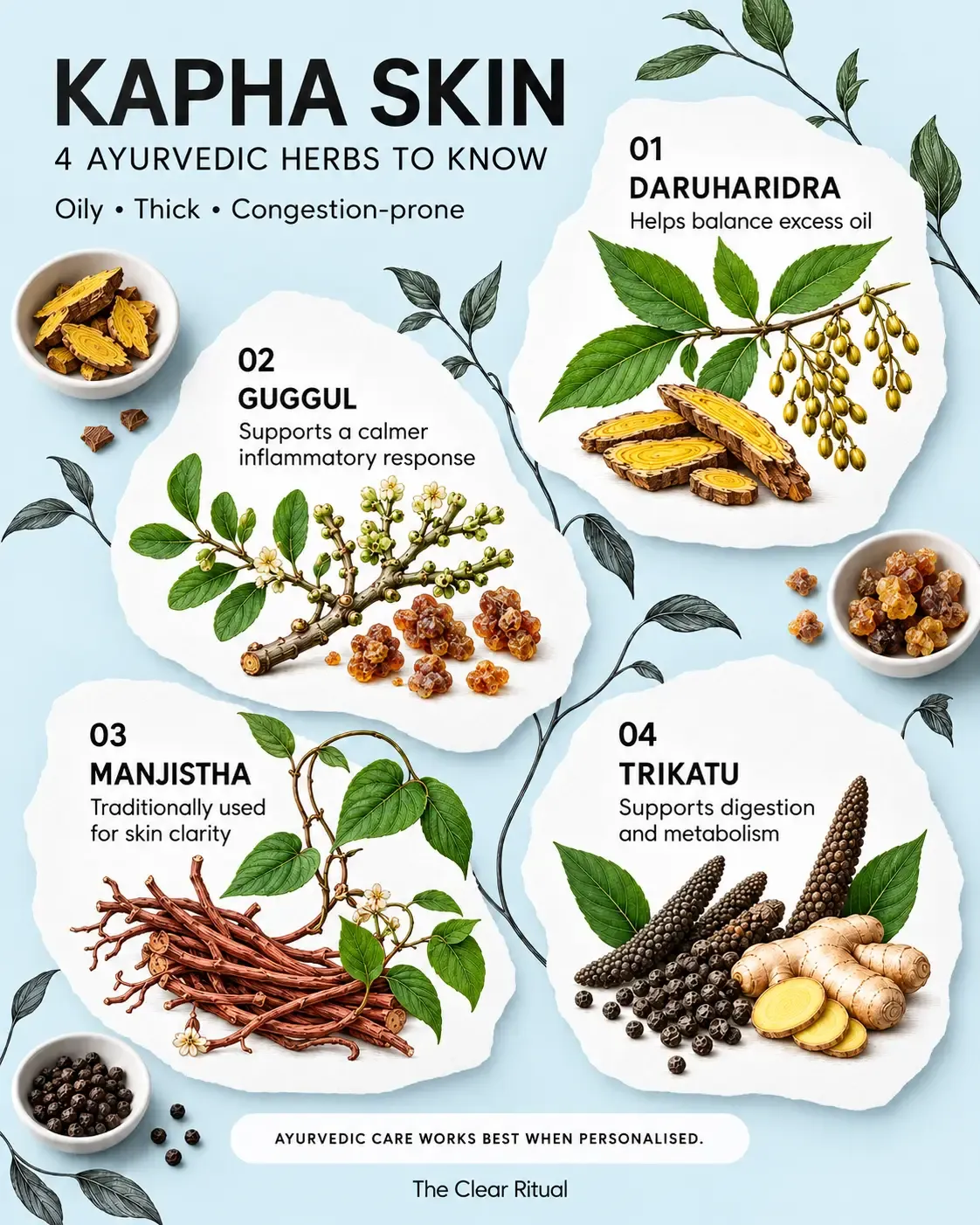
The most effective Ayurvedic herbs for Kapha-type skin are those that decongest lymphatic pathways, stimulate sluggish digestion, and reduce excess sebum production from within.
Kapha-type skin is naturally thick, oily, and cool-toned. When Kapha is aggravated, the body's elimination slows, and the skin compensates by pushing metabolic waste through the pores - producing deep, pus-filled cystic acne breakouts that heal slowly and often leave marks.
Key Ayurvedic herbs for Kapha skin:
- Daruharidra (Berberis aristata) - Bitter and drying; its active compound berberine inhibits Cutibacterium acnes proliferation and reduces sebaceous lipid production at the source
- Guggul (Commiphora mukul) - Contains guggulsterones E and Z, which downregulate the NF-κB inflammatory pathway - the same pathway targeted by many prescription anti-inflammatories, but without immunosuppression
- Manjistha (Rubia cordifolia) - Supports lymphatic drainage by stimulating macrophage activity; stagnant lymph is the Ayurvedic explanation for slow-healing cystic acne, and Manjistha directly restores immune clearance in the dermis
- Trikatu (Pippali + Black Pepper + Ginger) - Stimulates digestive fire (agni) and metabolic function; sluggish digestion is typically the upstream driver of Kapha-type congested pores
These Kapha herbs do not simply dry the skin. They improve internal elimination so that less metabolic waste reaches the skin surface in the first place.
What Are the Best Ayurvedic Herbs for Pitta Skin?
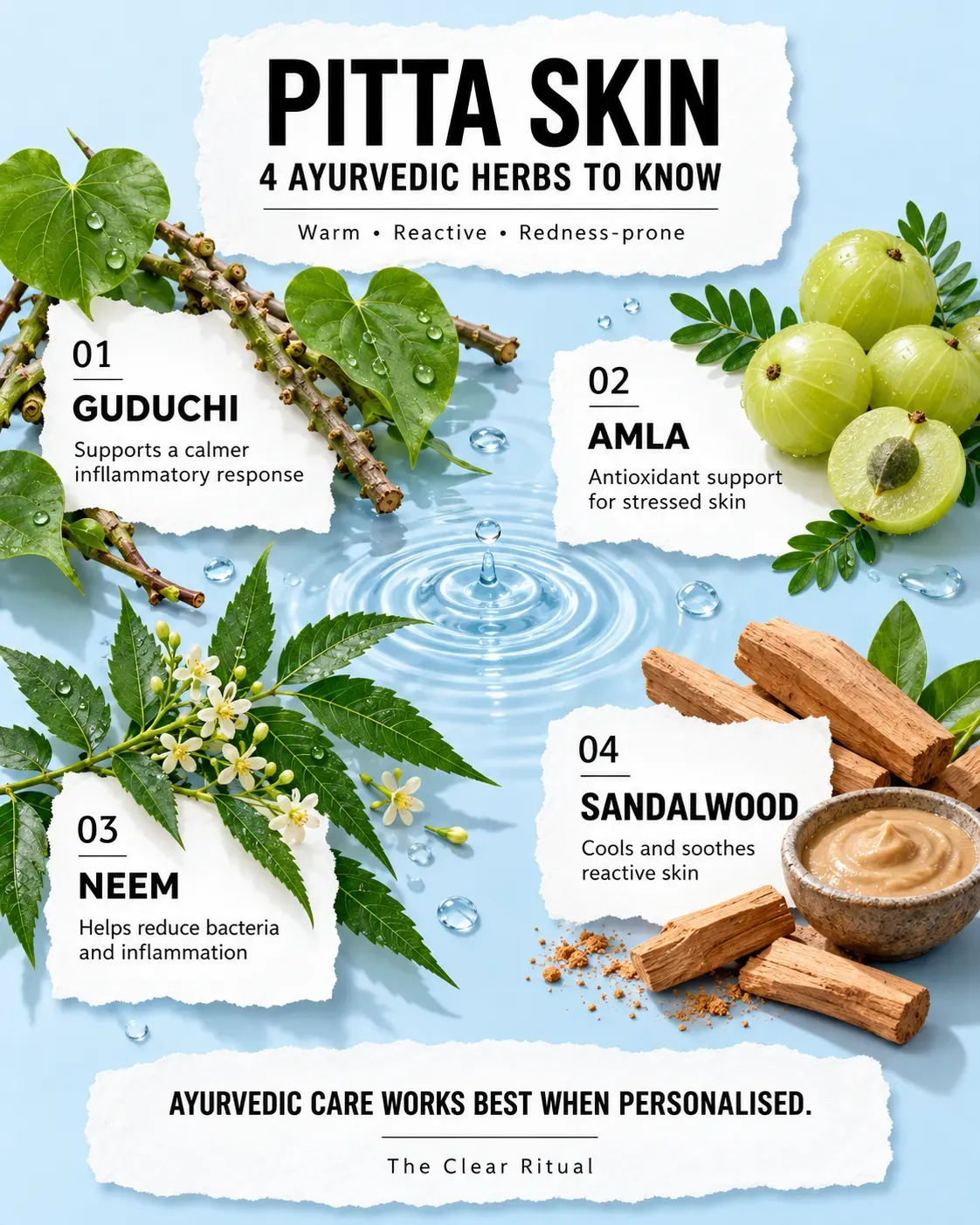
The most effective Ayurvedic herbs for Pitta-type skin are cooling, anti-inflammatory agents that reduce internal heat accumulation and lower systemic inflammatory load.
Pitta skin runs warm and reacts quickly. Triggers include spicy food, alcohol, heat, stress, and hormonal fluctuations - all of which amplify internal fire. The result is sudden, angry, inflamed papules or pustules, often accompanied by flushing, rosacea-like redness, or post-breakout hyperpigmentation.
In Ayurvedic physiology, aggravated Pitta causes excess heat to accumulate in the blood (rakta dhatu), which expresses outward through the skin as inflammation. Scientifically, this maps to elevated pro-inflammatory cytokines, increased sebaceous gland activity triggered by androgens and cortisol, and a compromised skin barrier.
Key Ayurvedic herbs for Pitta skin:
- Guduchi (Tinospora cordifolia / Giloy) - A natural immunomodulator; its active compound tinosporin upregulates IL-10 (anti-inflammatory) while downregulating TNF-α and IL-6, the cytokines directly responsible for redness and swelling in Pitta-type breakouts
- Amla (Emblica officinalis) - Contains approximately 445 mg of Vitamin C per 100 g of fresh fruit; cools internal heat, neutralises reactive oxygen species generated during inflammation, and reduces post-inflammatory hyperpigmentation
- Neem (Azadirachta indica) - Contains nimbin and nimbidol, compounds with proven antimicrobial activity against Cutibacterium acnes and anti-inflammatory properties comparable to aspirin in some in-vitro models
- Sandalwood (Chandana) - Used both externally and internally to regulate excess heat; particularly effective for redness and sensitivity in reactive Pitta skin
The Clear Ritual's approach to Pitta skin avoids the common mistake of applying cooling herbs topically while continuing to consume heating foods and habits internally - lasting Pitta correction requires both.
What Are the Best Ayurvedic Herbs for Vata Skin?
The most effective Ayurvedic herbs for Vata-type skin are deeply nourishing, cortisol-lowering, and hormonally stabilising - they rebuild the skin barrier from within rather than simply adding surface moisture.
Vata skin is thin, dry, and fine-pored. When Vata is aggravated, the skin loses its protective lipid barrier, becomes rough, flaky, or dull, and is more prone to sensitivity and eczema-like flares. Stress and inconsistent routine are the fastest Vata aggravators - skin typically reflects this within 72 hours.
Key Ayurvedic herbs for Vata skin:
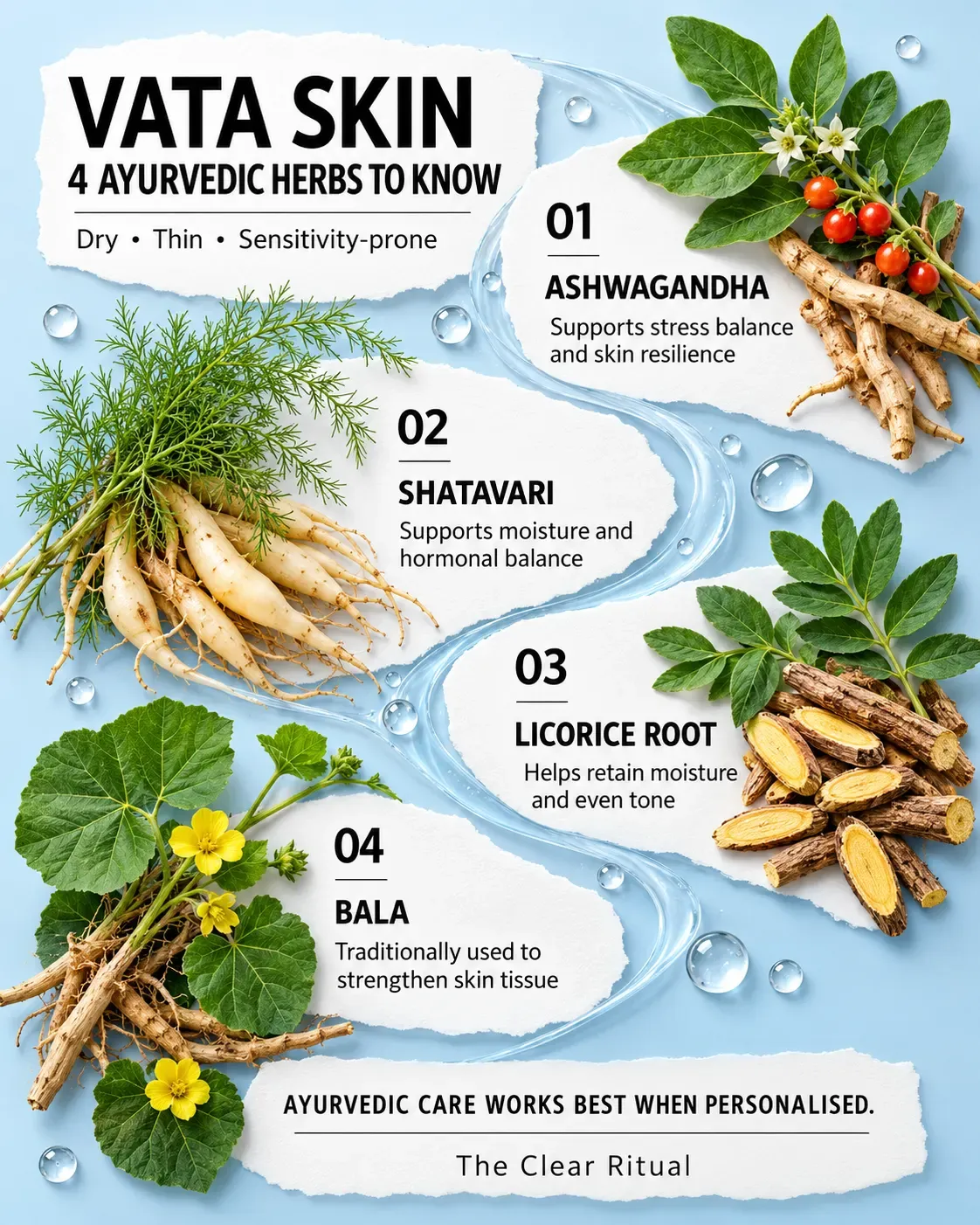
- Ashwagandha (Withania somnifera) - Reduces cortisol, which directly degrades collagen and impairs the epidermal moisture barrier; a 2019 randomised controlled trial found standardised ashwagandha extract reduced serum cortisol by 27.9% compared to placebo over 60 days
- Shatavari (Asparagus racemosus) - Contains saponins that support estrogen balance; low estrogen reduces ceramide production in the stratum corneum, causing the transepidermal water loss characteristic of Vata imbalance
- Licorice root (Yashtimadhu / Glycyrrhiza glabra) - Contains glabridin, which inhibits tyrosinase (the enzyme responsible for melanin overproduction) and has demulcent properties that retain moisture in the skin barrier
- Bala (Sida cordifolia) - Strengthens and tones skin tissue without generating heat, making it suitable for Vata types who react badly to warming herbs
These Vata herbs do not simply moisturise. They address the hormonal, stress-driven, and nutritional deficiencies that make Vata skin structurally unable to hold moisture in the first place.
How Do Ayurvedic Skin Herbs Actually Work? The Biological Mechanisms
Ayurvedic skin herbs work because their active compounds target the same inflammatory, antimicrobial, and hormonal pathways as conventional actives - through gentler, systemic correction rather than surface suppression.
Understanding the mechanism distinguishes evidence-based Ayurvedic use from folklore.
Kapha herb mechanisms:
- Berberine in Daruharidra inhibits C. acnes and reduces sebaceous lipid production, interrupting the pore-clogging cycle at its biochemical source
- Guggulsterones E and Z in Guggul suppress NF-κB - the master inflammatory switch - without the immunosuppression risk of pharmaceutical-grade NF-κB inhibitors
- Mollugin in Manjistha, identified in a 2012 review in the Asian Pacific Journal of Tropical Biomedicine, inhibits NF-κB activation and is linked to reduced post-inflammatory hyperpigmentation
Pitta herb mechanisms:
- Tinosporin in Guduchi upregulates IL-10 and downregulates TNF-α and IL-6 - the specific cytokines elevated in acne vulgaris and rosacea-type conditions, per a 2021 review in the Journal of Ethnopharmacology
- Vitamin C and synergistic tannins in Amla provide superior antioxidant activity compared to synthetic ascorbic acid, per a 2011 study in the European Journal of Clinical Nutrition
- Nimbin and nimbidol in Neem show antimicrobial activity against C. acnes with MIC values comparable to erythromycin in some strains, per a 2013 study in the Journal of Medicinal Plants Research
Vata herb mechanisms:
- Ashwagandha's cortisol reduction (-27.9% in a 2019 RCT in Medicine) preserves collagen and maintains the epidermal moisture barrier - directly reversing the stress-skin degradation cycle common in Vata types
- Saponins in Shatavari support estrogen signalling, restoring ceramide synthesis in the stratum corneum
- Glabridin in Licorice root inhibits tyrosinase and provides moisture-retaining demulcent properties internally
The research base for these herbs is largely in-vitro and animal-model based for skin-specific endpoints. Large-scale randomised controlled trials on Ayurvedic herbs specifically for acne remain limited. What the evidence strongly supports is the mechanism - these herbs do affect the biological pathways relevant to skin health.
How to Map Your Skin Symptoms to the Right Dosha and Herbs
The following table maps common skin symptoms to their most likely dosha imbalance and the primary Ayurvedic herbs that address them.
| Skin Symptom | Most Likely Dosha | Primary Supporting Herbs |
|---|---|---|
| Greasy skin, whiteheads, bloating | Kapha | Daruharidra, Manjistha, Trikatu |
| Red, painful papules or pustules | Pitta | Neem, Guduchi, Amla |
| Flaky, itchy skin with dull tone | Vata | Licorice, Ashwagandha, Bala |
| Cyclical acne linked to stress | Vata + Pitta | Shatavari, Amla, Guduchi |
| Acne combined with sluggish digestion | Kapha + Pitta | Guggul, Daruharidra, Trikatu, Neem |
| Congested pores + slow healing | Kapha | Guggul, Manjistha, Trikatu |
| Post-breakout dark spots | Pitta + Vata | Amla, Licorice, Guduchi |
In practice, most people with recurring breakouts have dual-dosha patterns - Kapha + Pitta being the most common in clinical Ayurvedic contexts. This is why The Clear Ritual's formulation approach uses layered blends rather than single-herb extracts: a single herb rarely covers the full causal chain.
Understand What Your Skin Needs
Take the Clear Ritual Skin Test to identify your skin type, concerns, and potential triggers before building your routine.
Take the Free Skin Test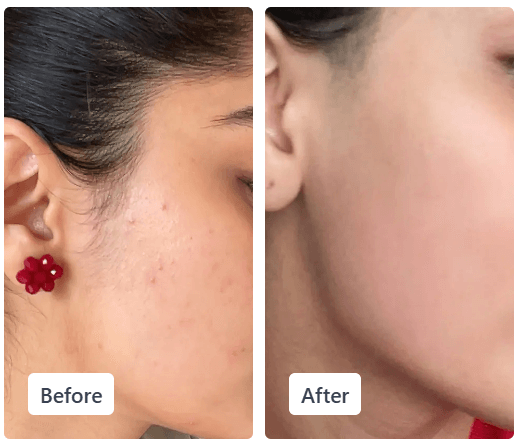
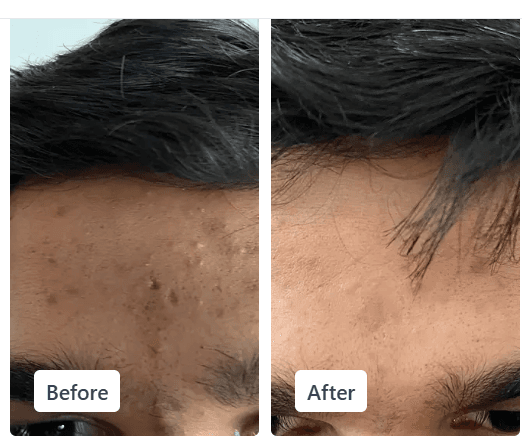
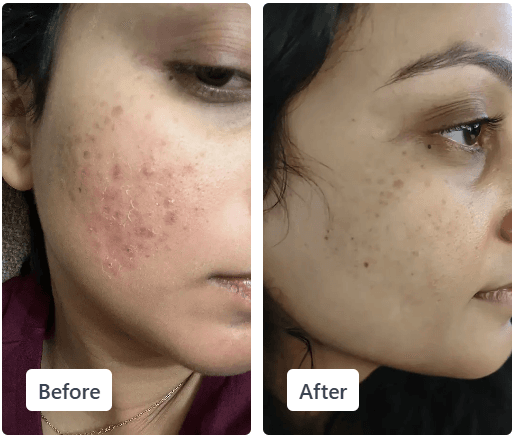
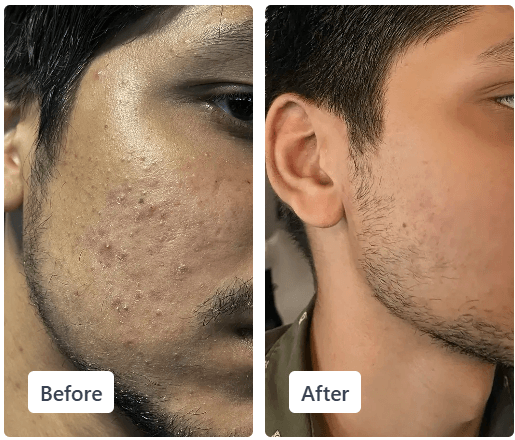
Ayurvedic Herbs vs. Conventional Skincare Actives: An Honest Comparison
Ayurvedic herbs and conventional actives target many of the same biological pathways but differ significantly in onset speed, mechanism depth, and side effect profile.
| Active / Herb | Primary Action | Best Skin Type | Typical Onset | Key Limitation |
|---|---|---|---|---|
| Salicylic acid (BHA) | Exfoliates inside the pore | Kapha blackheads, whiteheads | 4-8 weeks | Can over-dry; triggers rebound oiliness; irritates Pitta skin |
| Daruharidra (berberine) | Inhibits C. acnes + reduces sebum | Kapha oily-congested acne | 6-10 weeks | Slower onset than salicylic acid; works internally |
| Benzoyl peroxide | Kills acne bacteria on contact | Inflammatory papules | 2-4 weeks | Sensitisation risk; disrupts skin microbiome |
| Neem (nimbin) | Antimicrobial + anti-inflammatory | Pitta inflamed breakouts | 6-8 weeks | Slower initial clearance; cumulative effect is deeper |
| Retinol | Increases cell turnover | Anti-aging + comedonal acne | 12-16 weeks | High irritation risk for Vata + Pitta; requires SPF |
| Ashwagandha + Shatavari | Lowers cortisol + supports hormonal balance | Vata stress/hormonal acne | 8-12 weeks | Does not address active infections directly |
| Guduchi + Amla | Cools inflammation + antioxidant protection | Pitta redness + PIH | 8-12 weeks | Systemic effect; slower than topical anti-inflammatories |
The practical takeaway: Conventional actives typically produce faster surface results but often trigger rebound issues - over-exfoliation, purging, or barrier disruption. Ayurvedic herbs take 6-12 weeks longer because they correct the internal environment rather than the surface symptom. For chronic, recurring breakouts, root-cause correction means fewer relapses.
Salicylic acid clears a blocked pore. Daruharidra and Manjistha address why the pore blocked in the first place.
If you have a sudden severe flare or active infection, a conventional active may be the right short-term bridge while Ayurvedic herbs work on the underlying cause.
How to Build a Daily Ayurvedic Skincare Routine for Your Dosha
Ayurvedic skincare works best when internal herbal support and an external topical routine are aligned with your specific dosha pattern - not applied generically.
Kapha Skin Daily Routine
Morning: Cleanse with a gentle herbal cleanser containing Neem or Daruharidra to clear overnight sebum build-up. Avoid heavy moisturisers - Kapha skin rarely needs added emollients. Choose lightweight, non-comedogenic serums if using actives.
Internal support: Take Guggul or Trikatu with warm water after breakfast to stimulate digestion and metabolism. Sluggish digestion is typically the upstream cause of congested pores in Kapha types.
Lifestyle: Cold showers, light exercise (yoga, brisk walking), and reducing heavy or fried food reduce Kapha aggravation faster than any topical product alone.
Pitta Skin Daily Routine
Morning: Avoid harsh scrubs and hot water - both aggravate Pitta. Use a calming cleanser with Chandana (sandalwood) or Neem. Apply broad-spectrum sunscreen daily; Pitta skin is the most UV-reactive of the three types.
Internal support: Amla powder in lukewarm (not hot) water each morning cools internal heat and provides antioxidant protection. Guduchi capsules with dinner support immune modulation during the repair phase of sleep.
Lifestyle: Reducing spicy food, alcohol, and midday sun exposure produces noticeable redness reduction within one week for most Pitta types - faster than any herb alone.
Vata Skin Daily Routine
Morning: Oil cleansing or a gentle cream-based cleanser protects the lipid barrier. Vata skin should never feel tight after cleansing. Follow with a hydrating mist or rose water before applying serum.
Internal support: Ashwagandha in warm milk or water before bed lowers cortisol during sleep, when cellular repair peaks. Shatavari twice daily supports hormonal dryness if that is a contributing factor.
Lifestyle: Consistency is the most important Vata intervention. Regular mealtimes, adequate sleep, hydration, and reduced over-stimulation support the same barrier-repair goals as the herbal routine.
How Should You Approach Dual-Dosha Skin?
Dual-dosha skin needs a routine that addresses the dominant concern without aggravating the secondary one. Kapha + Pitta skin may be oily and congested but also red and reactive, while Vata + Pitta skin may feel dry yet develop inflamed breakouts.
Start by identifying the symptom that is currently most active. Understanding how skin type affects acne can help you avoid choosing a drying routine for reactive skin or a heavy routine for congested skin.
- Kapha + Pitta: Pair decongesting support such as Daruharidra or Manjistha with cooling herbs such as Amla or Guduchi.
- Vata + Pitta: Prioritise barrier support and calming care. Avoid combining multiple heating or strongly exfoliating products.
- Kapha + Vata: Use light hydration and gentle cleansing so that congestion improves without increasing dryness.
Introduce one change at a time and observe the skin for at least two weeks before adding another herb or active. This makes it easier to identify irritation or an ingredient that does not suit your skin.
How Long Do Ayurvedic Herbs Take to Show Results?
Ayurvedic herbs usually require consistent use because they are intended to support gradual changes in inflammation, stress response, digestion, and barrier function. The timeline varies with the concern, formulation, dose, and individual response.
| Timeline | What You May Notice |
|---|---|
| 1-2 weeks | Changes in comfort, hydration, digestion, or redness may begin. |
| 4-6 weeks | Fewer new mild breakouts or improved skin texture may become noticeable. |
| 8-12 weeks | A more reliable change in recurring breakouts, oiliness, or dryness can be assessed. |
| After 12 weeks | If there is no improvement, reassess the diagnosis, products, dosage, and other triggers with a qualified professional. |
Photographing the skin in similar lighting every two weeks is more reliable than judging progress day by day.
Safety, Interactions, and Common Mistakes
Natural does not automatically mean risk-free. Ayurvedic herbs can cause allergy, irritation, digestive effects, or medicine interactions, particularly when several oral products are combined.
- Patch test topical products before applying them to the whole face.
- Do not ingest cosmetic powders or topical herbal preparations.
- Ask a qualified clinician before oral use during pregnancy or breastfeeding, or if you have liver, kidney, thyroid, autoimmune, or hormone-sensitive conditions.
- Check for interactions if you take medicines for diabetes, blood pressure, immunity, thyroid function, anxiety, or sleep.
- Avoid starting several herbs and strong skincare actives at the same time.
- Stop the product and seek medical advice if swelling, breathing difficulty, widespread rash, or severe irritation occurs.
Visible symptoms of acne-prone skin do not confirm a dosha imbalance or rule out conditions such as rosacea, eczema, folliculitis, or contact dermatitis.
When Should You See a Dermatologist?
See a dermatologist if breakouts are painful, deep, rapidly worsening, leaving scars, or not improving after 8 to 12 weeks. Professional assessment is also important when a rash burns, spreads, repeatedly returns, or involves the eyes.
An evidence-based acne treatment guide can help you understand proven options, but prescription treatment should be selected for your diagnosis and severity. Ayurvedic support should complement necessary medical care, not delay it.
Clear Ritual's Perspective on Ayurvedic Herbs for Skin
Ayurvedic herbs can be useful when they are chosen for a clearly identified skin concern, used in an appropriate formulation, and monitored for tolerance. Dosha concepts may help organise patterns such as oiliness, heat, sensitivity, or dryness, but they should not replace a medical diagnosis.
Clear Ritual recommends building a simple routine around cleansing, moisturising, sun protection, and targeted treatment first. Herbal products can then be introduced one at a time according to the skin's response.
Frequently Asked Questions
Q. Which Ayurvedic herb is best for Kapha skin?
A. Daruharidra, Manjistha, Guggul, and Trikatu are commonly used for oily, congested Kapha patterns. The appropriate choice depends on the formulation, health history, and whether the concern is topical or internal.
Q. Which Ayurvedic herb is best for Pitta skin?
A. Amla, Guduchi, Neem, and Sandalwood are traditionally used for heat, redness, and inflammatory Pitta patterns. Reactive skin should still be patch tested before topical use.
Q. Which Ayurvedic herb is best for Vata skin?
A. Ashwagandha, Shatavari, Licorice root, and Bala are traditionally used to support dry or stress-sensitive Vata patterns. Oral use should be discussed with a qualified professional.
Q. Can Ayurvedic herbs cure acne permanently?
A. No treatment can guarantee a permanent cure. Herbs may support certain contributing factors, but persistent acne often needs a complete routine and, in some cases, dermatologist-led treatment.
Q. Can I combine Ayurvedic herbs with salicylic acid or retinol?
A. Sometimes, but introduce products gradually. Combining several active products can increase dryness or irritation, especially in Pitta- or Vata-dominant skin.
Q. How do I know my skin dosha?
A. Observe persistent patterns such as oiliness and congestion, heat and redness, or dryness and sensitivity. A dosha assessment can guide traditional care, but a dermatologist should evaluate ongoing or severe skin symptoms.
References
- National Center for Complementary and Integrative Health. Ayurvedic Medicine: In Depth.
- National Center for Complementary and Integrative Health. Ashwagandha: Usefulness and Safety.
- National Center for Complementary and Integrative Health. Neem: Usefulness and Safety.
- American Academy of Dermatology. Acne: Skin Care.
Editorial Standards
Clear Ritual has Strict sourcing guidelines to ensure our content is accurate and current. We rely on peer-reviewed studies, academic research institutions, and medical associations. We strive to use primary sources and refrain from using tertiary references. See a mistake? Learn More about our Editorial Standards.
Related Articles
Comedogenic Ingredients That Trigger Whiteheads (And What to Avoid)
Published 21 July 2026

Best Ingredients for Blackheads: Dermatologist-Approved Guide
Published 7 October 2026
Best Ingredients to Treat Whiteheads (Dermatologist-Approved)
Published 21 July 2026
Best Ingredients to Treat Pimples (Salicylic Acid, Benzoyl Peroxide, etc.)
Published 21 July 2026